


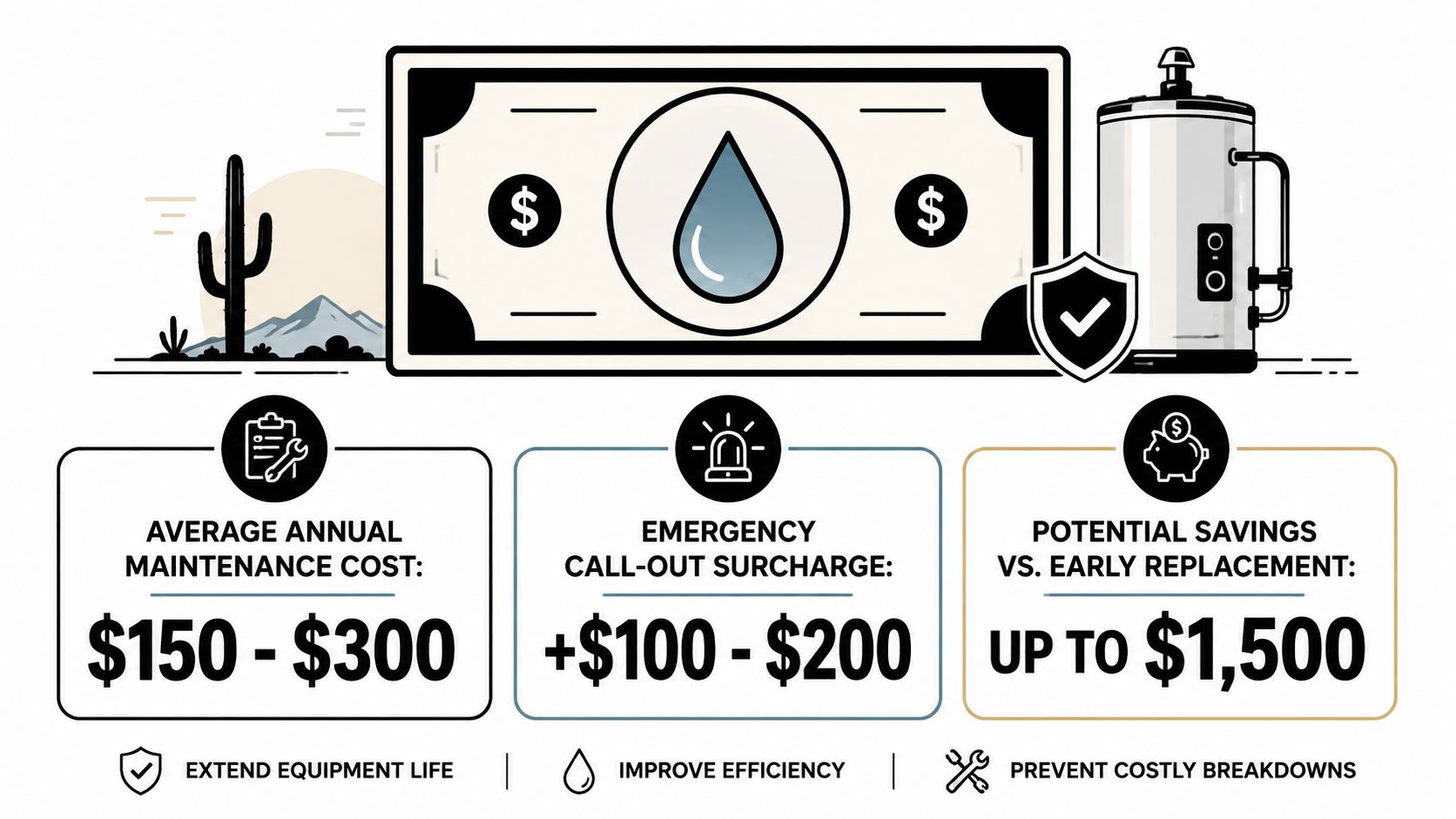
Annual professional water heater maintenance typically costs $100 to $250 for a tank system and $150 to $350 for a tankless unit, while average repair bills run about $606 to $615. Maintenance is usually a small, predictable fraction of the cost of reactive repairs.
That gap matters in Arizona, where mineral-heavy water can turn a routine service decision into a replacement decision if sediment, scale, and corrosion go unchecked. The right question isn't, “What does a water heater flush cost?” It's, “Which service prevents the failure that would cost me the most?”
What Arizona Homeowners Pay for Water Heater Maintenance
Arizona homeowners should budget for maintenance as a recurring ownership cost, not an optional add-on. Tank systems generally need less labor than tankless models, while tankless units require descaling that takes specialized equipment and more technician time. A broader Arizona-focused water heater maintenance cost guide places routine service across a wide range, depending on the heater's condition, service scope, and local labor.
The price gap between a basic visit and a full service often comes down to what the technician finds. Sediment-heavy tank units may need additional flushing and inspection. Tankless systems can require more careful scale removal across internal passages and heat-transfer components. Gas models also need combustion and venting checks, while electric units require attention to elements, thermostats, wiring, and connections.
Repair costs show why the lowest quote can be misleading. A failed component, corroded fitting, or leaking tank can turn a planned service visit into a much larger bill. Maintenance cannot prevent every failure, but it can identify worn parts before they cause water damage or leave the household without hot water.
Practical rule: Approve a maintenance quote only when it lists the inspection, flushing or descaling, safety checks, and any component testing included. A drain-and-flush alone is not a complete service plan.
Hard water changes the economics. Mineral deposits restrict flow, reduce heating performance, and increase stress on internal parts. An older heater may also take longer to drain safely or reveal a deteriorating anode rod once the technician begins the inspection. Paying for that extra evaluation is often more sensible than paying emergency rates after a preventable failure.
A historical Department of Energy-related cost model treated annual maintenance as 0.5% to 1% of total installation cost, according to the building technology equipment cost appendix. It is not a current plumbing quote, but it supports a sound ownership practice: include maintenance in the heater's lifecycle budget from installation onward.
What a Professional Maintenance Visit Includes
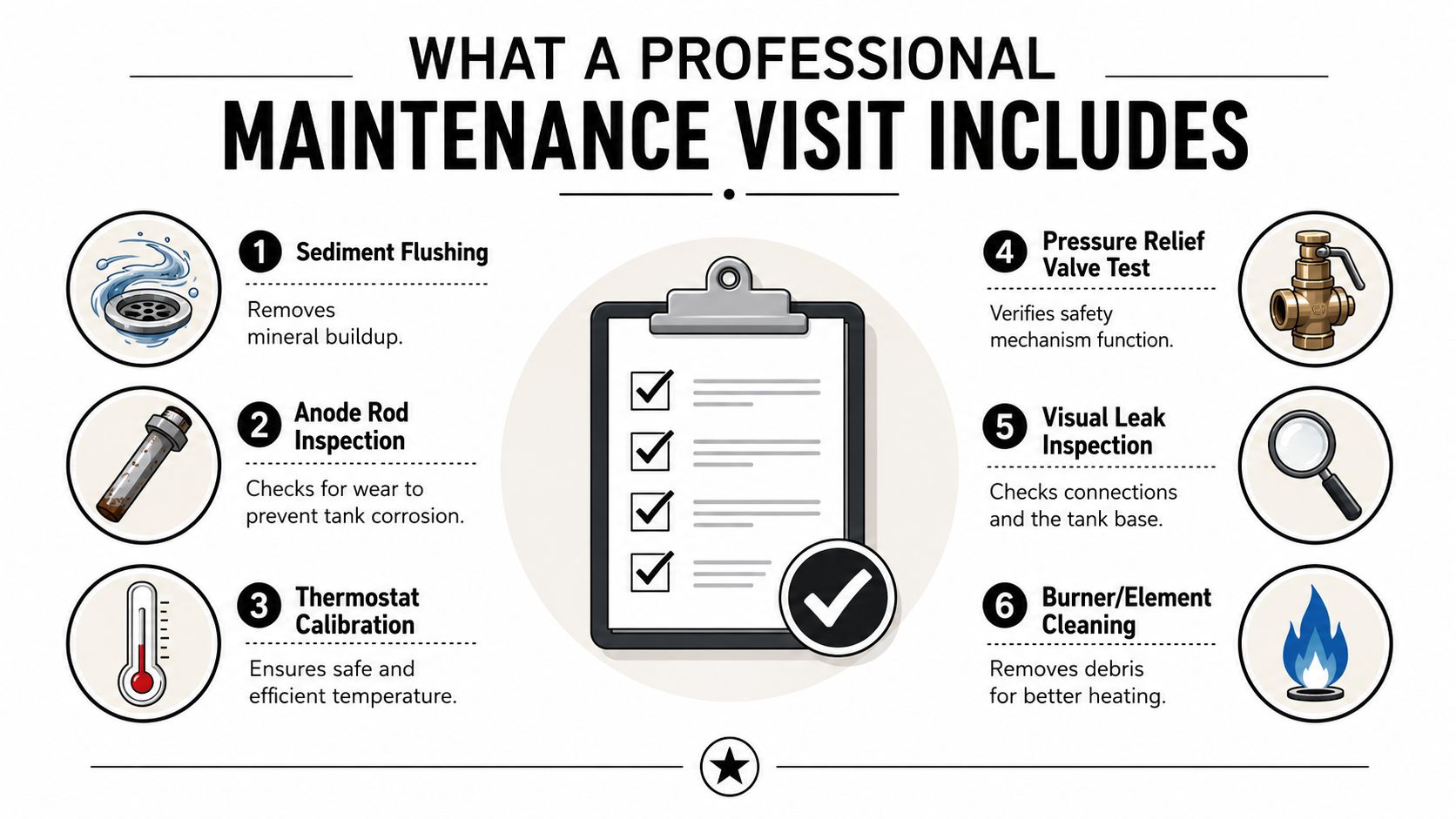
A professional visit should do more than connect a hose and open a drain valve. The technician should inspect the parts that control heat transfer, corrosion protection, pressure safety, combustion, and electrical operation.
The core service tasks
Sediment flushing: Mineral deposits settle inside tank-style heaters and can interfere with heating performance. The technician drains the tank, observes the discharge, and checks whether continued flushing is appropriate for the unit's condition.
Anode rod inspection: The sacrificial rod corrodes before the tank lining does. A technician checks its condition and explains whether replacement is justified, rather than waiting for tank-wall corrosion to become visible.
Temperature and pressure relief testing: The TPR valve is a safety component, not a convenience feature. The technician verifies that it operates correctly and checks the discharge piping for obvious problems.
Leak inspection: Connections, fittings, the tank base, and nearby plumbing receive a visual review. A small fitting leak may be repairable, while moisture at the tank base can indicate a much more serious failure.
Gas combustion and venting checks: Gas models require inspection of the burner area, vent path, and combustion conditions. Improper venting or dirty combustion components create safety concerns that a simple flush won't address.
Electrical review: Electric heaters need inspection of wiring, terminals, heating elements, and thermostat-related components. Loose or damaged electrical connections can affect reliability and create hazards.
A thorough technician should leave documentation showing what was inspected, what was cleaned, the condition of the anode rod and safety valve, and any recommended repairs. That record helps homeowners compare changes over time and gives property managers a service history for each unit.
Ask before approving service: “Does this price include flushing, safety-valve testing, corrosion inspection, and a written condition report?” If the answer is no, you're comparing a limited task with a complete maintenance visit.
Tank vs Tankless Maintenance Costs Compared
Tank and tankless systems don't incur maintenance costs for the same reasons. A tank stores heated water, so sediment collects at the bottom and the anode rod protects the storage vessel. A tankless heater moves water through a heat exchanger, so mineral scale can restrict flow and reduce heat transfer.
| Factor | Tank Water Heater | Tankless Water Heater |
|---|---|---|
| Typical annual professional cost | $100 to $250 | $150 to $350 |
| Main recurring task | Sediment flushing and inspection | Heat-exchanger descaling |
| Corrosion concern | Anode rod and tank-wall corrosion | Internal scale and component wear |
| Service complexity | Generally lower | Higher because descaling uses specialized procedures |
| Arizona concern | Sediment can accelerate wear | Hard-water scale can restrict flow and heating |
| Best cost-control strategy | Flush and monitor the anode rod | Descale and keep filters and vents clear |
The cost difference is justified when the tankless technician performs a complete descaling service, checks the inlet filter, inspects burners or sensors on gas equipment, and verifies safe operation. A tankless unit that receives only a superficial visual check isn't receiving the maintenance its heat exchanger needs.
Tankless owners can use this tankless water heater maintenance checklist when comparing a contractor's scope of work. It helps identify whether a quote includes the components that matter in a mineral-heavy service environment.
Tankless systems may also need attention more often when scale builds quickly. Tank owners shouldn't assume they're protected just because their equipment is less complex. Sediment, corrosion, and a failing safety valve can still produce expensive damage.
Factors That Drive Your Maintenance Bill Up or Down
The same service can take very different amounts of time depending on the installation. A heater in an open garage with accessible shutoff valves is easier to service than one enclosed in a tight closet, attic, or difficult crawl space.
The cost variables that matter most
System type and age: Tankless units generally require more specialized descaling work. Older tank systems may need additional inspection because corrosion, brittle fittings, and neglected components slow the visit.
Fuel source: Gas equipment adds burner, combustion, and venting considerations. Electric equipment shifts attention toward wiring, thermostats, and heating elements.
Water hardness: Arizona mineral buildup can make flushing or descaling more involved. Scale may also appear around fixtures and connections, giving the technician clues about what's happening inside the heater.
Accessibility: Tight clearances increase labor because the technician has less room to connect hoses, remove covers, inspect components, or replace an anode rod.
Service history: A maintained heater is easier to evaluate. A neglected unit may have heavy sediment, seized valves, corrosion, or a drain that won't flow freely.
Location and contractor pricing: Service rates vary by region and company. A quote for Globe, Miami, Superior, or a nearby rural community may reflect travel, availability, and the technician's equipment.
Commercial kitchens and restaurants deserve a separate assessment. High hot-water demand, grease-related conditions around equipment, and business interruption make a planned service schedule more valuable than a residential “wait until it acts up” approach.
DIY Maintenance vs Hiring a Licensed Professional
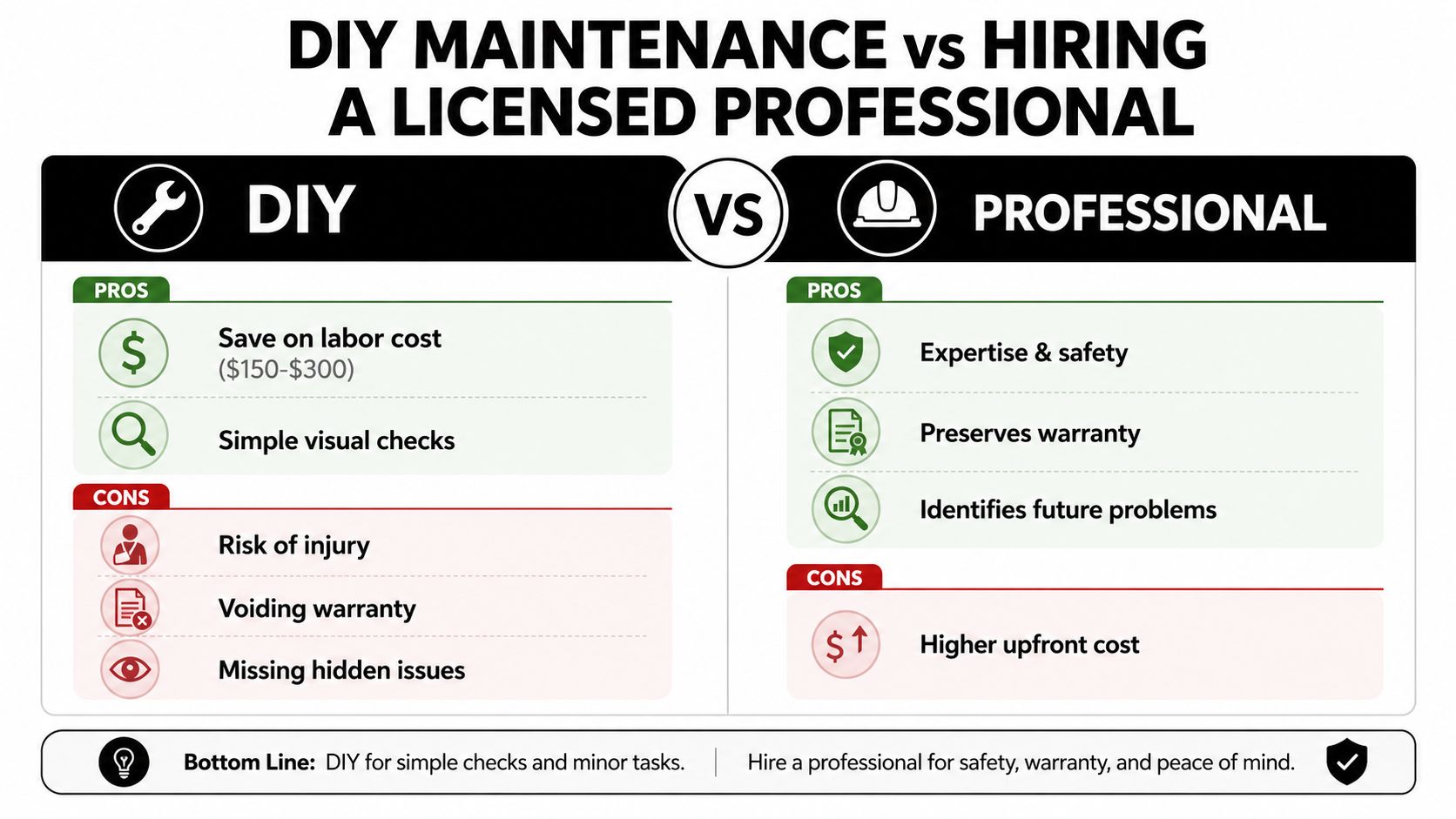
DIY maintenance makes sense for limited observation, not for every service task. A homeowner can look for moisture around fittings, keep the area clear, check for unusual sounds, and inspect an accessible inlet filter on a tankless unit. Those steps help identify trouble early, but they don't replace a complete service visit.
A licensed professional should handle gas lines, combustion testing, venting concerns, electrical component work, anode-rod removal when access is difficult, and any repair involving pressure or leaks. A mistake with gas combustion or electrical connections can create a safety problem that costs far more than the labor saved.
The financial trade-off is straightforward:
DIY advantage: You avoid labor charges for simple visual checks and basic cleaning.
DIY limitation: You may miss scale inside a heat exchanger, corrosion inside a tank, or a valve that looks normal but fails under operation.
Professional advantage: A trained technician combines maintenance with diagnosis. They can connect symptoms, component condition, water quality, and installation problems.
Professional limitation: You pay upfront for labor, tools, experience, and safe testing.
The licensed HVAC technician resource explains why qualification matters for work involving heating, ventilation, electrical, and combustion systems. For Arizona homeowners, the right question isn't whether a homeowner can turn a valve. It's whether the person performing the service can recognize a dangerous condition before restarting the equipment.
Use the visual below as a reminder of that boundary.
For a practical look at professional inspection versus homeowner checks:
When Annual Maintenance Is Not Enough in Hard Water Regions
Annual service is a sensible baseline, not a guarantee that every Arizona system can wait a full year. Hard water can load a tank with sediment or restrict a tankless heat exchanger faster than a lightly used system in a softer-water environment.
Watch the equipment between visits. Reduced hot-water output, slower recovery, fluctuating temperature, unusual popping or rumbling, visible mineral deposits, moisture near the base, and unexplained energy-use changes all justify earlier evaluation. A leak deserves prompt attention regardless of the calendar because water damage can spread beyond the heater.
Tankless units deserve particular scrutiny. Scale inside the heat exchanger can restrict water flow and force the system to work harder, so a homeowner who sees inconsistent temperature or declining flow shouldn't wait for the next annual appointment.
A practical scheduling approach
Start with annual professional service, then adjust based on evidence:
Clean performance: Keep the annual schedule when the technician finds limited buildup and stable operation.
Recurring scale symptoms: Shorten the interval when the unit repeatedly shows reduced flow, temperature swings, or mineral deposits.
High household demand: Consider more frequent checks when several occupants use hot water heavily throughout the day.
Multiple rental units: Property managers should track each heater separately, record service findings, and schedule attention before seasonal demand exposes weak equipment.
Current pricing references place routine professional visits around $100 to $350, with tankless descaling commonly around $150 to $350 and potentially reaching $300 to $600 where frequent cleaning is needed, according to this hard-water maintenance pricing guide. The right frequency is the one that prevents scale-related failure without paying for unnecessary visits.
The High ROI of Anode Rod Replacement and Other Key Tasks
Anode-rod condition should lead your maintenance decisions because it determines how long the tank walls remain protected. A magnesium rod may cost $20 to $50 for the part, while professional replacement commonly runs $150 to $300 installed. Full water-heater replacement can cost $1,000 or more, so replacing a consumed rod protects a far larger investment, according to this technical explanation of anode-rod replacement economics.
The rod corrodes instead of the tank. In Globe and other hard-water areas, mineral deposits can hide heavy wear and shorten the time available to act. If inspection shows the rod is mostly consumed, replacement belongs ahead of optional efficiency work. Waiting until the tank leaks eliminates the preventive option.
Rank findings by financial risk
Use this order when reviewing a service report:
- Safety risk: Address pressure-control or combustion findings first. A defective TPR valve or unsafe burner and venting condition requires prompt correction.
- Leak risk: Prioritize a depleted anode, corrosion, or sediment-related damage that threatens the tank. A tank leak usually turns maintenance into replacement.
- Replacement risk: Flush sediment when buildup is restricting heating performance or stressing components. Controlled buildup can also reduce wasted energy, with avoided electricity costs estimated at up to about $40 per year.
- Efficiency impact: Handle deposits, failed elements, loose connections, or thermostat problems after safety and leak threats are controlled.
For a Globe homeowner, five years of postponing a $150 to $300 installed anode replacement can end with a $1,000 or more heater replacement instead of a planned repair. Ask the technician to document rod condition, tank corrosion, and the reason for each recommendation. That converts a maintenance invoice into a clear risk-based decision.
Maintenance vs Replacement and Your Next Steps
Maintenance makes financial sense when the tank is sound, the failure is isolated, and the repair preserves reliable operation. Replacement becomes more compelling when the tank itself leaks, corrosion is widespread, or repeated repairs are approaching a substantial share of a new installation's cost.
Before booking service, note the heater type, fuel source, approximate age, recent symptoms, installation location, and whether your home has visible mineral buildup. Ask for a written scope covering flushing or descaling, anode-rod condition, TPR-valve testing, leak inspection, combustion or electrical checks, and a clear separation between required repairs and optional improvements.
For replacement planning, review this water heater replacement price resource and compare the full ownership picture, not just the equipment price. Cobre Valley Air LLC, Arizona license ROC 339078, serves Globe, Miami, Superior, and surrounding communities with tank and tankless water heater repair, maintenance, and replacement assessments.
Commercial owners and property managers should request documented service records and a unit-by-unit schedule. Homeowners should act on leaks, pressure concerns, temperature changes, and unusual noises before those symptoms become an emergency.
Cobre Valley Air LLC provides tank and tankless water heater maintenance, repair, and replacement assessments, with licensed technicians who can evaluate safety components, sediment, scale, and installation conditions. Visit Cobre Valley Air LLC to schedule a no-pressure evaluation for your Arizona home or business.