



In Arizona, a professionally installed single-zone mini split usually lands between $3,000 and $8,000. That number is useful, but it can also mislead you if you don't understand what's included, especially when electrical work, line routing, permits, and labor complexity start showing up in the quote.
A lot of homeowners start looking into mini splits for one uncomfortable room. It might be the upstairs bedroom that never cools down, the garage conversion that was never tied into the duct system, or a home office that bakes all afternoon. The system sounds simple enough. One outdoor unit, one indoor head, done. Then the quotes come in, and the spread can feel all over the place.
That's where most online pricing guides fall short. They give you an average, but they don't tell you why one install is straightforward and another turns into a much bigger project. In Arizona, that difference matters. Older homes in places like Globe and Miami often need electrical upgrades before a mini split can be installed safely. If that isn't discussed up front, sticker shock shows up later.
This guide is written the way a seasoned HVAC tech would explain it at the kitchen table. No fluff. Just the key cost drivers behind mini split installation cost, what usually belongs in the quote, what often gets missed, and how this ties into bigger comfort decisions like quality air conditioning repairs, AC installation, and AC maintenance, along with heat pumps furnaces and duct design.
Why Are You Considering a Mini Split
If your central system handles most of the house but leaves one area miserable, a mini split is often the right tool for the job. That's common in bonus rooms, additions, older homes with uneven airflow, and spaces where ductwork was never designed correctly in the first place.
Mini splits also come up when homeowners are tired of patching the same comfort complaint. You can keep adjusting registers, replacing thermostats, and chasing hot and cold spots, but sometimes the core issue is that the room needs its own dedicated heating and cooling. A ductless system solves that without tearing the whole house apart.
The problem usually starts with one room
A few situations come up again and again:
- Hot upstairs bedrooms: The central AC runs, but the second floor still stays warmer than the rest of the house.
- Garage conversions and additions: The space was finished later, and the original duct design never accounted for it.
- Home offices with electronics: Computers, monitors, and poor sun control add heat fast.
- Older homes with weak airflow: The equipment may still run, but the duct system doesn't deliver air where it should.
When that's your situation, a mini split isn't just a trendy add-on. It can be the cleanest fix.
Practical rule: If one area is uncomfortable year after year, and the rest of the house is mostly fine, you probably don't need to rebuild the whole HVAC system first. You need the right solution for that zone.
Mini splits work best when the system is sized and planned correctly
The install itself is only part of the story. A good result depends on selecting the right capacity, placing the head where airflow helps, and making sure the electrical and drainage details are handled cleanly. That's why it helps to understand what a ductless mini split system is before you compare quotes.
Mini splits also fit into a bigger comfort strategy. Sometimes they solve a standalone room problem. Other times they complement broader work like air conditioning repairs, AC installation, AC maintenance, heat pumps furnaces and duct design. If the house has chronic airflow issues, a mini split may be part of the answer, not the whole answer.
The Big Picture Average Installation Costs
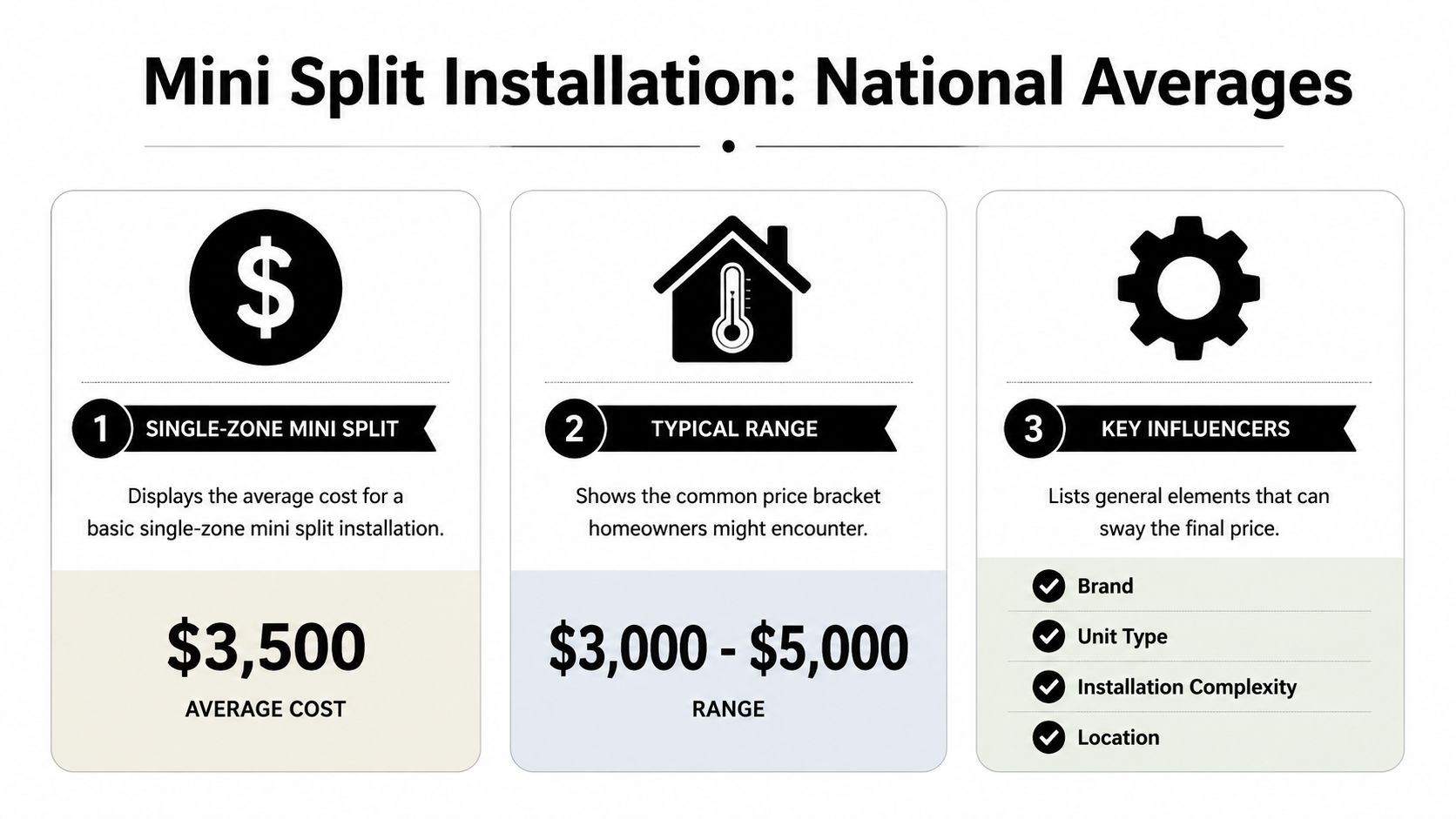
A homeowner in Globe or Miami might look up mini split pricing, see a low national average, then get a quote that comes in thousands higher. That gap usually comes from one problem. The published average often reflects a basic single-zone install, while the actual job includes electrical work, a longer line set, roof or attic access, condensate management, or multiple indoor heads.
National pricing still gives you a starting point. ACS HVAC's Arizona mini split cost overview puts Arizona installs in the $3,000 to $8,000 range, depending on system size, brand, labor, and job complexity. In the field, that range makes sense. A straightforward install in an accessible room lands very differently than a system going into an older home with a full panel and limited wall access.
Single-zone and multi-zone are priced on different logic
A single-zone system serves one area with one indoor head. That is the number many online averages are built around. Searching for “average mini split installation cost” often returns a low number that reflects only simple, single-zone jobs, which can be misleading.
Multi-zone work raises the price for practical reasons. The installer has more refrigerant piping to run, more indoor units to mount, more communication wiring to manage, and more time in startup and testing. The outdoor unit is larger too, and the layout has to be planned carefully so each room gets the right capacity. If the system is oversized or undersized, comfort suffers and efficiency drops. Proper HVAC system sizing for your home matters before anyone talks about final price.
Whole-home ductless projects can climb fast. So can “just one more head” additions.
Budgeting from a bare-bones national average is one of the fastest ways to get sticker shock on a mini split quote.
Arizona pricing needs local context
Arizona homes bring cost factors that national averages usually gloss over. Older homes in this area often need electrical upgrades before the mini split can be installed safely. Some need a new dedicated circuit. Some need panel work. In a few cases, the service has to be evaluated before the HVAC side can even start.
Then there is access. Block construction, finished garages, long exterior runs, and attic heat all affect labor time. In towns like Globe and Miami, the equipment also has to perform in extreme summer conditions, so system selection is not just about the cheapest unit on paper.
The short version is simple. A national average is a headline. Your actual installed price depends on the house, the electrical system, the route to the indoor unit, and whether the job is truly simple or only looked simple online.
Deconstructing the Quote Equipment vs Labor
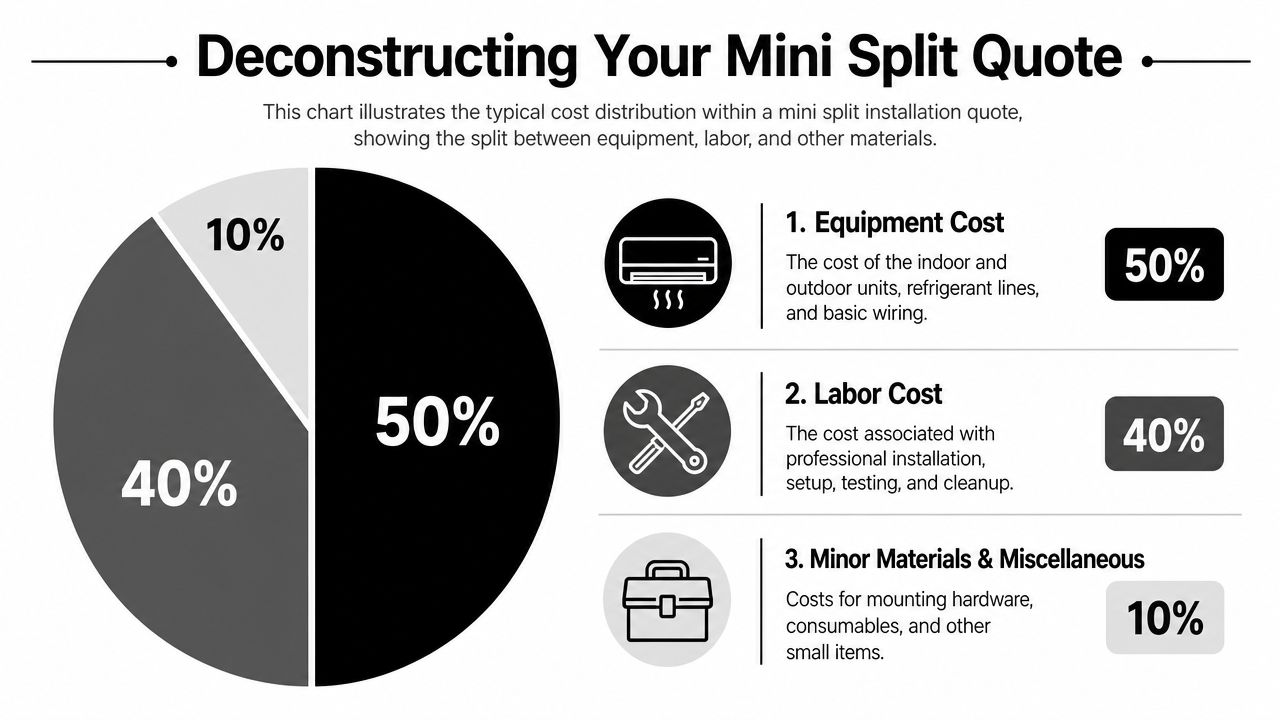
A quote can look straightforward until you see how much of the price has nothing to do with the indoor unit hanging on the wall. The equipment matters, but the install work is what separates a clean, reliable job from one that turns into repeat service calls.
According to Angi's ductless mini split installation cost guide, labor costs range from $300 to $2,000 for a single-zone system and $700 to $3,000 for multi-zone setups, with HVAC contractors charging $50 to $100 per hour for specialized work. The same source says the single-zone mini-split unit itself costs between $1,300 and $4,000.
What you're paying for in the equipment
Equipment pricing usually comes down to four things. Capacity, efficiency rating, cold and heat performance, and brand support after the sale.
Homeowners often start by comparing logos. In practice, the better question is whether the system is a good fit for the room, the insulation level, the sun exposure, and how the space is used. A bargain unit that is oversized, undersized, or hard to get parts for can cost more over time than a better-matched system with a higher upfront price.
Brand tier still affects the quote. Entry-level units usually cost less up front, while better-known brands often charge more for inverter performance, warranty support, quieter operation, and local parts availability. In Arizona, that support matters. If a unit fails in July, waiting on uncommon parts is not a small problem.
Proper sizing has a direct effect on equipment cost and comfort. A contractor should be working from room load, not rule-of-thumb guesses. If you want to understand that part before approving a system, read how to size an HVAC system for your home.
What you're paying for in the labor
Labor is where quotes spread out. Two systems with similar equipment can have very different installed prices because one home is simple and the other is a half-day fight with block walls, a long line-set route, and limited access.
A proper install includes mounting the indoor and outdoor units, running the refrigerant lines, communication wire, drain line, line-set cover when needed, evacuation, pressure testing, startup, and final performance checks. It also includes making service access possible later. That part gets skipped on cheap jobs more often than homeowners realize.
Labor usually goes up for reasons like these:
- Long or difficult line-set runs: More distance means more material, more time, and more cleanup.
- Masonry or block construction: Common in Arizona homes, and slower to drill and finish cleanly.
- Challenging indoor unit placement: High walls, finished spaces, and tight clearances all add time.
- Multi-zone coordination: Each head adds refrigerant piping, controls, drain work, and testing.
- Code and finish details: Disconnects, condensate routing, wall protection, and clean exterior presentation all take labor.
I've seen homeowners get hung up on the box price and miss the part that keeps the system from leaking water into a room or short-cycling in peak summer heat. Good labor is not just installation. It is setup, testing, and making sure the system can be serviced later without tearing into finished areas.
Cheap labor usually shows up later as poor drainage, noisy line sets, weak airflow, nuisance faults, or a system that never performs the way the quote promised.
Hidden Factors That Impact Your Final Price
A quote can look reasonable until the installer opens the panel, checks the line-set route, and sees what the house will require. That is where sticker shock usually starts. In Arizona, the biggest misses are often not the mini split itself. They are the electrical and installation details that online averages tend to gloss over.
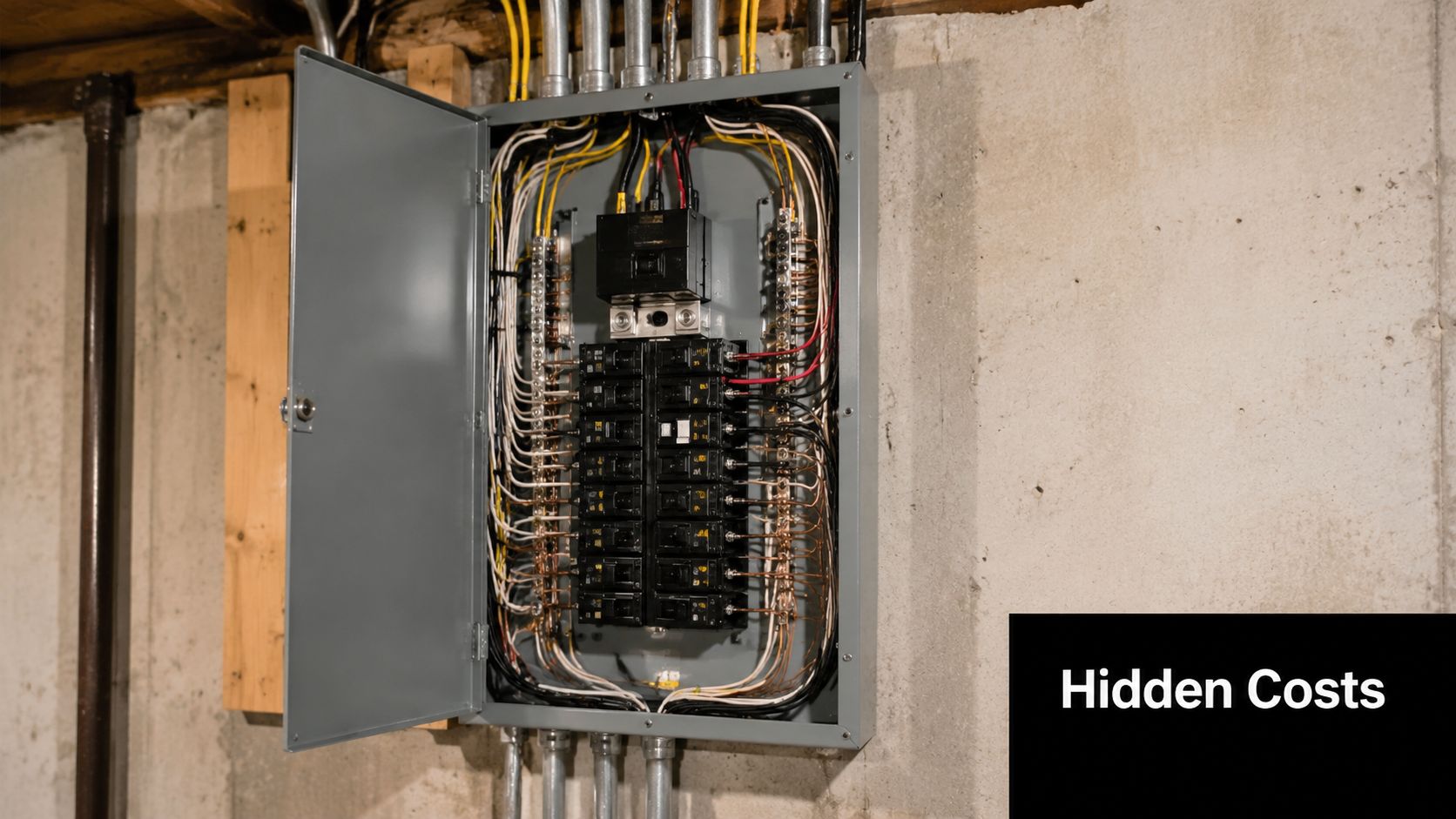
Electrical work is the surprise I see most often in older homes. Filterbuy's review of mini split installation cost hidden electrical upgrades points out that many national price ranges leave out added electrical costs, especially when a home needs a new dedicated circuit, panel work, or a longer run for wire and conduit. That gap is a big reason homeowners expect one number and get another.
In Globe, Miami, and other older Arizona neighborhoods, panel space is a common problem. Some homes do not have an open breaker space. Some have the space but not the right setup for a clean 240V circuit. Some need extra conduit because the shortest route is not the legal or practical route. None of that is cosmetic. It affects safety, code compliance, and whether the system can run without nuisance trips.
A few items regularly push the price higher:
- New dedicated circuit: A mini split cannot just share whatever circuit is nearby.
- Panel changes: Tandem breakers, subpanel work, or load review may be needed before the unit can be added.
- Long electrical runs: Detached rooms, additions, and awkward condenser locations use more wire, conduit, fittings, and labor.
- Code corrections tied to the install: Grounding, disconnect placement, and protection for exterior runs all have to be handled correctly.
The refrigerant and drain path can also change the number more than homeowners expect. A clean straight shot through an exterior wall is one price. A route that has to cross an attic, work around a garage, drop through finished spaces, or avoid a structural obstruction is another. If the drain cannot fall naturally, the job may need a condensate pump. That adds material, labor, and one more part that can fail later.
Mounting details matter too. Wall brackets, roof protection pads, vibration control, line-hide covers, and patching or finish work are easy to leave out of a quick verbal estimate. They still cost money, and they affect how the finished job looks and how serviceable it will be in a few years.
A good mini split quote spells out what is included, what is assumed, and what site conditions could change the final number.
Here's a good visual explanation of why install complexity matters before you compare bids:
Permits are another place where low advertised prices fall apart. Costs vary by area, but permit fees and inspection requirements are real parts of the job, not padding. If a quote leaves permits vague or skips the topic altogether, ask for a clear answer before the work starts.
The pattern is pretty consistent. Homeowners usually do not get blindsided by one huge mystery charge. They get hit by three or four smaller items that should have been discussed during the first site visit. That is why an on-site estimate matters so much, especially in older Arizona homes where electrical upgrades are common.
Arizona Pricing What Globe and Miami Residents Should Know
Arizona isn't just another line on a national cost chart. The climate is harder on equipment, and the install conditions can be more demanding than the online averages suggest. If you live in Globe, Miami, or Superior, local pricing makes more sense than broad national estimates.
For Arizona specifically, a full licensed mini-split installation averages about $7,795, according to a video breakdown of Arizona mini split installation costs. That same source says a two-zone installation usually takes 8 to 16 hours of labor, with labor costs ranging from $1,872 to $3,615.
Why Arizona quotes often run higher
Arizona heat changes the conversation. Homeowners don't just want a system that cools eventually. They want a system that keeps up through the toughest part of the season without running poorly or creating high utility bills. That usually pushes the discussion toward better equipment selection and careful sizing.
Labor also matters more locally than many homeowners realize. Licensed HVAC work in Arizona carries a real cost because the job has to be installed, tested, and finished correctly under local conditions. That's especially true when the home has older infrastructure or the install requires more than a simple exterior wall mount.
The homes in this region add their own challenges
In the Cobre Valley area, install conditions can vary a lot from one home to the next. Some houses are straightforward. Others have older electrical panels, difficult wall construction, additions built at different times, or access limitations that turn a “simple mini split” into a more involved project.
That's why the best quotes usually come from in-person evaluation, not from a generic phone estimate.
A local homeowner should expect a contractor to look at:
- Panel condition and available capacity
- Indoor head placement and airflow path
- Outdoor unit location and service clearance
- Line routing through walls, ceilings, or exterior surfaces
- How the mini split fits with existing AC installation and maintenance planning
In Arizona, the right mini split install isn't just about getting cold air. It's about getting a system that holds comfort in extreme heat and can be serviced properly later.
Mini splits also don't replace the need for broader HVAC judgment. In some homes, the better investment may still involve air conditioning repairs, AC installation, AC maintenance, heat pumps furnaces and duct design, especially if the house has larger system-wide comfort problems.
Saving Money Rebates Financing and DIY
Sticker shock usually shows up after the quote, not before. A homeowner sees a decent equipment price, then the actual total climbs once financing costs, rebate limits, permit requirements, and electrical corrections are added in. In older Arizona homes, that last item is the one people miss most.
Start with rebates, but verify the fine print
Rebates can lower the net cost, but only if the system, installer, and paperwork all meet the program rules. Some incentives apply only to certain efficiency ratings or matched equipment combinations. Some require proof that the job was installed to code and permitted correctly.
Ask for rebate information tied to the exact model on your quote, not a general promise that “this should qualify.” That keeps you from counting savings that never materialize.
Financing can help if the system needs to go in now and cash flow matters. It can also make an expensive quote look easier than it really is. Review the interest rate, promotional period, fees, and total paid over time. A lower monthly payment is not the same thing as a lower project cost.
If you want to compare local options, start with a mini split installation quote from a local contractor that clearly separates equipment, labor, electrical work, and permit-related charges.
DIY cuts labor cost, but it adds risk fast
Homeowners look at DIY for one reason. Labor is a real part of the bill.
That trade-off can make sense for a very handy person on a simple project, but mini splits stop being simple once the install moves beyond mounting hardware. The money saved up front can disappear if the system is oversized, undercharged, poorly drained, or wired incorrectly. In Arizona heat, small install mistakes get exposed quickly.
DIY usually becomes a problem in these areas:
- Electrical work: Older homes may need a new breaker, disconnect, or panel work before the system can be installed safely.
- Refrigerant setup: Vacuum, flare, and charge mistakes can shorten equipment life and cause performance issues from day one.
- Condensate management: Bad drain routing can stain walls, damage finishes, or create recurring leak calls.
- Warranty terms: Some manufacturers reduce coverage or make claims harder if the startup and install were not done by a licensed contractor.
- Permits and inspection: A skipped permit can create trouble later during resale or insurance questions.
A cheap install is expensive when it has to be redone.
Saving money means avoiding the wrong kind of cheap
The best value usually comes from a clean scope and a realistic quote. That means knowing what is included, what could change, and which costs are likely in your house specifically. For many homes in Globe and Miami, that includes older electrical service, long line runs, or wall conditions that make a basic install less basic.
A good contractor should be willing to explain where you can save and where cutting corners creates future repair bills. Sometimes the right call is choosing a single-zone system now and planning a second phase later. Sometimes it means paying for panel upgrades once so the system can run safely and pass inspection. Those are practical decisions, not upsells.
Compare total ownership cost, not just the number at the bottom of page one. A properly installed system has a better shot at delivering the efficiency, comfort, and service life you are paying for.
Your Next Step Getting a Precise Quote
The lesson of mini split pricing is simple. There isn't one universal number that fits every house. The final cost depends on the equipment, the labor, the electrical setup, the route of the lines, and whether the installer is pricing a clean, code-compliant job or just trying to look cheap on paper.
That's why the best next step is an in-home quote, not more guessing. A proper visit should include the room itself, the electrical panel, the outdoor unit location, line routing, drainage plan, and whether the mini split is the right answer by itself or part of a larger comfort strategy.
If you're comparing bids, ask each contractor to spell out what is and isn't included. Ask about permits. Ask whether electrical work is assumed or excluded. Ask how the system is being sized. If you need a local starting point for service in your area, review mini split installation near me and use that conversation to get a detailed scope, not just a headline number.
A clear quote should leave you with fewer questions, not more. That's the difference between buying confidently and bracing for sticker shock later.
If you want a no-pressure estimate from Cobre Valley Air LLC, schedule an in-home evaluation and get a quote that accounts for actual job conditions, including electrical needs, placement, airflow, and long-term serviceability. The team serves Globe, Miami, Superior, and nearby Arizona communities with practical guidance on mini splits, quality air conditioning repairs, AC installation, AC maintenance, heat pumps furnaces and duct design.