



You turn on the shower before work, let it warm up, and instead of clear water you get a rusty brown stream hitting the tub. Then your mind starts racing. Is it the city water, the pipes, the heater, or something worse?
If you're in Globe, Miami, or Superior, this problem is familiar for a reason. Arizona hard water is rough on water heaters. Minerals settle faster, tanks work harder, and corrosion shows up sooner than many homeowners expect. Most of the time, brown hot water has a clear cause and a practical fix. The key is figuring out whether you're dealing with tank sediment, internal rust, or a water chemistry issue that a basic flush won't solve.
One quick note before we get into it. Cobre Valley Air handles water heaters, but also takes care of the comfort systems that keep local homes running year-round, including quality air conditioning repairs, AC installation, AC maintenance, heat pumps, furnaces, and duct design. In a place like Globe, a home rarely has just one system that matters.
That Unsettling Moment Your Hot Water Turns Brown
A lot of homeowners first notice it in the shower. Others catch it at the kitchen sink while rinsing a pan or filling a mug. The cold water looks normal, but the hot side comes out brown, yellow-brown, or rusty-looking. It's ugly, it can stain fixtures, and it makes people wonder if the whole plumbing system is failing.
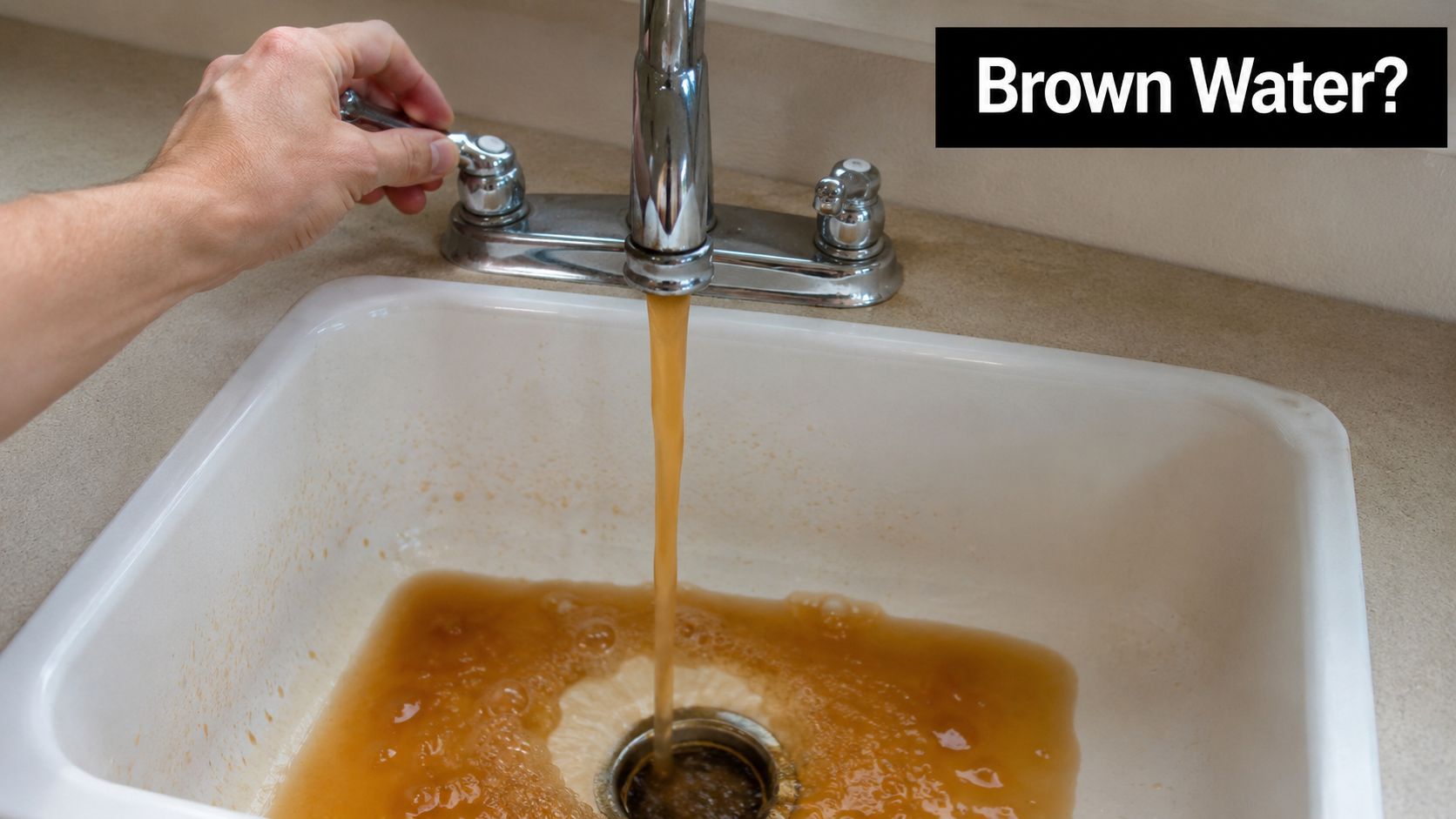
The good news is that this is usually a common water heater problem, not a mystery. In this area, hard water leaves mineral buildup behind year after year. That buildup settles, bakes onto tank surfaces, and eventually starts affecting water color. If the heater is older, rust can join the party.
What homeowners in Globe often notice first
Usually it starts one of a few ways:
- Morning surprise: The first hot water use of the day looks rusty, then seems a little better later.
- Whole-house pattern: Every hot faucet has the same discoloration, while cold water still looks clear.
- After recent work nearby: The problem showed up after utility work, hydrant flushing, or a pressure change.
- After a DIY flush: The water looks worse instead of better.
Brown hot water is alarming, but it doesn't automatically mean you need a full repipe or a full system overhaul.
What matters most is where the discoloration shows up. If it's only on the hot side, the water heater becomes the first suspect. If you want the system checked professionally, local water heater service is the right place to start.
Why local water makes this more common
Homes in Globe, Miami, and Superior deal with hard water as a daily reality. That means minerals like calcium and magnesium don't just pass through without trouble. Once they're heated over and over inside a tank, they settle out and create the gritty layer that often leads to brown hot water later on.
That local context is why generic online advice often misses the mark here. In Arizona, the answer to why is my hot water brown usually starts with the water heater, but the exact cause still needs a little diagnosing.
A Quick Two-Minute Diagnosis Test
You don't need special tools to narrow this down. You just need one sink, one shower, and about two minutes. The goal is simple. Figure out whether the discoloration follows the hot water only or whether it affects the home's water supply more broadly.
Do this in order
- Pick the faucet where you noticed it first. Run the hot water until the brown color appears.
- Shut off the hot side. Run cold water only from that same fixture.
- Compare the color. If cold is clear and hot is brown, that's a strong clue.
- Check a second fixture. Use another bathroom sink or the kitchen faucet.
- Repeat hot, then cold. You're looking for a pattern across the house, not one isolated faucet.
If every hot tap shows discoloration and the cold side stays clear, the heater is the likely source. If both hot and cold are discolored, you may be looking at supply-side disturbance, pipe corrosion, or a broader plumbing issue.
Diagnosing Your Brown Water Problem
| Symptom | Likely Cause |
|---|---|
| Hot water is brown, cold water is clear at multiple faucets | Water heater sediment, rust, or internal corrosion |
| Hot and cold water are both brown | Water supply disturbance or plumbing issue beyond the heater |
| Only one faucet shows discoloration | Problem at that fixture or nearby piping |
| Brown water appears briefly after municipal activity, then clears | Temporary disturbance from line work or hydrant flushing |
| Brown water returns again and again on the hot side | Ongoing heater problem or water chemistry issue |
Practical rule: If cold water stays clear everywhere and only hot water turns brown, start with the heater before you start worrying about the entire house.
A quick visual test can save you a lot of guessing. It also helps you decide whether simple upkeep might solve it or whether you need a closer look. For more background on upkeep that helps prevent this kind of issue, water heater maintenance guidance for local homes is worth reviewing.
What not to assume yet
Don't assume that brown water always means the tank is dead. Don't assume a single flush will fix every case either. Some tanks are full of loose sediment. Others are rusting internally. And some homes have clear cold water that only turns brown once heat changes the chemistry.
That last one is where many homeowners get bad advice.
The Main Culprits Behind Rusty Hot Water
If your two-minute test points to the water heater, the cause is usually sitting inside the tank. Think of the heater like a tea kettle that never gets a real break. It heats mineral-heavy water over and over, and the leftover material settles where you can't see it.
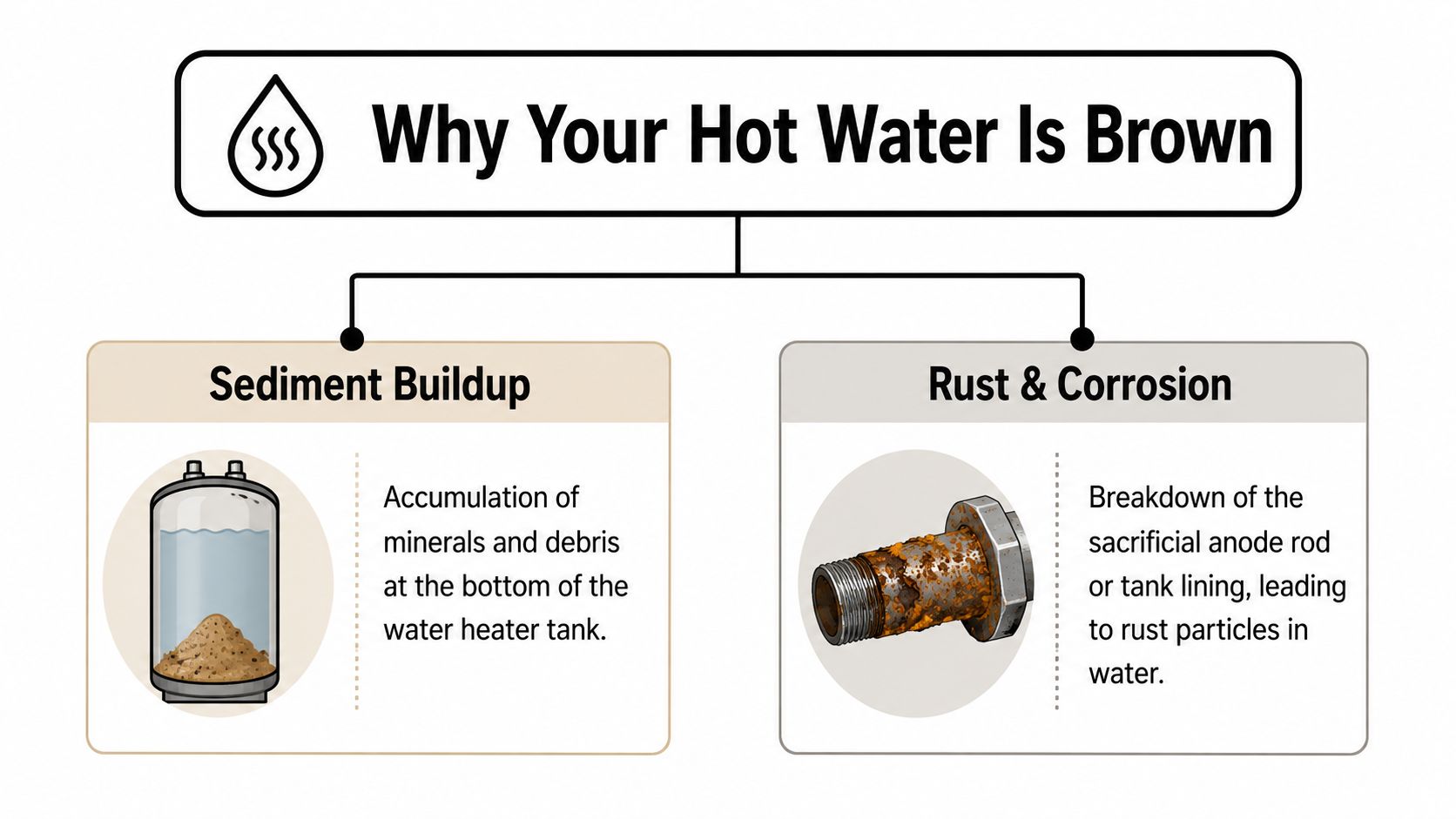
According to Aqua Pump on brown hot water from water heaters, the primary cause of brown hot water, while cold water remains clear, is the accumulation of sediment and rust at the bottom of the water heater tank. As water is heated, minerals settle and form a discolored layer that gets mixed into the water supply when a tap is turned on.
Sediment buildup in hard water areas
This is the big one in Globe, Miami, and Superior.
As the tank heats water, minerals naturally present in the supply settle to the bottom. Over time, they create a layer of sediment. Every time cold water enters the tank during a draw, that turbulence stirs some of that material into the outgoing hot water.
Signs that point toward sediment include:
- Brown tint mostly on hot water
- Popping or rumbling sounds from the heater
- Water that improves briefly after running
- A heater that hasn't been serviced in a long time
Sediment can also make the heater less efficient because it creates a barrier between the burner or heating element and the water.
Rust and internal corrosion
The second culprit is internal rust. Steel tank water heaters rely on an anode rod to take the corrosion hit before the tank does. That rod is sacrificial by design. Once it's used up, the tank lining and steel body become more vulnerable.
When rust starts developing inside the tank, flakes and discoloration can move into the hot water stream. This isn't the same thing as a little debris in one branch line. If the rust is coming from the heater, it often shows up across the whole house on the hot side.
The anode rod problem homeowners don't see
Most homeowners never see the anode rod, and that's exactly why it gets overlooked. But it's one of the most important parts in the whole tank. A failing rod can let corrosion move faster than expected, especially in hard water conditions.
If the tank is corroding from the inside, flushing may help for a short time, but it won't reverse metal loss.
That trade-off matters. Sediment can often be removed. A rusting tank can only be managed for so long.
Immediate Safety Steps and Temporary Fixes
The first move is simple. Don't drink brown hot water and don't cook with it. That water may contain rust, sediment, or other contaminants that you don't want in your coffee pot, pasta water, or baby bottles.

For homeowners in this region, hard water makes prevention and maintenance more important. Fenwick Home Services on brown discolored hot water notes that brown hot water should not be used for drinking or cooking until resolved. For homeowners in areas with hard water like Globe, Miami, and Superior, annual water heater servicing, including flushing and anode rod inspection, is critical to prevent corrosion-induced discoloration.
What you can do right away
Start with the least risky steps.
- Run hot water briefly: If the discoloration came from a temporary disturbance, it may clear after several minutes.
- Check the cold side too: If cold water is also discolored, stop blaming the heater alone.
- Avoid using appliances: Don't run the dishwasher or washing machine with brown hot water unless you want stained loads or sediment in valves.
- Hold off on drinking or cooking: Use clear cold water from a confirmed clean source until the issue is solved.
A basic tank flush can help sometimes
If the problem is loose sediment, a tank flush may improve things. The short version is to shut the heater down, let it cool, connect a hose to the drain valve, and drain water from the tank until it runs clearer. That's the standard first attempt for sediment-heavy tanks.
What works:
- Light to moderate sediment: A flush can remove loose buildup and improve water clarity.
- Routine maintenance: Periodic flushing helps keep layers from getting too thick.
What doesn't work:
- Severe corrosion inside the tank
- Iron problems coming from the water itself
- Very old tanks with heavy scale that won't break loose cleanly
Before doing any mechanical work around home systems, basic safety matters. If you're working around HVAC equipment or any powered mechanical system in general, maintenance safety practices from 1Build emphasize shutting off power and using proper PPE such as gloves and safety goggles. Water heaters deserve the same mindset. Hot water, pressure, gas, and electricity aren't forgiving.
This walkthrough gives a visual sense of the process:
One DIY mistake that can backfire
A lot of homeowners reach for vinegar because it sounds harmless. On an older tank, that can be a mistake. If the lining is compromised or the anode rod is already in bad shape, acidic cleaning can strip away protective buildup and expose fresh metal.
If the water gets darker after a DIY cleanout, stop. That's not the moment to keep experimenting.
When a DIY Fix Is Not Enough
Some brown water problems are maintenance issues. Others are warning signs. If the water keeps turning brown after flushing, returns quickly, or comes with banging sounds from the tank, you're likely past the easy fix stage.
Aging tanks are where I'd be most cautious. Once corrosion is established, you're not cleaning a healthy surface. You're dealing with a tank that may be wearing out from the inside.
Signs the problem is beyond a simple flush
Here's when I'd stop treating it like a weekend project:
- Brown hot water comes back fast
- The heater makes popping or knocking sounds
- You see signs of age or corrosion around the unit
- The drain runs dirty no matter how long you flush
- The water changed after a DIY vinegar treatment
- You suspect the color appears only after heating, not before

The iron issue that gets missed
Not every case of brown hot water starts as sediment inside the tank. A more nuanced problem is dissolved iron in otherwise clear cold water. Once that water is heated, the iron can precipitate into visible rust-colored particles.
According to this plumbing diagnostic discussion on heated iron precipitation, high iron concentrations in clear cold water can precipitate into visible rust only upon heating. In these cases, which account for up to 30% of "brown hot water" complaints in some areas, flushing the tank fails because the root cause is in the water chemistry, often requiring a whole-house iron filter.
That's why a flush sometimes seems to help for a day and then the problem returns. The tank wasn't the root cause. The heater only revealed it.
If clear cold water turns brown almost instantly after heating, the answer may be filtration, not just flushing or replacing the heater.
Why professional diagnosis saves money
The wrong diagnosis gets expensive fast. Homeowners replace heaters they didn't need to replace, or they keep flushing a tank that isn't the actual source. A proper inspection can tell the difference between sediment, anode failure, tank corrosion, and source-water iron.
If replacement does turn out to be the right move, water heater installation options near Globe should include sizing, code compliance, and a realistic look at water quality conditions in the home.
Preventing Brown Water in Your Arizona Home
The best fix for brown hot water is catching the conditions that cause it before they show up at your tap. In Globe, Miami, and Superior, that means planning around hard water instead of pretending your heater is operating in mild conditions.
Build a simple maintenance routine
A practical prevention plan looks like this:
- Schedule annual service: A professional flush removes sediment more thoroughly than a quick partial drain.
- Inspect the anode rod: This is one of the best ways to slow internal corrosion before the tank body starts rusting.
- Pay attention to water changes: If the hot water shifts in color, smell, or clarity, act early.
- Consider water treatment when needed: If iron or hard water is pushing the problem, conditioning or filtration may solve the root cause.
That approach helps protect more than the heater. It also helps fixtures, valves, appliances, and laundry.
Be careful with DIY shortcuts
One overlooked problem is the vinegar flush. According to this discussion of post-flush brown water and anode issues, a DIY vinegar flush can react with old anode rods or corroded tank linings, accelerating rust release and making water even browner. This happens because the acid dissolves protective mineral layers, exposing fresh metal to oxidation, a common issue in 25% of post-flush complaints.
That doesn't mean every DIY flush is wrong. It means older tanks need judgment. If a heater is already compromised, aggressive cleaning can uncover more corrosion than it removes.
Think of the whole home, not just one tank
Arizona homeowners do better when they treat maintenance as a full system habit. Water heaters need flushing and inspection. HVAC systems need regular service too. ENERGY STAR recommends checking central air conditioner, furnace, and heat pump filters once a month, and outdoor cooling equipment benefits from clear space and coil rinsing as covered by Carrier's HVAC maintenance guidance. The same mindset applies across the house. Small routine care prevents ugly surprises.
Homes in Globe last longer when owners stay ahead of scale, airflow restrictions, and corrosion instead of waiting for breakdowns.
Brown hot water usually starts as a maintenance problem. If you deal with it early, it stays manageable. If you wait, it can turn into a leaking tank, damaged fixtures, and an emergency replacement at the worst time.
If your hot water is brown in Globe, Miami, or Superior, Cobre Valley Air LLC can help you get a clear diagnosis and a practical fix. Their team handles water heater service and replacement, along with quality air conditioning repairs, AC installation, AC maintenance, heat pumps, furnaces, and duct design for Arizona homes that need reliable comfort year-round.