


National averages for the average cost to fix AC land around $350 to about $483, but real-world bills can range from $130 for a minor fix to over $2,000 for major component failures. If your air conditioner just quit in an Arizona summer, that spread probably feels frustrating, because the price depends far more on the exact failure, labor time, airflow conditions, and system age than on any single “average.”
When a house in Globe, Miami, or Superior starts heating up fast, most homeowners want one straight answer: what's this going to cost me? The honest answer is that a simple electrical issue can stay relatively manageable, while a compressor, coil, or refrigerant-related problem can change the conversation quickly.
Arizona adds another layer. Desert heat exposes weak motors, dirty coils, undersized ductwork, and poor airflow fast. A system may look like it has “an AC problem” when the root issue is really static pressure, a starved return, a duct restriction, or an oversized or undersized installation that's been hard on components for years. That's why repair pricing can vary so much from one home to the next.
Decoding the Real Cost of an AC Fix
It is 6 p.m. in Globe, the outdoor temperature is still high, and the AC starts blowing warm air. In that moment, homeowners are not looking for a national average. They want to know whether this is a modest repair, a major parts failure, or a symptom of a bigger system problem that has been building for years.
The national pricing data mentioned earlier is still useful as a rough frame. The problem is that averages combine very different jobs into one number. A clogged condensate drain, a failed capacitor, low airflow across a dirty coil, and a bad compressor can all fall under “AC repair,” but they do not belong in the same cost conversation.
That is where Arizona homes need a more local view.
In our area, summer heat exposes weak points fast. A system that seemed to run acceptably in spring can start short cycling, freezing up, losing capacity, or running nonstop once long stretches of triple-digit weather hit. Homeowners often assume a single part failed. Sometimes that is true. Sometimes the failed part is only the last thing to give out after months or years of poor airflow, undersized return ducts, incorrect equipment sizing, or a duct system that has been working against the unit.
Why the average cost to fix AC can miss the real story
Repair bills change because the job changes. A technician might replace one electrical component and have the system cooling again quickly. Another call may begin with “AC not cooling” and turn into a longer diagnosis involving refrigerant pressures, blower performance, static pressure, duct restrictions, and coil condition.
A few factors drive that difference:
- The failed part matters: Small electrical and drainage repairs usually cost far less than compressors, coils, or major motor problems.
- Labor time matters: A quick repair and a half-day repair may both restore cooling, but they will not land at the same price.
- Airflow matters: Dirty filters, blocked returns, failing blower motors, and restrictive ductwork can raise strain on the whole system.
- System design matters: An oversized or undersized unit often wears parts differently and can create comfort complaints that look like repair issues.
- Arizona demand matters: Long cooling seasons and high heat put more runtime on motors, capacitors, contactors, and compressors.
A fair repair quote should explain what failed, what caused it, and whether the rest of the system is helping or hurting the repair outcome.
That last part gets overlooked all the time. If one side of the house never cools right, if the unit runs longer than it should, or if the same type of part keeps failing, the repair cost is only part of the picture. Duct layout, return air capacity, coil cleanliness, and equipment sizing all affect how hard the AC has to work. That local Arizona perspective matters because airflow and duct problems are common here, and they can result in a basic repair becoming a repeat repair.
The Initial Diagnostic and Service Call Fee
It is 6:30 p.m. in July, the house is climbing past 85, and the AC is running without cooling. At that point, the main question is not just, "How much is the repair?" It is, "Are we paying for an answer, or paying for a guess?"
That first fee covers the technician's time to find the actual fault. A proper diagnostic visit should narrow the problem down before any part gets recommended. In Arizona, that matters even more because extreme heat exposes weak airflow, duct, and sizing issues that a quick glance can miss.
What that first visit usually covers
A solid service call often includes:
- Basic operating checks: Confirming the thermostat, disconnect, breaker, and control voltage are all doing what they should.
- Electrical testing: Checking capacitors, contactors, relays, boards, motors, safeties, and wiring connections.
- Performance checks: Measuring temperature split, watching system startup, and checking whether the equipment is removing heat.
- Airflow review: Looking for clogged filters, weak blower performance, blocked returns, frozen coils, or duct restrictions.
- Refrigerant-related clues: Watching for signs that point toward a leak, low charge, or another sealed-system problem that needs more testing.
Labor rates and service call pricing vary by company, by hour of the day, and by how involved the diagnosis becomes. As noted earlier, national guidance puts average repair costs in the midrange, but that number does not tell you much at the front door. What matters on this visit is whether the technician can identify the failure accurately and explain what caused it.
A careful diagnosis saves money more often than a cheap dispatch fee does.
Why accurate diagnosis matters more than a low advertised fee
I have seen the same pattern for years. A homeowner gets quoted a low service call, the unit gets a fast once-over, and the first repair does not solve the full problem.
A frozen coil is a good example. The ice is the symptom. The cause might be a filthy filter, a weak indoor motor, a matted evaporator coil, a crushed flex duct, an undersized return, or a refrigerant leak. Those are not small differences. They affect price, repair strategy, and whether the problem comes right back.
If the system may be losing refrigerant, the next step should be leak diagnosis, not just topping it off. Homeowners dealing with that issue can get a clearer picture from this guide on the cost of fixing a Freon leak in an air conditioner.
What a thorough technician should answer before repair starts
| Diagnostic question | Why it matters |
|---|---|
| What failed right now? | It separates the immediate repair from general wear or unrelated complaints. |
| What caused that failure? | A replaced part will not last if airflow, voltage, or system condition is still stressing it. |
| Is airflow within a reasonable range? | Poor airflow can create icing, high utility bills, hot rooms, and repeat part failures. |
| Is the duct system part of the problem? | Leaks, restrictions, and poor return design are common in Arizona homes and often get missed. |
| Is the equipment sized and operating appropriately for the house? | A system that is too large or too small can create comfort problems that look like repair problems. |
That last point gets overlooked. In our Arizona climate, I would rather see a technician spend extra time checking airflow and duct conditions than rush to swap a part and leave. If one room is always warm, the system runs too long, or the same component keeps failing, the service call should help uncover that pattern.
A fair diagnostic fee buys clarity. That is the value.
A Breakdown of Common AC Repair Costs
Some repairs are routine. Others are where the bill jumps. The reason is simple. Parts differ, labor differs, and sealed-system work takes more time and care than basic electrical replacement.
The cost ladder becomes clearer when you group repairs by what part of the system failed.
Typical AC repair cost ranges
Below is a practical breakdown based on national residential guidance.
| Repair Type | Typical Cost Range | Description |
|---|---|---|
| Refrigerant leak detection and repair | $150 to $500 | Finding and addressing a refrigerant leak, then correcting the charge if needed |
| Circuit board replacement | $450 to $1,300 | Replacing a failed control board that affects startup, communication, or operation |
| Fan motor | $500 to $1,200 | Replacing a motor tied to airflow or heat rejection |
| Compressor repair | $900 to $2,900 | Major repair involving the heart of the cooling system |
| Evaporator coil | $1,000 to $5,000+ | Indoor coil replacement tied to refrigerant-system work |
| Condenser coil repair | $1,000 to $4,000+ | Outdoor coil repair with significant labor and sealed-system implications |
These ranges come from Trane's air conditioning repair cost guide, which also notes overall AC repair costs can range from $100 to $5,000+ depending on the part and the work involved.
The lower-cost side of the repair spectrum
The repairs people hope for are usually electrical or condensate-related. A control issue, drain issue, or a simpler part replacement often stays well below compressor or coil territory. Even then, labor still matters. A hard-to-access air handler in a tight attic takes more time than a package unit with easy access.
In the field, these are often the jobs where diagnosis matters most. A unit that won't start may have a failed control component, but it may also be shutting itself down because airflow or drain problems triggered a safety.
Refrigerant problems are rarely “just a recharge”
A lot of homeowners ask for a recharge as if refrigerant works like fuel. It doesn't. If the system is low, something escaped.
That's why refrigerant work often turns into a bigger discussion. You're paying for leak detection, repair strategy, refrigerant handling, and then verifying the system runs correctly afterward. If you want a closer look at what drives that specific kind of invoice, this breakdown of the cost of fixing a Freon leak in an air conditioner is useful.
If a system needs refrigerant repeatedly, the real repair is finding the leak. Topping it off without addressing the cause usually turns one bill into several.
The repairs that trigger replacement conversations
Once you get into compressor and coil work, the average cost to fix AC can stop being a simple repair question and become a financial decision.
Here's why those repairs hurt more:
- Parts are expensive: Compressors and coils are major components, not small service items.
- Labor is heavier: Technicians often need to recover refrigerant, open the sealed system, make repairs carefully, and verify performance after startup.
- Older systems carry more risk: One major repair doesn't guarantee the next weak point won't fail soon after.
- Airflow issues may still remain: Replacing a component won't solve bad duct design or chronic airflow starvation.
That last point gets overlooked. In Arizona, airflow is tied directly to system life. When ducts are undersized, returns are weak, or static pressure is high, expensive components run hotter and harder. Homeowners then see “another failed part” when the underlying issue is years of stress on the equipment.
Key Factors That Influence Your Final Repair Bill
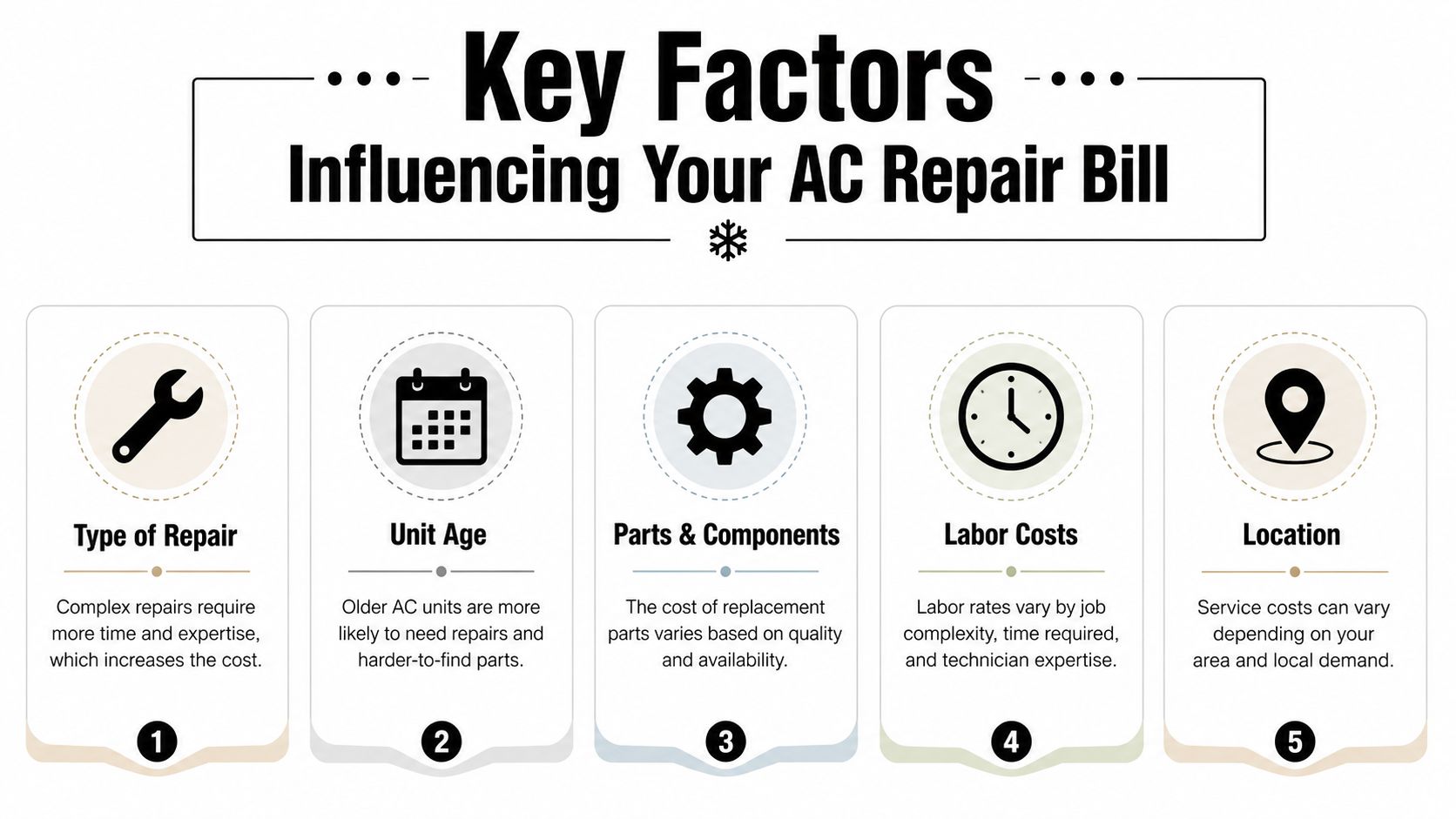
Two homeowners can both say, “My AC stopped cooling,” and get very different estimates. That's normal. HVAC pricing works a lot like auto repair. The failure matters, but so do the age of the equipment, access, parts availability, and how much labor it takes to do the work correctly.
Failure type changes everything
A control issue and a compressor issue are both “AC repairs,” but they don't belong in the same budget category.
Kelley Blue Book's A/C repair pricing shows that pattern clearly even in automotive cooling: average car A/C repair runs $384 to $445, while A/C compressor replacement is $1,546 to $1,705. Residential systems show the same basic logic, with compressors commonly costing far more than minor service work.
Age and refrigerant affect repair value
Older equipment often costs more to repair for practical reasons:
- Parts may be harder to source
- More than one issue may be present
- Older refrigerant types complicate service decisions
- A major repair may not restore long-term reliability
If your system uses an older refrigerant, this overview of whether Freon is still used helps explain why refrigerant type can influence both repair cost and replacement timing.
Arizona-specific cost drivers
In local Arizona conditions, these factors often push a bill higher:
| Factor | How it affects cost |
|---|---|
| Attic or tight-space access | Adds labor time and difficulty |
| Peak summer demand | Scheduling pressure can raise service costs |
| Poor ductwork or weak airflow | Turns a part failure into a system-performance issue |
| Oversized or undersized equipment | Causes repeat strain that can make repairs less durable |
A homeowner might think they're paying for one failed motor. In reality, they may be paying for the labor to replace the motor plus the time needed to address why that motor has been overworking.
A repair quote makes more sense when you look at the whole system, not just the broken part.
Installation quality matters more than people think
Often, cheap installs come back to haunt people. If the original system was swapped in without duct evaluation, airflow verification, or proper sizing, repair costs tend to show up sooner and more often. A unit can have brand-new equipment and still perform poorly if the return is undersized or the duct layout fights the blower.
That's especially true with heat pumps and high-efficiency systems. They need the right airflow to deliver the comfort and efficiency they were designed for. When airflow is wrong, homeowners often blame the equipment when the actual problem is the installation around it.
The Big Question Repair or Replace Your AC Unit
At some point, every expensive repair turns into the same conversation. Should you fix this one problem, or is it time to stop putting money into an aging system?
That answer isn't emotional. It's a cost and reliability decision.
A common field shortcut is the 5000 Rule. Multiply the repair cost by the system's age. If the result lands over 5000, replacement deserves serious consideration. It's not a law, and it doesn't replace a real inspection, but it gives homeowners a simple starting point.
When repair still makes good sense
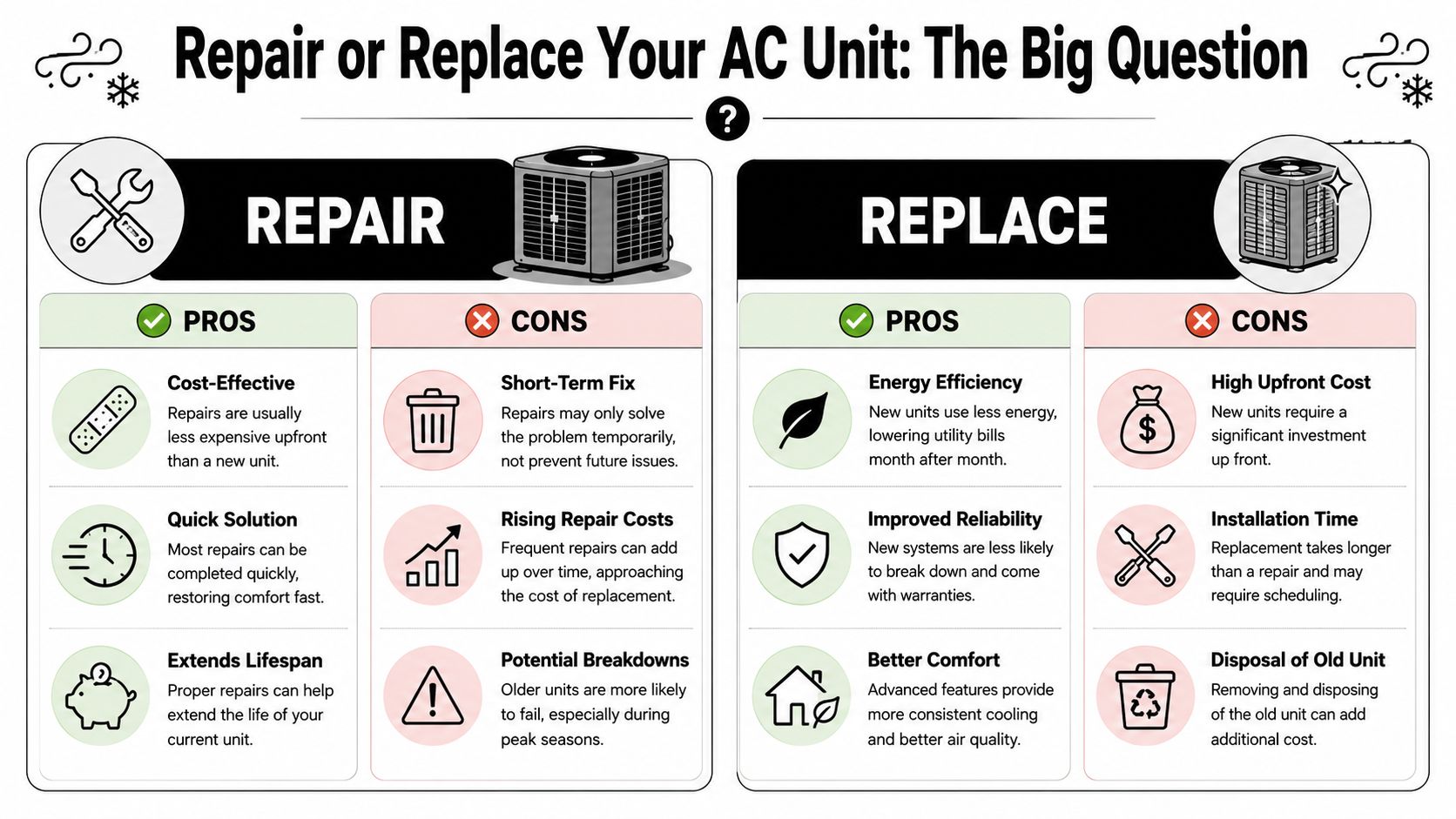
Repair is usually the better path when the problem is isolated and the rest of the system is still healthy.
Good candidates for repair often look like this:
- The system has cooled well overall: No long history of comfort complaints or recurring breakdowns.
- The repair is modest compared with system age: One clear fault on equipment that still has useful life.
- Airflow and duct conditions are acceptable: The equipment isn't being damaged by poor installation conditions.
- Parts are available and the refrigerant situation is manageable: The repair doesn't create a second problem.
For homeowners dealing with a confirmed issue that still makes sense to fix, a service page like quality AC repair can help clarify what proper repair work should include.
Here's a helpful visual comparison before making the call.
When replacement is usually the smarter move
There's a point where repair becomes a short-term patch on a long-term problem.
Replacement deserves the stronger argument when:
- Major components fail on an older unit
- Comfort has been inconsistent for years
- You're seeing repeated service calls
- The ducts, return air, or sizing were never right to begin with
- The new repair won't address the fundamental system weakness
Homeowners can make an expensive mistake. They replace one component but leave bad airflow, poor duct design, or improper sizing untouched. The invoice is large, but the house still doesn't cool evenly and the new part still operates under stress.
Field advice: If you replace equipment without checking ductwork and airflow, you may end up with a new unit that inherits the old system's problems.
Don't judge replacement by equipment price alone
A proper replacement isn't just a box swap. It should include a look at:
| Replacement question | Why it matters |
|---|---|
| Is the new system sized correctly? | Oversized and undersized units both create comfort and wear problems |
| Are the ducts supporting the new equipment? | New equipment can't overcome poor airflow design |
| Does the furnace or air handler still match? | Mismatched components can reduce performance |
| Will the home's hot and cold spots be corrected? | Replacement should improve comfort, not just restore cooling |
That matters a lot in homes with additions, remodeled spaces, or long-standing airflow complaints. A replacement done well can solve comfort, reliability, and efficiency issues together. A replacement done fast can leave most of those problems in place.
Proactive Maintenance to Prevent Costly AC Repairs
A lot of expensive summer breakdowns start with a small problem in May or June. The system still runs, so it gets ignored. Then Arizona heat exposes the weakness all at once, often on the hottest afternoon of the week.
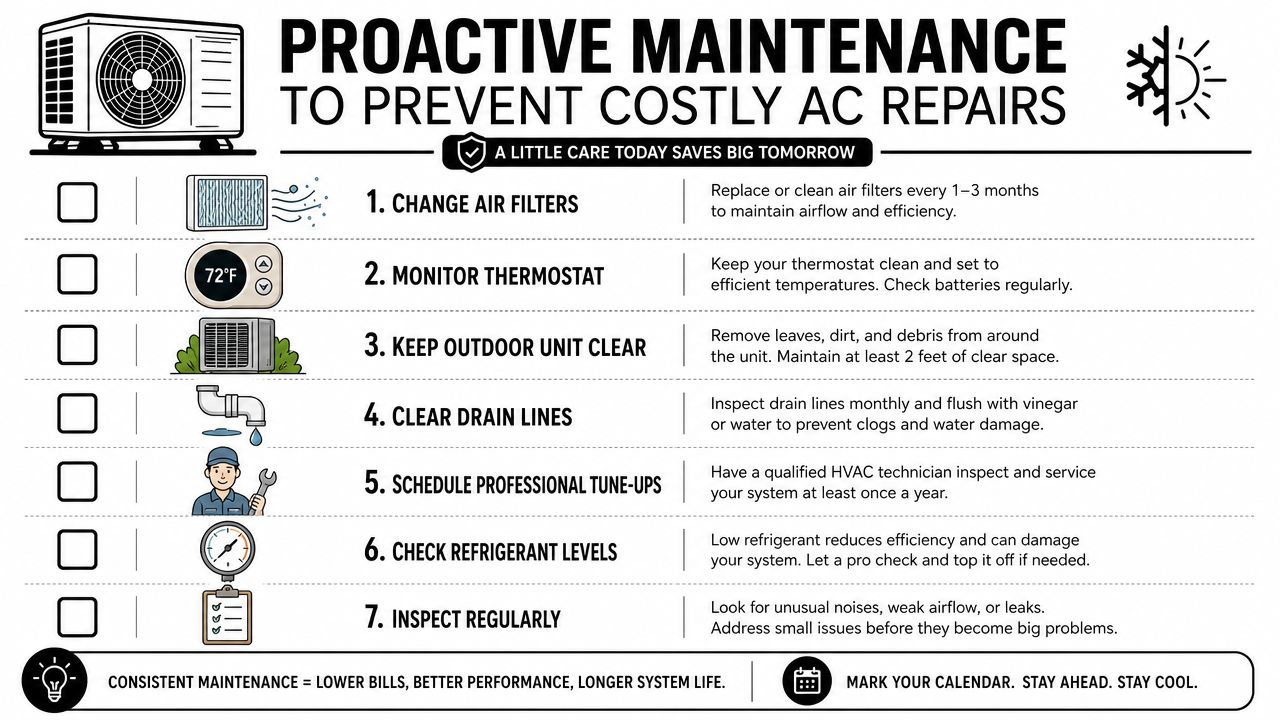
Regular maintenance helps catch those small problems before they turn into a no-cool call, after-hours service, or a larger repair bill. As noted earlier, repair costs often rise with age, wear, and peak-season demand. The practical takeaway is simple. Keeping the system clean, checked, and moving the right amount of air usually costs less than waiting for a hard failure.
What homeowners can do themselves
Homeowners can prevent a fair amount of wear without opening panels or handling refrigerant.
- Change filters on schedule: A dirty filter restricts airflow, which can strain the blower, reduce cooling, and contribute to a frozen coil.
- Keep the outdoor unit clear: Trim back plants, remove leaves, and keep debris off the coil so the condenser can shed heat.
- Watch for water: Moisture around the indoor unit or drain line is a warning sign, not a cosmetic issue.
- Notice changes in sound or runtime: Longer cycles, hard starts, buzzing, or humming usually mean the system wants attention before it quits.
What a professional tune-up should actually include
A real maintenance visit should do more than replace a filter and rinse the condenser. It should include electrical testing, inspection of contactors and capacitors, coil condition, drain performance, blower operation, and a basic check of how the system is cooling.
In Arizona, airflow deserves extra attention. I see plenty of systems with equipment that still has life left in it, but the ductwork leaks, the return is undersized, or the blower is fighting a constant restriction. That kind of setup raises operating stress all season long. The homeowner feels weak airflow in one room, high humidity or long run times in another, and the equipment takes the punishment.
Maintenance can catch those patterns early. It cannot correct bad duct design by itself, but it can reveal that the repair problem is bigger than a single part.
Problems maintenance can catch before they get expensive
A good inspection often finds issues like:
- Weak capacitors or contactors before a no-start failure
- Dirty coils that force the system to run longer
- Blower or fan motor issues that reduce airflow
- Drain clogs before they cause water damage or float switch shutdowns
- Pressure or temperature readings that suggest airflow, duct, or sizing problems
That last point gets overlooked all the time. If an AC keeps struggling because the airflow is wrong, replacing parts one by one can turn into a costly pattern. In homes around Globe, Miami, Superior, and other Arizona communities, attic heat, dust, long duct runs, and older return setups can all push a system harder than it should be pushed.
Maintenance works best as an early-warning process. It helps you fix smaller issues on your schedule, and it gives you a better read on whether the system has a simple repair need or a deeper airflow problem behind it.
Your Next Steps for a Comfortable Arizona Home
By now, the average cost to fix AC should look less like one number and more like a decision tree. The final bill depends on what failed, how long it takes to access and repair it, whether refrigerant work is involved, and whether airflow or duct problems have been stressing the system in the background.
That last part matters more than most homeowners realize. In Arizona, a lot of comfort complaints that sound like equipment failure trace back to system design. Weak return air, undersized ducts, poor balancing, and mismatched equipment all raise strain and lower comfort. A good repair restores operation. A good long-term solution also looks at why the system struggled in the first place.
For homeowners and property owners in Globe, Miami, Superior, and nearby communities, that means taking a wider view of the HVAC system. Repair may be the right move. Maintenance may buy you more reliable seasons out of your current equipment. In other cases, replacement only makes sense if someone also checks sizing, airflow, and duct condition so the next system doesn't inherit the same problems.
Cobre Valley Air LLC is one local option for that kind of broader HVAC work, including AC repair, installation, maintenance, duct design and repair, heat pumps, furnaces, and indoor air quality support. The company also offers 24/7 emergency response and financing through Wisetack and OPTIMUS, which can matter when a large repair or replacement hits at the wrong time.
If your system is down now, the best next step is simple:
- Get the problem diagnosed before approving major work
- Ask whether airflow or duct conditions contributed to the failure
- If the repair is large, compare it against the age and overall condition of the system
- If replacement comes up, make sure the conversation includes sizing and duct performance
That approach protects your budget better than shopping only for the lowest repair number.
Frequently Asked Questions About AC Repair Costs
Is a home warranty worth it for AC repairs
Sometimes, but read the coverage details carefully. The main issue isn't whether the policy mentions AC. It's whether it covers the actual failure, labor, refrigerant-related work, and enough of the diagnosis process to be useful. Many homeowners assume “covered” means everything is paid for, then find out exclusions apply.
What are common signs of a refrigerant leak
Warm air, longer run times, ice on the indoor coil or refrigerant lines, and weaker cooling are common warning signs. Refrigerant doesn't get “used up” in normal operation, so if a system is low, the better question is where it leaked and whether fixing that leak makes financial sense.
Can bad ductwork make repair costs worse
Yes. Poor duct design or weak airflow can overwork motors, reduce coil performance, and make the system run longer than it should. That doesn't always cause the first failure, but it often helps create repeat failures.
Should I replace just the AC or the whole system
That depends on system match, age, and condition. In many homes, the outdoor and indoor components need to work as a matched setup. If one side is much older, or if airflow and sizing have been off for years, replacing only part of the system may not solve comfort or reliability issues.
Does a heat pump change repair decisions
It can. Heat pumps handle both cooling and heating duties, so annual wear happens differently than with cooling-only equipment. The same repair-versus-replace logic still applies, but the system's year-round workload matters when judging future reliability.
If you need straight answers about AC repair, ductwork, installation, or maintenance in Globe, Miami, Superior, or nearby areas, contact Cobre Valley Air LLC. They handle diagnostics, repairs, replacements, heat pumps, furnaces, and airflow-focused duct solutions with a service-first approach.