



Your AC quits in the middle of an Arizona afternoon. The house starts climbing in temperature, one room feels hotter than the next, and every company you call sounds like they want to swap the box outside and move on. That's the moment most homeowners in Globe start comparing brands and prices.
That's understandable. It's also where a lot of expensive mistakes begin.
If you're looking for an AC company in Globe, AZ, the decision isn't solely which condenser or air handler to buy. It's whether the contractor treats your home like a complete system. Equipment, ductwork, airflow, controls, electrical, drainage, and sizing all have to work together. If one piece is wrong, the whole job underperforms.
A new unit can still cool badly. A high-efficiency system can still waste energy. A heat pump can still leave cold or hot spots. Most of the time, the problem isn't the logo on the cabinet. It's what happened before and after installation.
Beyond the Box A Smarter Approach to AC Replacement
A lot of replacements in small markets happen fast. The old unit fails. A contractor reads the nameplate, matches tonnage, gives a price, and schedules the install. Homeowners think they bought a whole new system. What they often got was a new piece of equipment connected to old assumptions.
That shortcut causes trouble in Globe. Homes here aren't all built the same. Some have aging duct systems. Some have room additions that changed the load. Some have airflow restrictions that were never corrected. Some have heat pump setups that work fine in one season and struggle in another. If a contractor ignores those details, the replacement may run, but it won't run right.
Why modern AC work is no longer simple
Modern air conditioning became practical commercial technology in 1902, when Willis Carrier built a humidity-control system for a printing plant, and the U.S. Department of Energy notes that today's systems came from more than a century of engineering advances, not a single one-time invention, as explained in the DOE history of air conditioning. That history matters because modern HVAC isn't just about making air cold. It's about balancing temperature control, humidity management, and airflow inside a complete mechanical system.
A replacement job today should include more than setting equipment and pulling a vacuum. It should include diagnosis, system sizing, duct review, startup verification, and a clear look at how the house behaves.
Practical rule: If the proposal talks a lot about the brand and almost nothing about airflow, ductwork, or sizing, it's incomplete.
What homeowners usually see versus what matters
The outdoor unit is often what people notice because it's visible and expensive. Technicians look harder at what you can't see as easily:
- Return air problems: Too little return can starve the system and drive up static pressure.
- Supply duct restrictions: Crushed flex, undersized trunks, and bad transitions choke airflow.
- Oversized replacement equipment: Bigger isn't safer. It can short-cycle and leave comfort problems behind.
- Ignored heating side issues: In heat pump and furnace systems, poor duct design affects winter performance too.
A good AC replacement feels boring in the best way. The house cools evenly. The system runs the way it should. It doesn't keep cycling on and off for no reason. You don't have one back bedroom that never catches up.
That kind of result comes from system-first thinking, not box-first thinking.
Start with Science Not Guesswork

The first serious question in an AC replacement isn't, “Which brand do you want?” It's, “What does the house need?”
That answer should come from a load calculation, not from the size of the old unit and not from a square-foot shortcut. A lot of bad replacements start with a lazy rule of thumb. The old system was a certain size, so the new one gets matched. That sounds efficient. It isn't.
What a load calculation actually looks at
A proper sizing process evaluates the home itself. That includes insulation levels, window area, sun exposure, orientation, layout, ceiling height, infiltration, and how air moves through the rooms. It also accounts for how the duct system delivers that air.
If you want a homeowner-friendly explanation, this guide on how to size an HVAC system gives a useful overview of what should be examined before equipment is selected.
The reason this matters is simple. A system that's too large can satisfy the thermostat too quickly and shut off before it has done a balanced job across the house. A system that's too small may run hard and still struggle on the hottest days. Neither outcome is what you're paying for.
Why the shortcut keeps getting used
The shortcut is fast. It lets a contractor quote quickly. It avoids the time needed to inspect the house, measure conditions, and think through the duct side of the system. Homeowners often don't realize anything was skipped because the proposal still looks professional.
But this is one of the biggest gaps in local replacement conversations. The U.S. Department of Energy and ENERGY STAR both emphasize that correct sizing and duct performance are central to efficiency, yet many contractors still skip that step, as noted in this discussion of the Globe HVAC content gap around proper sizing.
If a contractor can size your system without spending time looking at the house, they're probably not sizing it. They're estimating.
What should happen before equipment selection
Before a homeowner says yes to a replacement, the contractor should be able to explain these points clearly:
How the current system is performing
Look at runtime patterns, comfort complaints, hot spots, noise, and whether airflow seems weak at certain registers.Whether the duct system supports the new equipment
A new air handler or furnace can't fix restrictive ductwork by itself.Whether the old system was the right size
Plenty of homes have lived for years with mismatched equipment and uneven comfort. Replacing like-for-like only locks that in again.What the target outcome is
Some homes need better room balance. Some need quieter airflow. Some need to solve repeat breakdowns. Some need better filtration and ventilation planning.
What good sizing sounds like in plain English
A careful technician should be able to say something like this: the house needs a certain cooling capacity, the duct system can or can't support that airflow, and here's what needs to change if you want the new unit to perform correctly. That's a real design conversation.
A weak sales process sounds different. It leans on phrases like “standard replacement,” “same size as before,” or “this is what most homes use.” Those aren't technical answers. They're shortcuts dressed up as confidence.
Choosing Your Cooling System for the Arizona Climate

Once the load and airflow side are understood, then equipment selection makes sense. In Globe, the right answer depends on the house, the duct system, how you use the space, and whether you want cooling only or year-round heating and cooling from one system.
Some homeowners need a straightforward central AC replacement. Others are better served by a heat pump. Others should stop trying to force a ducted solution into a room addition or older layout that would be better handled by a mini-split.
The main system types homeowners compare
| System Type | Best For | Pros | Cons |
|---|---|---|---|
| Central air conditioner with furnace or air handler | Homes with existing ductwork and a conventional central layout | Familiar setup, whole-home cooling, works well when ducts are in good shape | Performance drops if ducts are undersized, leaking, or poorly laid out |
| Heat pump | Homeowners who want heating and cooling from one system | One system for both modes, strong fit for Arizona homes, available in high-efficiency options | Requires correct sizing, controls, and airflow setup to perform well |
| Ductless mini-split | Additions, older homes, garages, problem rooms, homes without practical duct routes | Zoned comfort, no large duct run required, flexible installation | Indoor unit placement matters, whole-home strategy can be more complex |
For a side-by-side look at where each approach makes sense, this comparison of ductless mini-split vs central air is useful when you're deciding between a full ducted replacement and zoned equipment.
Central AC systems
A central split system still makes sense in a lot of Globe homes. If the ductwork is sound and the layout works well, central air can deliver steady whole-house comfort. But that “if” matters.
When a central replacement goes wrong, it usually isn't because central air is a bad choice. It's because the installer left old duct problems in place. Bad transitions, weak return design, leakage, and poor balancing can leave the new system fighting the same restrictions the old one had.
Heat pumps in this market
Heat pumps deserve more attention than they usually get. For many homes in central Arizona, they're a practical choice because they handle both cooling and heating. On cool desert nights and through the heating season, that dual-purpose setup can be a clean solution.
The catch is setup quality. Thermostat logic, defrost behavior, airflow, and duct design all matter. A heat pump installed without attention to the distribution side can disappoint a homeowner who expected one neat answer for every season.
Ductless mini-splits
Mini-splits shine where ductwork is missing, damaged, impractical, or not worth extending. They're also useful when one area of the house has always been uncomfortable. Older homes around Globe and nearby communities sometimes fit this category well.
They are not magic. Indoor head placement matters. Zoning strategy matters. The installer still has to think through refrigerant line routing, condensate management, controls, and how the room is used.
A mini-split is a great tool when it solves a layout problem. It's a poor substitute for design when someone uses it just to avoid diagnosing the main system.
The brand matters less than the installation standard
Manufacturers such as Daikin offer high-efficiency air conditioners, heat pumps, ductless mini-splits, smart thermostats, and indoor air quality options, but the key performance difference comes from the installer's methods, including duct practices aligned with SMACNA standards and verified airflow after startup, as reflected in Daikin's product and system approach.
That's the point homeowners miss when shopping by brochure. A premium unit on bad ductwork won't deliver premium comfort. A properly matched system on a well-verified distribution setup usually beats a fancier box installed carelessly.
How to Hire an AC Company You Can Trust
Globe isn't a huge service market. That changes how you should shop.
A local directory shows at least seven contractors listed at separate Globe addresses across ZIP codes 85501 and 85502, which means homeowners do have options, but the pool is still tight enough that reputation, licensing, and service range matter a lot, as shown in this Globe air conditioning contractor listing.
In a market like that, the lowest bid can look tempting because everyone appears local and available. The safer move is to compare how each company thinks.
What to check before you compare price
Start with the basics, but don't stop there.
- License status: Verify that the contractor holds an active Arizona license appropriate for the work.
- Insurance: Ask whether they carry liability and worker coverage.
- Service scope: Make sure they handle diagnosis, installation, duct evaluation, and follow-up service.
- Local fit: Ask how often they work on homes like yours in Globe, Miami, Superior, or nearby communities.
Those checks don't guarantee quality, but skipping them opens the door to avoidable problems.
How to read the quote like a technician
A replacement proposal should tell you exactly what is being installed and exactly what work is included. If it doesn't, you're comparing vague promises instead of real scopes.
Look for these items in writing:
- Equipment details: Specific model information for indoor and outdoor equipment, or at minimum a clearly defined equipment category.
- Duct evaluation language: The quote should mention existing duct inspection, needed repairs, or airflow review.
- Electrical and controls: Thermostat, disconnects, whip, pad, drain work, and any accessory changes should be listed clearly.
- Permit and inspection responsibility: The contractor should say who handles it.
- Startup and testing: Ask whether they verify refrigerant charge, airflow, and system operation after installation.
If a bid says little more than “remove and replace AC system,” that's not a strong document. It leaves too many decisions unspoken.
Red flags that deserve more attention
A few patterns show up again and again on weak installs:
Phone quotes without a site visit
Nobody can seriously assess duct condition, access, drainage, or installation constraints from a quick call.No mention of airflow
This usually means airflow isn't being measured.Matching the old tonnage automatically
That often means no real sizing review took place.No discussion of room comfort issues
If you've had hot rooms, weak airflow, or repeated repair issues, the new bid should address them.
Ask this directly: “What are you doing to verify that my ductwork and airflow match the new equipment?”
That one question tells you a lot. A strong contractor will answer specifically. A weak one will redirect to brand reputation or warranty language.
Financing is useful, but it shouldn't hide a bad scope
Financing can make a better installation more manageable, and some local contractors offer options such as Wisetack or OPTIMUS. That can be helpful when a failure happens at the worst time.
Still, financing doesn't improve workmanship. It only changes how the job is paid for. Review the scope first, then the payment method.
One local option homeowners may come across is Cobre Valley Air LLC, which states that its replacement approach includes airflow and duct evaluation, along with financing through Wisetack and OPTIMUS. That's the kind of scope detail worth comparing across bids, because it speaks to process rather than sales language.
The right company sounds different
A contractor you can trust usually talks in practical terms. They ask where comfort is poor. They look at returns and supplies. They explain what can stay, what should change, and what they'll test when the job is done.
They don't need to pressure you. Their process does the persuading.
The Installation Process From Start to Finish
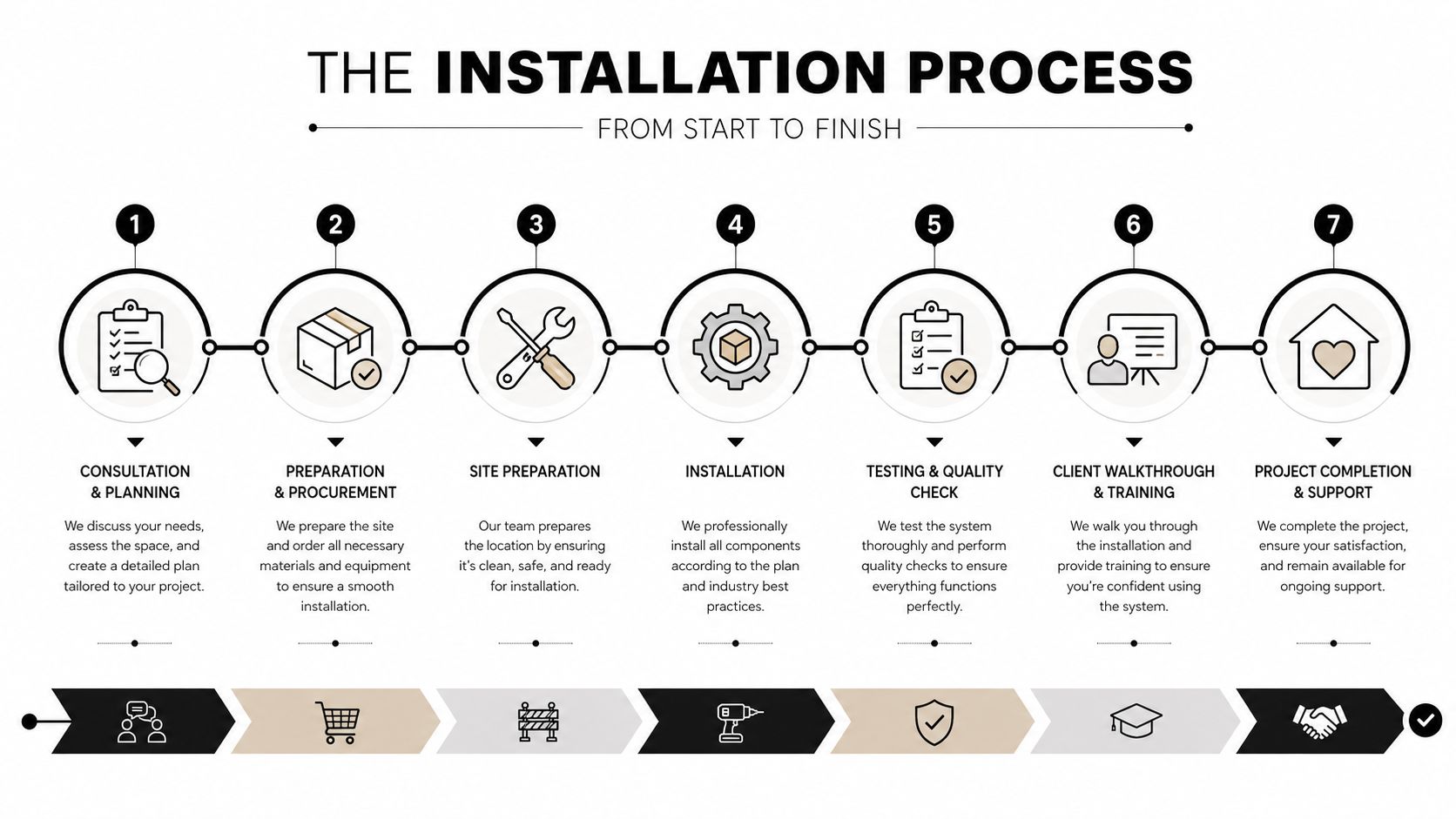
Installation day should feel organized, not chaotic. By the time the crew arrives, the important decisions should already be made. Equipment selection, scope, duct modifications, and placement details should be settled. That lets the install team focus on execution.
For homeowners, it helps to know what a proper replacement should include so you can tell the difference between a complete job and a rushed one.
Before the crew starts
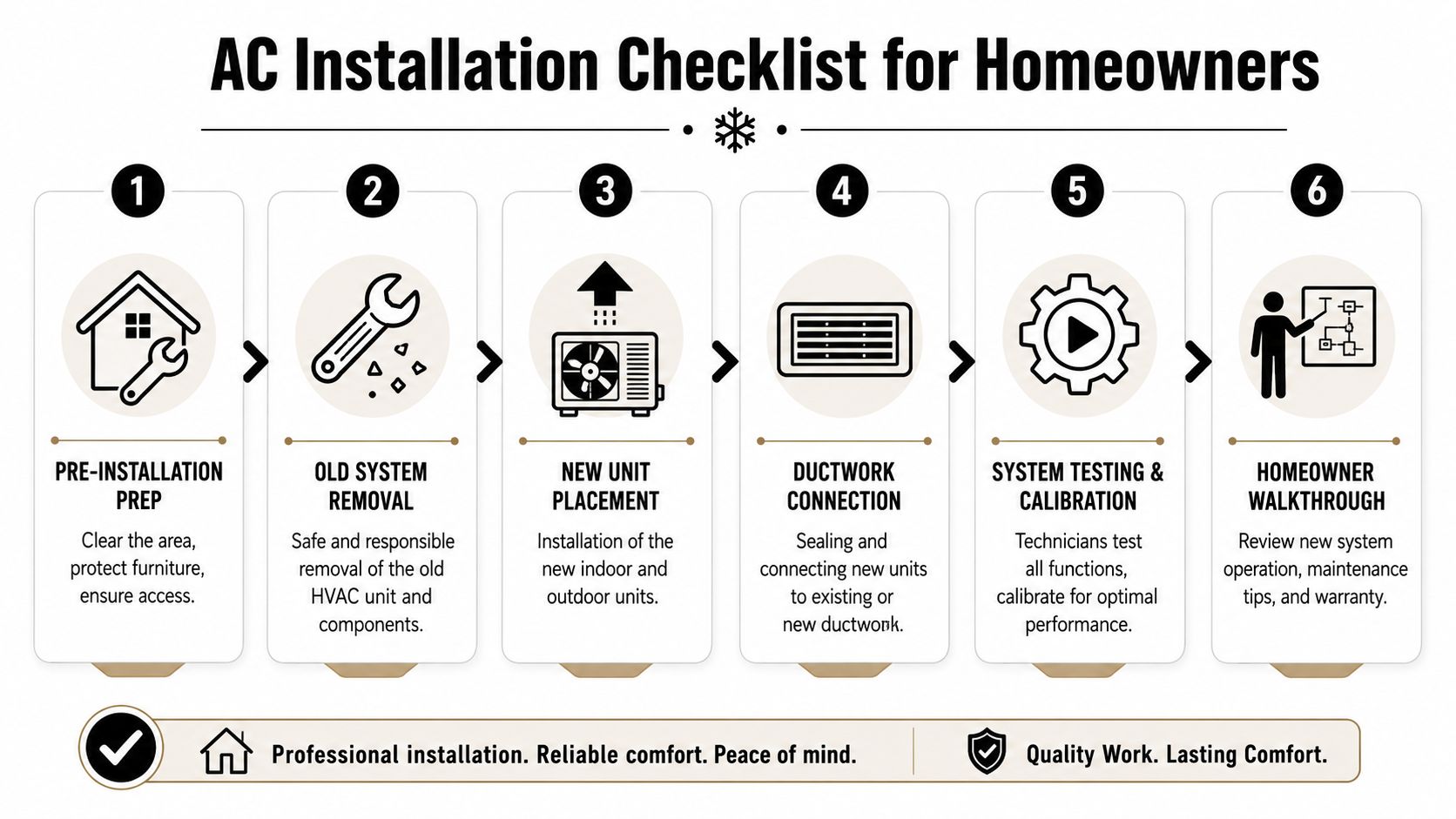
Make sure access is clear around the indoor and outdoor equipment. If the attic, closet, side yard, or mechanical area is crowded, move what you can ahead of time. Ask where power will be shut off and whether the thermostat will be offline during the work.
You should also know whether the job includes duct repairs, new transitions, return modifications, drain line updates, or thermostat replacement. Those items affect both timing and final performance.
Permit and code compliance
Permits are not paperwork fluff. They're part of doing the job correctly.
The Globe Municipal Code requires work to comply with the most currently adopted code requirements, which means permits and inspections matter because expired plans and permit issues must still align with current code, as described in the Globe Municipal Code provisions for building compliance.
If a contractor tries to normalize skipping permits, take that seriously. HVAC replacement touches electrical, mechanical, safety, and code issues. Inspection helps confirm the installation meets the standard the town currently requires.
What the physical install should include
A clean replacement usually involves several parts moving together:
- Safe removal of old equipment: The crew removes the old condenser, coil, furnace or air handler components as needed, and handles disposal properly.
- Setting the new equipment: The outdoor unit has to be placed level and with proper clearances. Indoor equipment needs correct fit, support, and service access.
- Refrigerant line and drain work: Lines, fittings, insulation, and condensate drainage need to be installed or updated carefully.
- Duct connections: Duct connections often distinguish good installations from poor ones. Connections should be sealed and transitions should make airflow sense.
- Electrical and controls: Disconnects, low-voltage wiring, thermostat setup, and system communication all need to be correct.
Commissioning is where quality becomes visible
This is the part many homeowners never hear about, and it's one of the most important.
Once the system is physically installed, the technician should verify how it's operating. That means checking more than “it turns on and blows cold.” Proper startup should include review of static pressure, refrigerant charge, temperature split, runtime behavior, and airflow. Without that step, the install is unfinished.
Don't be shy about asking what was measured after startup. A serious technician expects that question.
If duct changes were included, ask how they confirmed airflow improved. If you had comfort issues before, ask what changed and how the crew verified it. Those answers should be concrete.
The final walkthrough
Before the crew leaves, you should get a simple explanation of:
- Thermostat operation
- Filter location and replacement routine
- What the warranty covers
- What sounds or behavior are normal
- When to call for service
This is also the right time to ask about maintenance. New equipment lasts longer and performs better when someone keeps the coil, drainage, controls, charge, and airflow side in check. That matters for straight AC systems, heat pumps, furnaces, and ducted or ductless setups alike.
Your Partner for Long-Term Comfort in Globe
If you remember one thing from this guide, make it this. A good AC replacement isn't about replacing a machine. It's about correcting and tuning a complete comfort system.
That means the job starts with sizing, not guessing. It means equipment choice follows the home's needs, not a sales special. It means the duct system gets inspected instead of ignored. It means the crew verifies performance after startup instead of assuming the brand name will carry the job.
That approach matters whether you need air conditioning repair, AC installation, AC maintenance, a heat pump, a furnace upgrade, or duct design work. The same principle applies every time. The box matters, but the system matters more.
For homeowners in Globe and nearby communities, long-term comfort also depends on simple habits after the install. Clean filters, clear returns, and regular service help protect airflow and system health. This guide on how often to replace your HVAC filter is a practical place to start if you want to avoid starving the system you just paid to install correctly.
If you're comparing bids from any AC company in Globe, AZ, ask harder questions. Ask how they sized it. Ask what they found in the ductwork. Ask what they'll measure when they're done. Those answers usually tell you more than the brand name on the brochure.
If you want a no-pressure second opinion on AC repair, installation, maintenance, duct design, heat pumps, furnaces, or indoor air quality, Cobre Valley Air LLC serves Globe, Miami, Superior, and nearby Arizona communities with code-compliant evaluations and system-focused recommendations.