


If you've opened a summer electric bill in Globe, Miami, or Superior and thought, “there's no way the house was comfortable enough to cost this much,” you're not alone. Around here, the AC doesn't get a few polite weeks of work, it stays on the job for long stretches, and dusty conditions can make ducts and filters part of the problem too.
An HVAC energy savings calculator is a smart first step because it turns a gut feeling into a rough dollar estimate. It compares the system you have now with the one you might install next, using the basics of tonnage, run time, local electric rates, and efficiency ratings. But the number it gives you is still an estimate, not a promise, because comfort, duct design, airflow, and system sizing all affect what shows up on the bill.
Why That Summer Electric Bill Is So High
Arizona heat changes the way people look at their utility bill. In a place like Globe, the AC isn't just running in the afternoon, it's carrying the home through repeated hot days, dusty air, and a cooling season that feels like it never really ends.
That's why cooling costs usually get blamed first, and fairly so. A modern HVAC energy savings calculator starts from that same reality and asks a simple question, what would it cost to cool the same space with a different system?
The catch is that a calculator can only estimate the equipment side of the story. It can compare SEER ratings, annual operating hours, and utility price assumptions, but it can't see a leaky duct, a bad airflow setup, or a system that was never sized correctly in the first place.
Practical rule: If the bill feels high, don't assume the answer is always a bigger or newer unit. First, ask whether the system is delivering conditioned air where it should, and whether it was designed for the home in the first place.
A good place to start is a plain-language explanation of why the bill is climbing, like this local guide on why a summer energy bill runs high. Once you understand the likely drivers, the calculator becomes much more useful because you're comparing real options instead of guessing.
Gathering Your Inputs for an Accurate Estimate
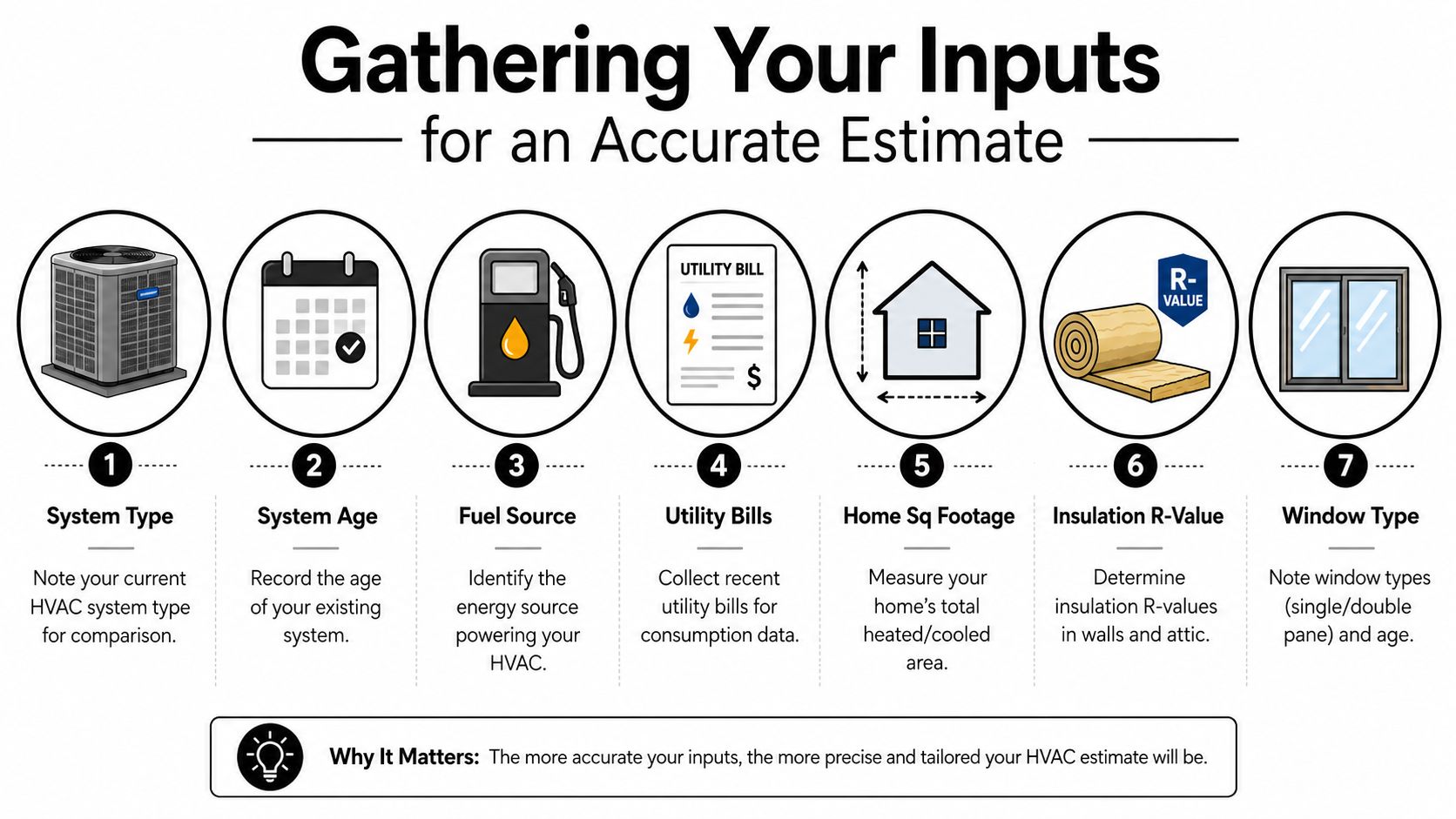
A calculator only works well if the numbers behind it are real. The best starting point is the same information a technician reviews before talking about repair, replacement, or a new installation.
Start with the system label and size
The SEER or SEER2 rating is the first number most calculators ask for. The equipment label usually gives you the answer, often on the outdoor condenser. The tonnage matters too, because the calculator needs to know how much cooling capacity the unit has, not just how efficient it is.
Old systems are often in the lower efficiency range, while newer systems are usually much higher. Some calculator tools also rely on standard assumptions for cooling capacity, electricity cost, and service life when they estimate lifetime savings. That makes the input useful, but only if the equipment details match what is installed.
Read the sticker first. If the label is missing, unreadable, or does not match the equipment on site, the estimate gets shaky fast.
Pull your utility rate from the bill
Your electric bill matters because savings are not just about fewer kilowatt-hours, they are about what those kilowatt-hours cost. A calculator that uses a generic utility price can point you in the right direction, but it still may miss what you really pay in Arizona.
Use the rate on your own bill, not a national average. If you are on a commercial plan or a time-of-use plan, the estimate gets less reliable because the value of each kilowatt-hour changes with the billing structure and the time the system runs.
Add the cooling hours that fit your place
The run time matters as much as the equipment rating. In Arizona, a home or shop can rack up a lot of cooling hours because the system works through long hot stretches, dusty conditions, and a load that does not drop off quickly.
That is one reason industry calculators often build in annual operating hours and long-term savings models, sometimes with assumptions that stretch across a full equipment life. Those tools are helpful for comparison, but the result still depends on how your system runs, how your ductwork moves air, and whether the equipment was sized correctly in the first place.
Don't skip the home details
Square footage helps, but it is only one piece. The more complete the input set, the better the estimate, especially if the home has older windows, weak insulation, a hot attic, or rooms that never seem to cool evenly.
For a more accurate diagnosis, professionals often move beyond the calculator and use a load calculation. If you want the technical side explained in plain English, this page on manual J load calculations is a useful companion. It helps show why a properly sized system matters more than a bigger nameplate, especially when the ductwork is part of the problem.
A calculator gives you a starting point. Real savings in Globe depend on the whole system, the equipment, the duct design, the installation, and the way the house loses heat.
Worked Examples for Arizona Homes and Businesses
A calculator makes more sense once you plug in real situations. A house in Globe and a small restaurant in Superior do not cool the same way, so they should not be measured with the same assumptions.
Sample HVAC Savings Calculation AZ Home vs. Business
| Input | Residential Home (Globe, AZ) | Small Business (Superior, AZ) |
|---|---|---|
| Current system type | Older central AC | Rooftop or split cooling system |
| Efficiency basis | Lower SEER side of the comparison range | Higher runtime sensitivity and operating schedule matter more |
| Cooling hours | Higher summer use, with long daily runtime | Daytime and peak-service runtime |
| Electricity rate | Flat residential rate from the bill | May vary by time-of-use or demand charges |
| Calculator approach | SEER-based estimate using current versus upgraded equipment | Estimate should account for pricing structure and schedule |
| What matters most | Proper sizing, duct condition, and real run time | Operating hours, tariff structure, and part-load behavior |
For a Globe homeowner, the calculator can show the value of replacing an aging unit with a more efficient one, especially if the current system is old and running often. The estimate becomes more believable when you use the actual SEER rating, the accurate utility price, and a realistic view of how many hours the AC is working. That still leaves out a few things the tool cannot see, like airflow problems, duct leaks, or a system that was never sized right for the house.
For a small business in Superior, the picture shifts. Commercial bills often depend on time-of-use pricing and demand charges, so a simple calculator can miss part of the cost that shows up during busy hours. The same equipment upgrade can look better or worse once the building's operating schedule and rate structure are part of the estimate, which is why commercial users need to read the result with care (MABTS).
A calculator still has value here, but it is only the first pass. It can point you toward a better replacement decision, then a proper site visit can confirm whether the ducts, equipment size, and installation details will deliver the savings you want.
What the numbers are really showing
The estimate is not there to predict the next bill exactly. It is there to compare operating patterns and show where the energy is going.
The same upgrade can look modest in one building and meaningful in another, because runtime and rate structure decide a lot of the outcome.
That is why side-by-side comparison works best. If the home's system is old and inefficient, the calculator can narrow the replacement conversation. If the business runs through peak hours and pays more during those windows, the calculator needs to be read alongside local billing knowledge and a real look at the cooling system, especially the ductwork and installation quality that make or break actual savings.
Interpreting the Results Payback Period and ROI
The dollar figure from a calculator matters, but it is only one piece of the decision. In practice, the question is whether the upgrade pays back in a reasonable time and whether the long-term savings justify the upfront cost for your home or business.
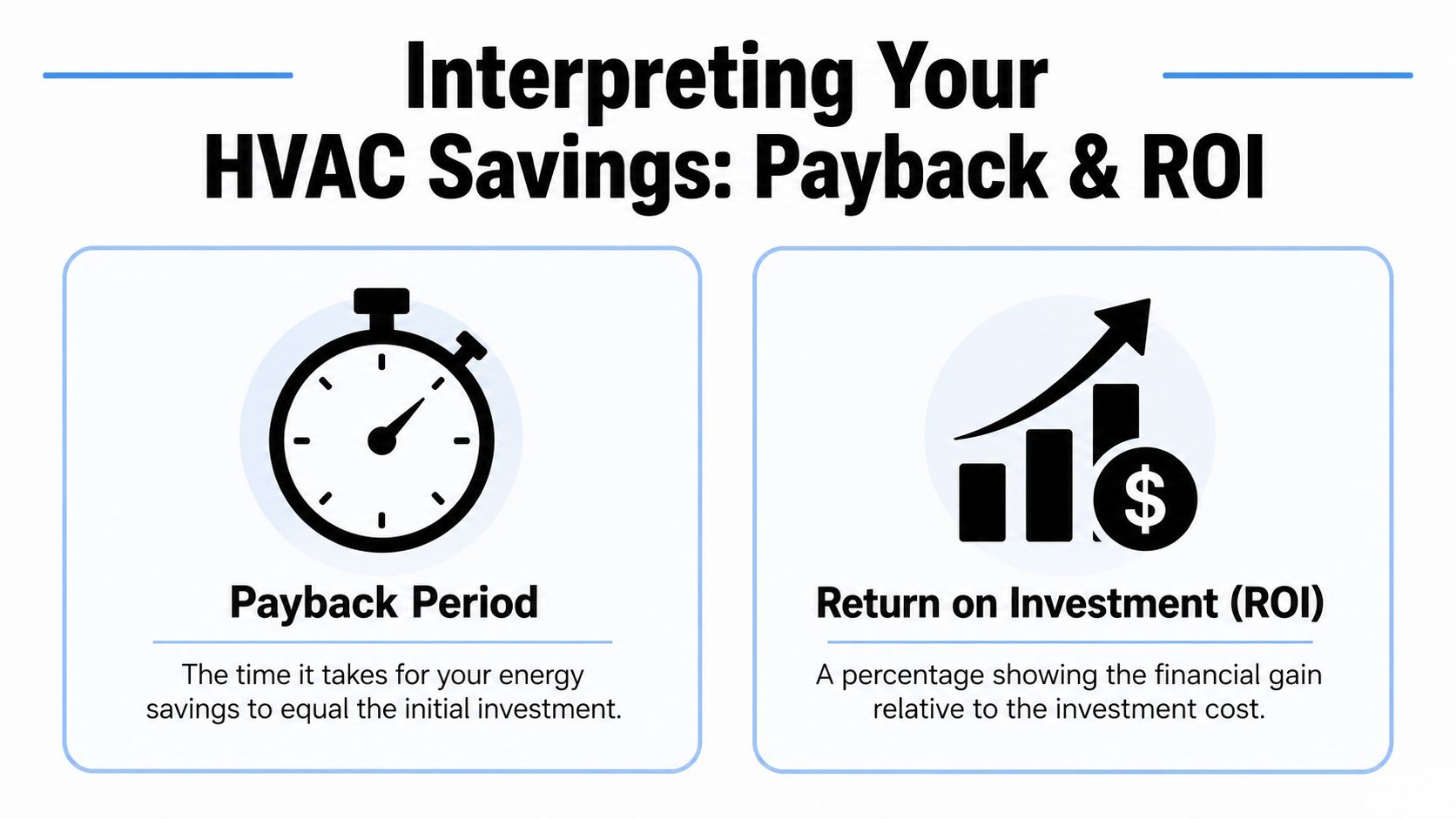
Payback period in plain terms
Payback period is the time it takes for the energy savings to match what you spent on the upgrade. If the new system costs more than a repair, and the monthly savings are real, that payback window gives you a simple break-even check.
Many industry calculators show savings over 5, 10, and 15 years so you can see how the numbers change over time. They also use operating-hour assumptions to estimate how quickly a new system can pay for itself, which helps move the conversation past one-season thinking and into lifecycle cost.
ROI gives you the bigger picture
Return on investment, or ROI, measures the gain compared with what you spent. In HVAC terms, that means the calculator is helping you judge whether the efficiency gain, comfort improvement, and lower bills justify the purchase.
Use the estimate as a decision filter, not a final answer. A good system does more than reduce energy use, it needs to fit the building, run the way it should, and hold up over time.
Practical rule: A short payback looks good on paper, but it only means something if the system is sized correctly and the ducts are doing their job.
The best way to read the result is to compare it with your current system's age, repair history, and comfort problems. If the house already has uneven rooms, weak airflow, or frequent breakdowns, the financial calculation is only one part of the decision.
Beyond the Calculator What Most Tools Miss

A calculator can point you in the right direction, but it often assumes the system is already built and operating the way it should. Around Globe and the rest of Arizona, that is a big assumption.
Ducts, airflow, and sizing can wipe out the promise
Many calculator tools lean on simple inputs like SEER and square footage. That gives you a rough estimate, but it can miss the actual problems in the field. A higher-SEER unit can still fall short if the duct system leaks, the airflow is off, or the building load was never matched correctly to the equipment, especially in hot, dry climates like Arizona (ServiceTitan). A neat savings figure does not mean the system will deliver it.
If the ducts leak, are undersized, or were laid out poorly, the equipment ends up working against the building instead of cooling it. If the unit is too large, it can short-cycle and waste energy. If it is too small, it can run too long and still leave hot spots behind.
That is why Cobre Valley Air puts so much attention on system design, not just equipment replacement.
Bill accuracy matters more than a flat rate
Electric rates can be another blind spot. Basic tools often use one flat power price, but actual bills may include time-of-use pricing or demand charges, and that changes the savings picture for commercial properties and for some homes too. A calculator can still be useful, but it may miss the full bill impact if it ignores the rate structure and how the system is used.
A stronger estimate comes from utility-bill normalization. That means pulling together 12 months of billing data, separating the base load, and comparing HVAC use against weather and occupancy patterns.
A good estimate respects the building, not just the equipment tag.
For homeowners, contractors, and builders, that is why the work has to start before replacement. The best savings usually come from a system that is sized right, balanced right, and ducted right, not just from the highest efficiency number on the brochure. If you want a practical way to see what is already being missed, a HVAC maintenance checklist template can help you spot the obvious problems before you spend money on new equipment.
From Estimate to Actual Savings Your Next Steps
A calculator should push you toward a real plan, not leave you staring at a number on a screen. In Globe, the first place I look is always maintenance, because a dirty coil, weak airflow, clogged returns, or neglected equipment can waste comfort and money long before a full replacement makes sense.
If the system is still in decent shape, a repair or tune-up may be the better first move. If the unit is aging, repairs keep stacking up, or the house never cools evenly, the next step is a proper diagnostic that looks at load, airflow, and duct design, not just the equipment label. A practical HVAC maintenance checklist template can help you catch the issues that are already dragging performance down.
For the most reliable estimate, contractors should go beyond a SEER-only calculator and use actual usage data. A stronger field method is utility-bill normalization, where 12 months of billing information are used to separate HVAC consumption from everything else and compare real usage patterns, as outlined by the National Comfort Institute.
That approach fits homes and businesses in Globe, Miami, and Superior, where long cooling seasons and dusty conditions put extra stress on weak ductwork. A calculator gives you a starting point. Optimal savings show up when the system is properly sized, installed, and ducted for the building, which is the kind of work Cobre Valley Air focuses on every day.