


You notice it first on the TV stand. A thin film of dust again, even though you wiped it down two days ago. Then someone in the house starts sneezing. A week later, smoke from a wildfire a long way off rolls into Globe and the whole house smells stale, even with the windows shut.
That's the point where a lot of Arizona homeowners start looking at air purifiers.
I get why. In our part of the state, indoor air quality isn't just about allergy season. It's desert dust, traffic particles, pet dander, cooking fumes, monsoon humidity swings, and smoke that finds its way indoors no matter how careful you are. If your HVAC system is moving air through the house all day, it's also moving whatever is suspended in that air.
The benefits of air purifier systems are practical. Cleaner air can mean fewer airborne particles, less irritation, and better day-to-day comfort. But the honest answer is that results depend on the type of unit, the pollutant you're dealing with, and how well the purifier works with your AC, furnace, ductwork, and filter setup.
Beyond Temperature Control The Importance of Indoor Air Quality
A lot of homeowners think of comfort in one dimension. If the air is cold in July and warm in January, the system is doing its job. That's only part of the story.
Indoor air quality means the health and comfort of the air inside your home. It includes airborne particles, odors, humidity-related issues, and whatever your HVAC system is pulling in, filtering, and recirculating. In Arizona, that matters because the house stays closed up for long stretches, especially during extreme heat, windy days, and smoky conditions.
I've seen homes where the AC equipment was running fine, but the people inside still felt miserable. Their complaint wasn't temperature. It was dust on furniture, irritated sinuses, stuffy bedrooms, and air that just felt dirty by the end of the day.
Why Arizona homes deal with this so often
Our local conditions make indoor air quality harder to ignore.
- Desert dust gets everywhere: Fine particles come in through doors, attic gaps, duct leaks, and normal daily traffic.
- Wildfire smoke travels: Even when the fire isn't nearby, smoke can raise indoor particle levels once it drifts into town.
- Monsoon season changes the equation: Moisture, muddy air, and less predictable ventilation can make a home feel heavier and smell different.
- Closed homes trap pollutants: Running the AC with windows shut helps with heat, but it also means indoor contaminants can build up.
A good HVAC system should do more than hit thermostat setpoint. It should support healthy air movement, proper filtration, and balanced airflow room to room.
Indoor air problems often show up as comfort complaints first. Dust, headaches, stale air, and restless sleep are common clues.
If you're trying to get a handle on what's circulating through your house, this guide on how to reduce indoor air pollution is a good starting point. It helps connect the dots between daily habits, HVAC performance, and what an air cleaner can realistically help with.
The Health and Comfort Benefits of Cleaner Air
The biggest mistake I see is expecting an air purifier to be magic. It won't fix every indoor air problem. It will, however, help with the problems it's built for, especially airborne particles.
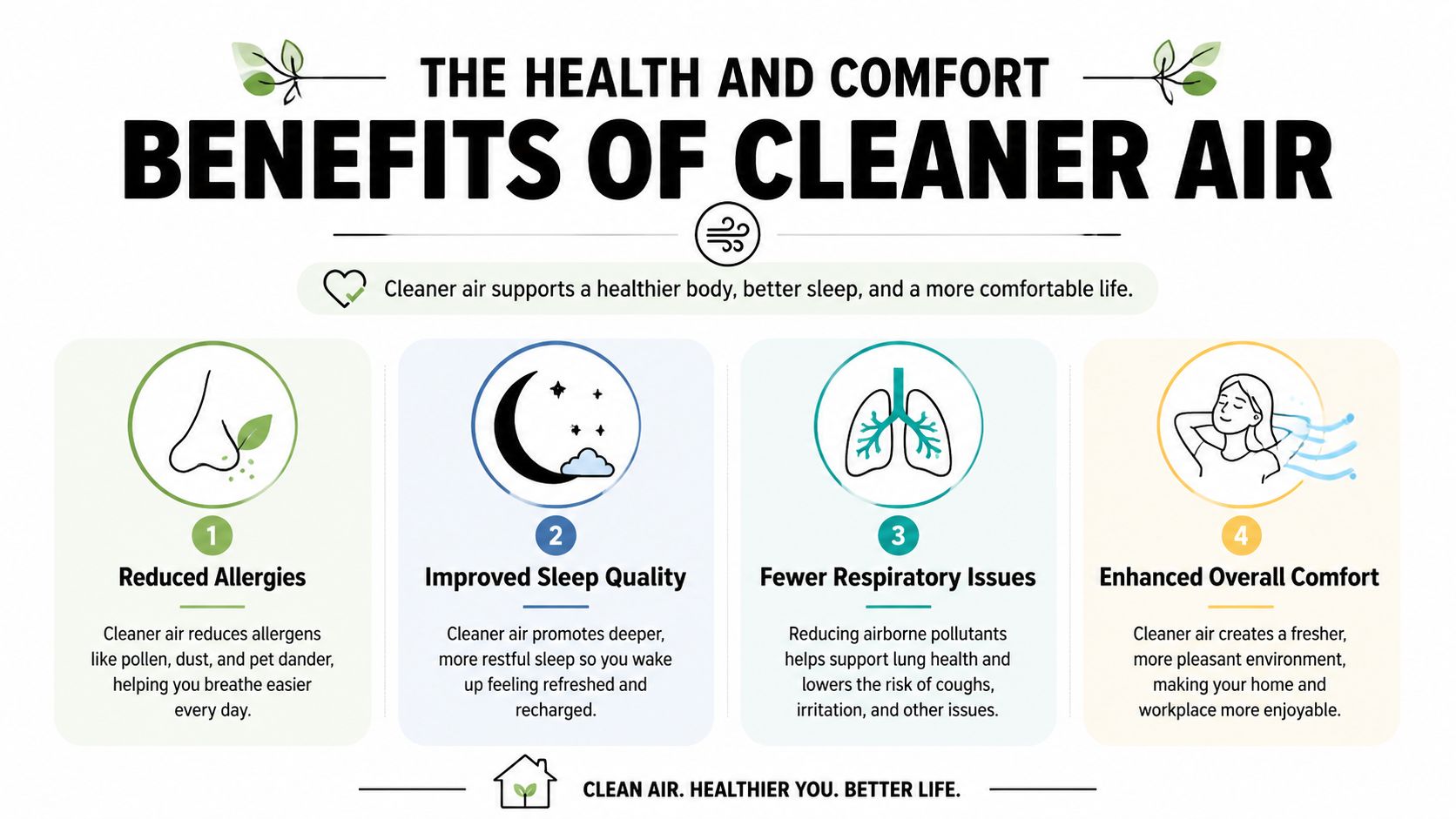
When people ask about the benefits of air purifier equipment, I usually break it into two buckets. Health first. Comfort second. They overlap, but it helps to keep expectations clear.
Health benefits that have real support
A HEPA filter isn't just marketing language. Consumer Reports notes that HEPA filters are certified to collect 99.97% of particles sized 0.3 micrometers in diameter, which is why they matter for fine particle control in the first place, according to Consumer Reports' air purifier buying guide.
That lab standard matters in daily life because small particles are the ones that stay airborne and get deep into the lungs. In a home with dust, pollen, smoke, or pet dander, that's usually what people are reacting to.
A review in Enhancing indoor air quality – The air filter advantage reported several meaningful particle reductions indoors, including an average 50% reduction in PM levels in a child's bedroom, 69% to 80% reductions in another study, and a separate result showing 60% lower indoor fine-particle concentrations, as detailed in the PMC review on the air filter advantage. Those are the kinds of changes that matter for people with asthma, allergies, and smoke sensitivity.
There's also a disease-transmission angle. Smart Air cites CDC research showing that HEPA filters reduced COVID-19 spread in schools by 41%, and the same source states that HEPA filters can remove 99.9% of pollutants on a single pass, including viruses and allergens, in its summary of the health benefits of air purifiers.
Practical rule: If your main concern is particles like dust, smoke, pollen, or dander, filtration is where an air purifier earns its keep.
Here's the video version if you want a quick overview before getting into the details.
Comfort benefits people notice first
Most homeowners don't call and say, “I need lower airborne particulate exposure.” They say the house feels dusty, the bedroom smells stale, or they wake up congested.
That's where cleaner air changes day-to-day living:
- Less airborne dust settling out: You'll still need to clean, but a good purifier can reduce what keeps floating around and landing on surfaces.
- Fewer allergy triggers indoors: Pollen, pet dander, and other common particles are easier to manage when they're being captured instead of recirculated.
- A fresher feel in closed-up homes: This is hard to measure in a casual conversation, but easy to notice in lived experience.
- Better sleep for some households: People often sleep more comfortably when airborne irritants are reduced, especially in bedrooms.
What cleaner air can and can't promise
There's a reason I'm careful here. Broader wellness claims get exaggerated fast.
Verywell Health notes that air purifiers may have benefits beyond allergy relief, including possible effects on cardiovascular health, sleep, and general exposure to fine particulate pollution, while also stressing that the strongest evidence remains around respiratory and allergy symptom relief in its overview of what an air purifier does.
That's the honest framing. If you buy an air purifier to reduce exposure to airborne particles, that's a solid use case. If you expect it to solve every odor, every chemical issue, and every comfort complaint in the house, you'll probably be disappointed.
Understanding Different Air Purifier Technologies
Walk through any store or browse online long enough and you'll see the same problem. Ten products, ten different claims, and not much explanation of what each technology does.
The easiest way to sort it out is by asking one question. What is this unit designed to remove? Particles and gases aren't the same problem, so they don't respond to the same solution.
The main technologies in plain language
HEPA filtration works like an ultra-fine physical net. Air passes through media that traps airborne particles such as dust, pollen, smoke particles, and dander. If your concern is Arizona dust or wildfire smoke particles, this is usually the first technology to consider.
Activated carbon acts more like a sponge. It's used for gases, odors, and some volatile compounds. It doesn't replace particle filtration. It complements it.
UV-C light is a sanitizing technology. It can help address biological contaminants under the right conditions, but it doesn't physically remove dust from the airstream. Homeowners sometimes assume UV equals cleaner air overall. It doesn't, unless the problem you're targeting is one UV is suited to address.
Ionizers charge particles so they clump together or stick to surfaces. Some people like them. I'm cautious with them because performance varies and you need to be careful about unwanted ozone from certain designs.
In-duct active purification systems, including systems used in central HVAC applications, are designed to work with the air handler and duct system. Some are aimed at reducing airborne contaminants throughout the home instead of in a single room.
Air Purifier Technology Comparison
| Technology | Primary Target | Best For | Key Consideration |
|---|---|---|---|
| HEPA filtration | Airborne particles | Dust, pollen, smoke particles, pet dander | Strong for particles, not a gas solution |
| Activated carbon | Odors and gases | Cooking smells, pet odors, some gaseous pollutants | Media saturates and needs replacement |
| UV-C light | Microbial control | Targeted germ-focused applications in HVAC equipment | Doesn't capture dust or debris |
| Ionization | Airborne particles in varying ways | Situations where a homeowner wants active treatment | Product quality and ozone risk matter |
| In-duct whole-home systems | House-wide treatment through HVAC | Homes wanting integrated air cleaning | Depends on duct design, airflow, and installation quality |
What works best in a central HVAC system
For whole-home applications, integration matters more than gadget count.
If a purifier is tied into the return side, air handler, or duct system, it has to work with actual airflow, static pressure, filter rack design, and blower capacity. A high-efficiency filter sounds great until it chokes airflow and makes the system work harder than it should. That can affect comfort, noise, and equipment health.
The value of HVAC experience is evident. Air cleaning isn't separate from heating and cooling. It rides on the same ductwork, fan performance, and maintenance habits.
A purifier added to a poorly designed duct system won't perform the way the brochure suggests.
The limitation most ads skip
Air purifiers are strongest when the problem is particles. Their results are less straightforward when the issue is gases, ongoing odor generation, or poor ventilation.
Air Health emphasizes this well in its discussion of the benefits and limits of air purifiers. Effectiveness depends on pollutant type, room size, placement, ventilation, and whether the source is particles or gases. That lines up with what technicians see in the field every day.
If you burn food often, have a garage odor issue, or deal with chemical fumes, ventilation and source control may do more than filtration alone. If you're battling visible dust and smoke haze, filtration becomes much more effective.
A note on advanced whole-home options
Some Arizona homeowners want more than a portable box in one room. Whole-home systems can be installed in the HVAC equipment so the air treatment happens as the system circulates air through the house.
That can include media filtration, carbon stages, UV-based components, or active air treatment products. Cobre Valley Air LLC installs indoor air quality solutions including air purification and RGF-certified options as part of integrated HVAC service, which is relevant when a homeowner wants the purifier to work with duct design, airflow, and equipment operation instead of sitting separately in one room.
The key is matching the technology to the actual problem. Dust control, odor reduction, pathogen reduction, and smoke events don't all call for the same setup.
Whole-Home Systems Versus Portable Units
The simplest comparison is this. A portable air purifier is like a window AC. A whole-home air purifier is like central air.
Both can work. They just solve the problem differently.
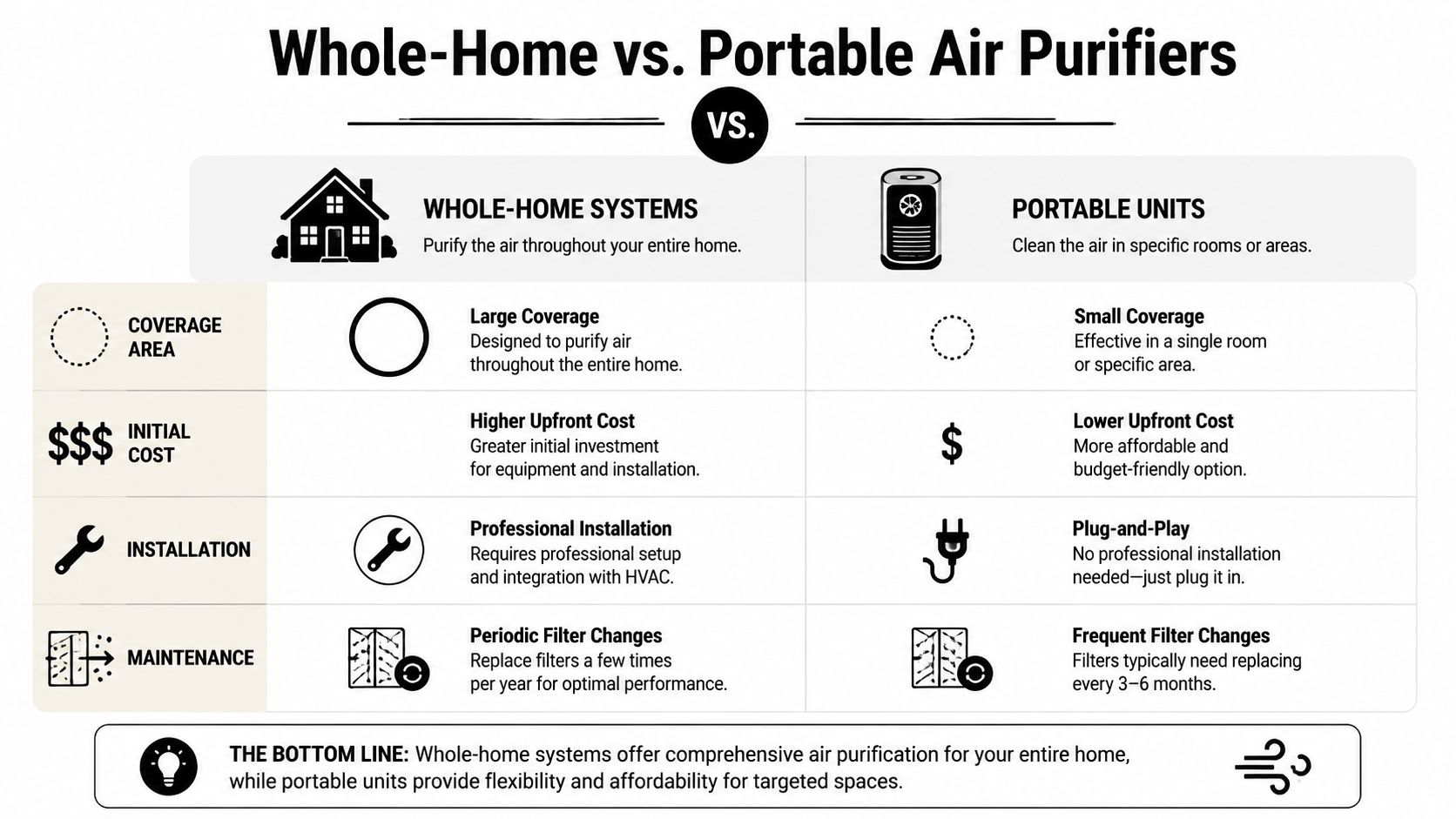
When portable units make sense
Portable units are useful when you need a focused fix.
Maybe one bedroom is the problem. Maybe you rent and can't modify the HVAC system. Maybe you want relief in a nursery, home office, or a room where a family member spends most of the day. In those situations, a good portable unit can help.
They also have practical advantages:
- Lower barrier to entry: You can buy one unit and use it right away.
- Flexible placement: Move it to the room that needs it most.
- No HVAC modification required: Good for apartments, rentals, and short-term testing.
The downsides show up fast in larger homes. One portable unit only covers the air that reaches that unit. If you want broad coverage, you may end up with multiple machines, multiple filters, more noise, and cords in several rooms.
Why whole-home systems fit many Arizona houses better
Whole-home systems treat the house as a system, which is the right way to think about HVAC anyway.
If your AC and furnace already move air through the ductwork, a properly selected in-duct purifier can clean that moving air across the home instead of only in one corner of one room. It's quieter because the treatment happens in the HVAC system. It's cleaner visually because there's no box sitting on the floor. And maintenance is usually centralized.
For homeowners in Globe, Miami, and Superior, this often matches the problem better. Dust doesn't stay politely in one room. Smoke doesn't either. If contaminants are circulating through the return and supply system, a whole-home approach usually tracks closer to how the house behaves.
If you want cleaner air in the whole house, a one-room strategy usually feels incomplete.
The trade-off that matters most
The main drawback of a whole-home setup is upfront commitment. It needs professional installation, correct sizing, and a look at airflow and duct conditions before anyone adds equipment.
Portable units are easier to buy. Whole-home systems are easier to live with once they're set up correctly.
That doesn't mean portable is wrong. It means you should buy based on coverage goals. If you only care about one room, a portable unit is often enough. If you're trying to improve air quality throughout the house, integrated HVAC purification usually makes more sense.
Air Purification Strategies for Arizona Homes and Businesses
Arizona homes don't need generic advice. They need strategies that match local conditions.
Dust is constant. Smoke season changes from year to year. Monsoon weather can shift how a home feels in a matter of days. That means air purification works best when it's part of a larger indoor air quality plan, not a standalone gadget decision.
For homeowners dealing with dust and smoke
In this area, I'd focus on three priorities.
First, capture particles at the HVAC system. Fine dust and smoke move with the air your system is already circulating. If the filter setup is weak, or if return leaks are pulling in dirty attic or crawlspace air, you're fighting the same problem over and over.
Second, seal and maintain the delivery system. Leaky ducts, poor filter fit, dirty blower compartments, and neglected maintenance undercut whatever purifier you install.
Third, use room-specific help where needed. Bedrooms, nurseries, and home offices often benefit from targeted filtration even when the main system is upgraded.
A practical Arizona approach often looks like this:
- During dusty periods: Check filter condition sooner than usual and inspect return-air areas for bypass or leakage.
- During wildfire smoke events: Keep windows closed, limit bringing outdoor air in unless conditions improve, and rely on particle-focused filtration.
- During monsoon season: Watch for musty smells, moisture issues, and airflow imbalances that can let one room feel clammy while another feels dry.
For businesses and restaurants
Commercial buildings have their own version of the same problem. Occupancy is higher, doors open more often, and indoor air complaints affect employees and customers quickly.
A restaurant may need odor control near cooking areas and better overall air treatment in customer spaces. An office may be more concerned with stale conference rooms, crowded waiting areas, or rooms that feel stuffy by mid-afternoon. In both cases, cleaner air supports comfort, but only if the HVAC side is right too.
That's why a real assessment matters. The right answer for a restaurant isn't the same as the right answer for a house with two dogs and a teenager leaving the back door open all day.
The HVAC connection people miss
An air purifier doesn't replace AC maintenance, duct design, or proper system sizing. It depends on them.
If the blower speed is off, the return is undersized, or the duct layout leaves rooms starved for airflow, air cleaning performance drops because the system isn't moving air the way it should. The purifier may still help, but not to its potential.
For homeowners looking at integrated solutions, these indoor air quality services are most useful when they're paired with filter evaluation, airflow checks, and a close look at the duct system. That's especially true in Arizona homes where dust loading and long cooling seasons put the HVAC equipment to work almost nonstop.
Maintenance Costs and Finding an Expert Partner
The purchase price is only part of the story. Owning any air purification system means committing to maintenance.
Portable units need filter changes and regular cleaning. Whole-home systems need media replacement, component checks, and service that lines up with the HVAC schedule. If the system uses carbon, UV components, or specialized in-duct equipment, those parts won't last forever either.
What homeowners should budget for mentally
I'm saying “budget mentally” on purpose because the bigger issue isn't surprise cost. It's surprise neglect.
If you install a purifier and then ignore it, performance drops. Filters load up. Airflow changes. Odor control fades. In some cases, the HVAC system starts paying the price because a neglected filter setup can increase resistance and make the equipment work harder.
Here's the practical maintenance mindset:
- Replace what the manufacturer expects replaced: Don't stretch filter life just because the unit still turns on.
- Pair purifier service with HVAC maintenance: It's easier to stay on top of one plan than manage separate schedules.
- Inspect airflow, not just filters: A clean filter in a bad rack or a leaky return setup still leaves performance on the table.
Why installation quality matters
A lot of indoor air quality complaints aren't equipment failures. They're design problems.
Wrong filter selection. Poor cabinet fit. Purification added to a system that already struggles with static pressure. Return leaks drawing in dirty air before it ever gets to the purifier. These are HVAC issues first and air-cleaner issues second.
That's why I always tell homeowners to look for someone who understands the whole air path. Not just the product. The return, the blower, the coil, the supply duct layout, and the filter fit all affect the result.
This article on how often to replace your HVAC filter is a useful companion because filter maintenance is still the first line of defense, even when you add more advanced purification.
A company website can also tell you a lot about whether they treat HVAC as a full system or just sell accessories. Here's the relevant service snapshot:
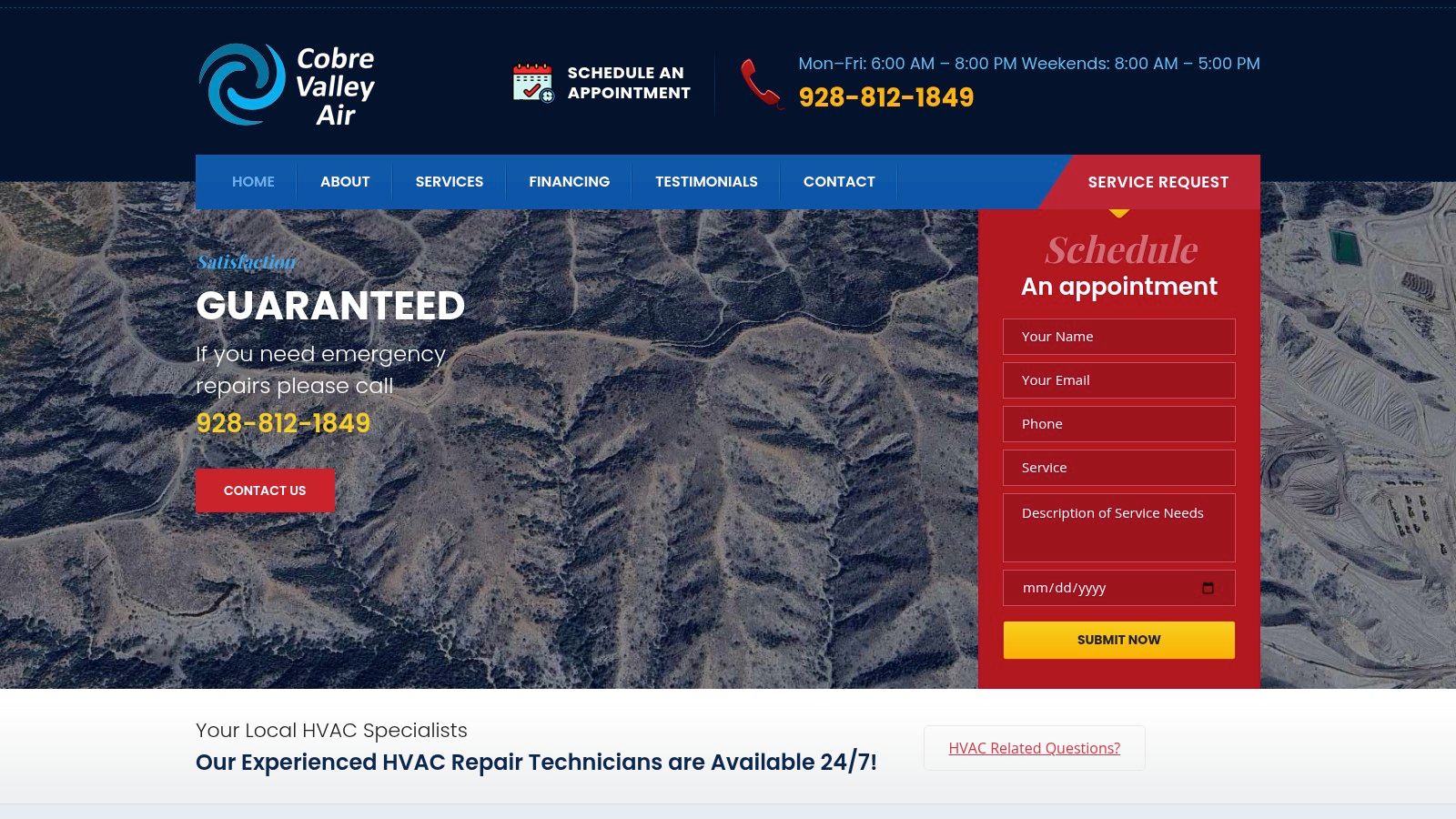
If you're comparing providers, look for service-before-sales language, duct and airflow evaluation, and technicians who are comfortable talking through trade-offs instead of pushing one box for every house.
Frequently Asked Questions About Air Purifiers
Do air purifiers help with pet dander and pet odors
Yes, but those are two different jobs.
Pet dander is a particle problem, so filtration is the main answer. Pet odor is more of a gas and smell problem, which usually calls for carbon or another odor-focused approach. If you've got both, a unit that only emphasizes particle capture may help the allergies but leave the smell issue behind.
Will an air purifier stop dusting in my house
No. It can reduce airborne dust, but it won't end house cleaning.
Some dust enters from outside. Some comes from fabrics, skin cells, pets, and daily activity inside the house. If your ductwork leaks, or your filter rack allows bypass, those issues also keep dust in circulation. A purifier helps most when it's part of a broader fix.
Cleaner air should mean less dust circulating. It shouldn't be sold as a promise that you'll never wipe down furniture again.
Are portable air purifiers noisy
Some are quiet on low speed and noticeable on high speed. That's the trade-off.
If a portable unit is undersized for the room, people often run it harder to get results, which increases sound. For bedrooms, noise tolerance matters a lot. For living rooms and offices, it's usually less of an issue. Whole-home systems avoid most of that because the treatment happens inside the HVAC equipment.
Can I just put a stronger filter in my HVAC system and skip the purifier
Sometimes a better HVAC filter is enough. Sometimes it isn't.
A stronger filter only works if the system can handle it without harming airflow. I've seen homeowners install restrictive filters with good intentions and then wonder why certain rooms feel weak or the equipment seems strained. The right filter has to match the blower, duct design, and return setup.
Do air purifiers remove gases and chemical fumes
Not all of them.
HEPA-style filtration is built for particles. Gas and odor control usually require activated carbon or a different strategy altogether. In some homes, ventilation and source control do more than any purifier. If the issue is paint fumes, cleaning products, garage odors, or persistent chemical smells, don't assume a particle-focused unit will solve it.
Is a whole-home system worth it in Arizona
If your concern affects the entire house, it often is.
That's especially true for homes dealing with dust infiltration, smoke season, and long cooling runs where the HVAC system is already moving large volumes of air every day. If the concern is limited to one room, a portable unit may be the simpler answer. The key is matching the solution to the actual problem, not the ad copy on the box.
If you want straight answers about the benefits of air purifier options for your home or business, talk with Cobre Valley Air LLC. They handle HVAC repair, AC installation, maintenance, duct design, and indoor air quality work in Globe, Miami, Superior, and nearby Arizona communities. A good next step is a practical evaluation of your existing system, airflow, filter setup, and duct condition so you can decide whether a portable unit, upgraded filtration, or an integrated whole-home solution makes the most sense.