


An AC tune-up is an annual preventive maintenance service where a technician inspects, cleans, and tests your air conditioner's key components to help it run efficiently and reliably, and it typically takes about 60 to 90 minutes. Most homeowners should schedule it at least once a year, ideally in spring before the cooling season starts.
If you live in Arizona, you already know why this matters. The first stretch of real heat doesn't politely ask whether your system is ready. It shows up, your AC runs for hours, and any small problem that sat dormant through mild weather suddenly becomes a no-cool call.
That's why so many homeowners ask, what is an AC tune up, really? Is it just a quick cleaning? Is it a sales visit? Is it the same thing as a repair?
A good tune-up isn't a repair visit, and it shouldn't be a rushed once-over. It's closer to a car tune-up or an annual physical. You're checking the system before trouble starts, looking for wear, dirt, airflow issues, electrical stress, and performance problems that can push the equipment harder than it should have to work.
For Arizona homes, that matters even more because cooling systems don't just need to run. They need to run well, with proper airflow through the equipment and duct system, especially when outdoor temperatures stay high for long stretches.
Your Air Conditioner's Annual Check Up
It usually starts on the first hot afternoon. The thermostat is set where it always is, the outdoor unit is humming, and yet the house still feels a little muggy, a little uneven, or slow to cool down. One bedroom feels fine. Another never quite catches up.
That's the moment many Arizona homeowners realize an AC can be running without really performing.

It's an annual checkup for the whole cooling system
An AC tune-up works a lot like a car tune-up. The goal is to catch wear, buildup, and small performance problems before they turn into a breakdown on a 105-degree day. A technician should inspect, clean, test, and verify how the system is operating as a whole, not just confirm that it powers on.
That distinction matters for homeowners because air conditioning is a system, not a single box outside. The thermostat, indoor coil, blower, drain line, filter, refrigerant circuit, and the major parts of the outdoor AC unit all have to do their job at the same time. If one piece struggles, comfort drops across the house.
Why the term “tune-up” can be misleading
The phrase sounds simple, and that's where a lot of confusion begins. Some homeowners picture a quick filter change and a rinse of the condenser. Those tasks help, but they do not tell you whether the equipment is cooling efficiently or moving enough air through the home.
A high-quality tune-up should answer a practical question: is the system delivering the cooling your house needs, in the way it was designed to deliver it?
In Arizona, the answer has to include the full path of cooling. Cold air has to be produced, moved, and delivered. If airflow is weak, a duct is leaking into the attic, or the blower is not moving the right amount of air, the house can feel uncomfortable even while the AC still runs.
A real checkup goes beyond cleaning
Cleaning is part of maintenance, but it is only part of the story. A strong tune-up also looks at performance. That means checking whether the system is operating safely, whether temperatures and airflow make sense, and whether the duct system is helping or hurting the equipment.
That last part gets overlooked in a lot of online guides. In a hot Arizona climate, ductwork and airflow often make the difference between an AC that merely runs and one that cools the house evenly without overworking itself.
What a Real AC Tune Up Actually Includes
A real tune-up goes beyond a checklist that looks good on paper. It should verify system performance, much the same way a mechanic doesn't just look under the hood but instead checks how the car is running.
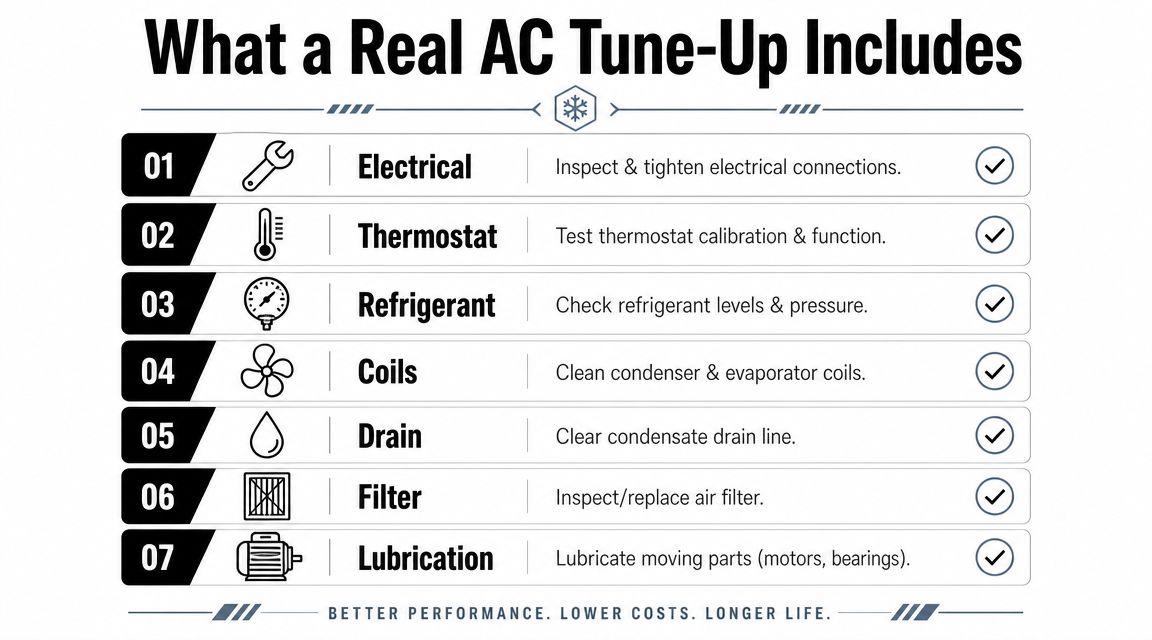
Here's a visual summary of what homeowners should expect during a quality visit.
The control and electrical side
Your AC depends on clean, stable electrical operation. During a thorough tune-up, a technician typically checks the thermostat, inspects wiring and connections, and tests key electrical components.
Bryant explains that an AC tune-up commonly includes thermostat calibration, electrical inspection and tightening, lubrication of moving parts, coil and drain cleaning, refrigerant verification, and a full safety and performance test. Technicians often measure blower motor amperage or voltage, supply-return temperature differential, and capacitor condition to confirm the system is operating within design tolerances, as described in Bryant's HVAC tune-up overview.
Why does that matter? Because loose electrical connections can increase resistance and stress components. A failing capacitor may still let the system run for now, but not reliably. A thermostat that reads incorrectly can make a perfectly good system seem like it has a cooling problem.
If you want a better sense of what the outdoor side of the system includes, this guide to parts of an outdoor AC unit helps homeowners connect the names of components with what a technician is checking.
The cooling side and the cleaning side
Cooling happens through heat transfer. Your AC removes heat from inside the home and releases it outdoors. If the coils are dirty, that heat transfer gets harder.
A tune-up commonly includes:
- Coil cleaning: Dirty condenser and evaporator coils reduce heat transfer.
- Drain cleaning: A clogged condensate drain can lead to moisture problems and shutdowns.
- Filter inspection: Restricted airflow can make the system work harder and cool less evenly.
- Refrigerant verification: Charge problems can affect comfort and component life.
- Lubrication: Moving parts need proper friction control to avoid extra wear.
Practical rule: If a visit only confirms that the unit turns on, you didn't get a full tune-up. You got a basic operational glance.
This short video gives a useful look at the kind of service items homeowners often hear discussed during maintenance.
The part many guides skip
In hot Arizona climates, a quality tune-up should also pay attention to airflow. That means more than checking whether air is coming out of the vents. It means asking whether the system is moving enough air, whether the temperature drop across the system makes sense, and whether the duct layout may be limiting performance.
A house can have a working condenser, a clean filter, and a functioning thermostat, yet still cool poorly because the airflow side of the system is off. That's why the best tune-ups don't stop at “clean and check.” They look for why some rooms stay warmer, why humidity feels high, or why a unit seems to run too long.
The Hidden Benefits More Than Just Cold Air
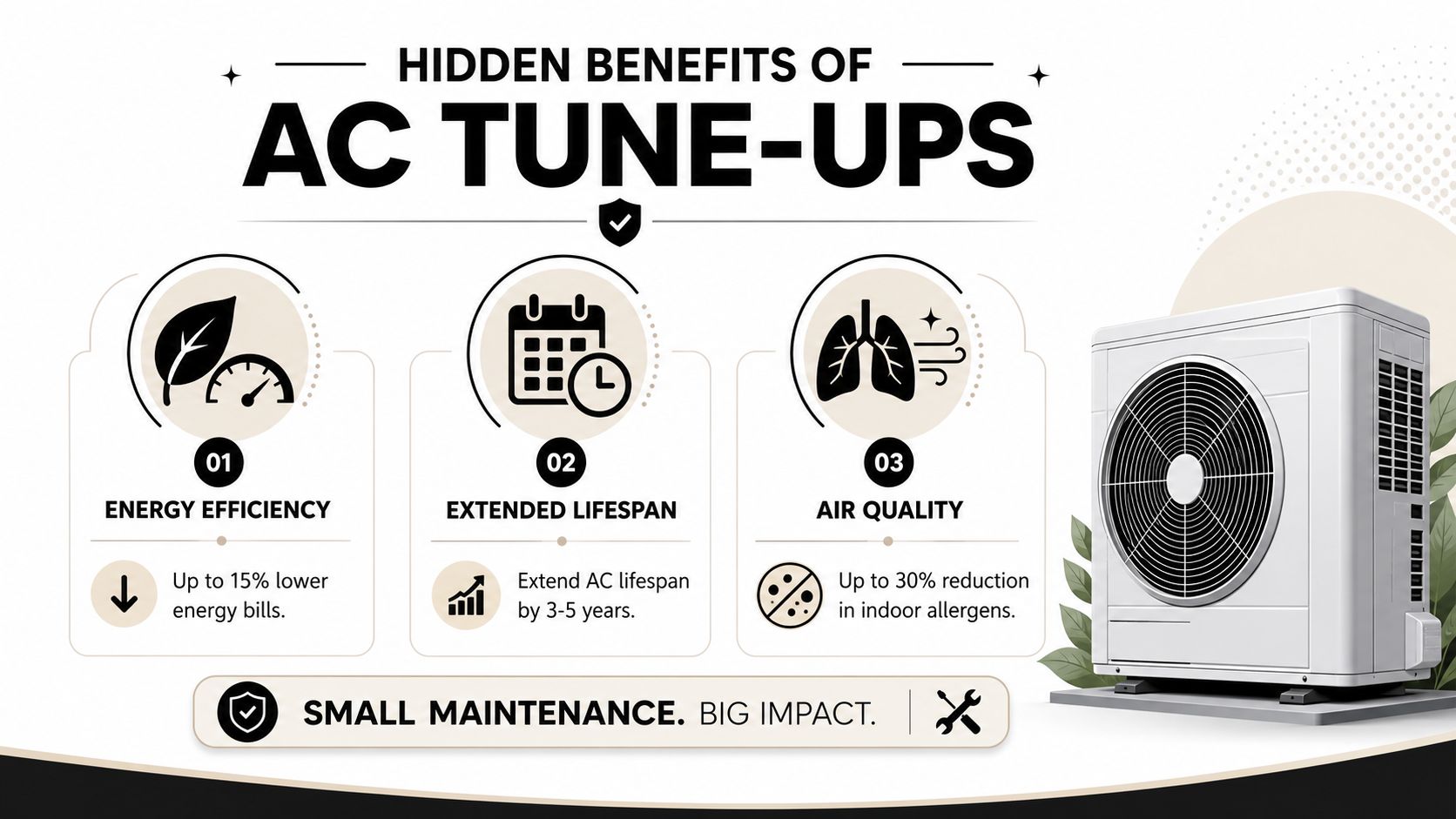
A common reason for scheduling a tune-up is the desire for cold air. That's fair. However, its full value extends beyond providing comfort on a hot afternoon.
A maintained system is easier to trust. It's more likely to operate efficiently, less likely to surprise you with an avoidable breakdown, and more likely to give you useful warning before a minor issue turns into a larger repair.
Lower operating cost and less waste
The U.S. Department of Energy states that neglecting maintenance leads to declining performance and increased energy use. Industry analysis cited by WorkTrek adds a stronger financial frame. Preventive HVAC maintenance can produce a 545% ROI, emergency HVAC repairs can cost 50% to 100% more than standard service calls, and regular maintenance can extend the life of air conditioners by 40%, according to WorkTrek's HVAC maintenance statistics roundup.
Those numbers make sense when you think about what the technician is addressing. Dirty coils, stressed electrical parts, and airflow restrictions all force the system to work harder. Harder work usually means more wear, more energy use, and less margin when the weather gets brutal.
Fewer surprise breakdowns
A tune-up doesn't guarantee that nothing will ever fail. Mechanical systems don't work that way. But it does improve the odds that someone catches warning signs early.
That matters in Arizona because a small weakness in spring can become a no-cool event in peak summer. A weak capacitor, restricted drain, dirty coil, or developing airflow problem may not stop the system on a mild day. Under heavy summer demand, it can.
Here's the practical payoff many homeowners care about most:
- Better reliability: The system has a better chance of making it through the season without interruption.
- Fewer emergency decisions: You're less likely to choose a repair under heat, stress, and time pressure.
- More useful planning: If a part is aging, you can schedule the repair instead of reacting to a breakdown.
Cleaner operation and a more comfortable house
Homeowners often describe the result of a good tune-up as “the AC feels normal again.” That usually means stronger airflow, steadier temperatures, and less strain on the equipment.
If indoor air quality is part of your concern, maintenance also fits into the bigger picture of filter condition, coil cleanliness, and airflow through the house. Homeowners who want to reduce dust and airborne irritants can also review practical steps for reducing indoor air pollution at home.
Good maintenance doesn't just help the unit. It helps the whole home feel more even and predictable.
How Often to Schedule Service and What It Costs
A good rule for most Arizona homes is to schedule AC service once a year, ideally before the long cooling season starts. Spring is usually the easiest window because the system can be checked before it has to work through months of extreme heat.
Some homes benefit from a tighter schedule. If you have an older system, a heat pump that runs in both summer and winter, long daily run times, or rooms that never seem to cool evenly, twice-yearly service can make sense. A car that racks up highway miles needs more attention than one that sits in the garage, and an air conditioner works the same way.
The bigger point is that service frequency should match how hard the equipment lives, not just the calendar.
What affects the price
Tune-up pricing varies because not every visit is the same. A basic check on an easy-to-access system usually costs less than a visit that includes heavy coil cleaning, difficult attic access, or extra diagnostic time to sort out airflow and performance problems.
That last part matters. In Arizona, a real tune-up should not stop at “the unit turns on and blows cold.” A technician should also look at how the whole system is performing, including airflow and, when needed, duct-related issues that can make a house feel hotter than it should even when the equipment itself is running.
If you are comparing prices, ask what the company does during the visit. A very cheap special may cover little more than a quick rinse and a visual glance. A higher-priced service may include measurements, electrical testing, drain inspection, airflow checks, and a clear explanation of what was found.
These questions help separate a real tune-up from a fast stop:
- How long does the visit usually take? Enough time should be set aside to inspect, test, and explain.
- What gets measured, not just looked at? Diagnosis matters more than a quick cleaning.
- Will I get a summary of the findings? Homeowners should know what is working well and what needs attention.
- Do you check airflow and comfort issues inside the home? That is often where efficiency and comfort problems start.
Between visits, simple filter care still helps the system breathe the way it should. If you are not sure what schedule makes sense for your home, this guide on how often to replace an HVAC filter is a useful place to start.
DIY Maintenance vs Professional Service
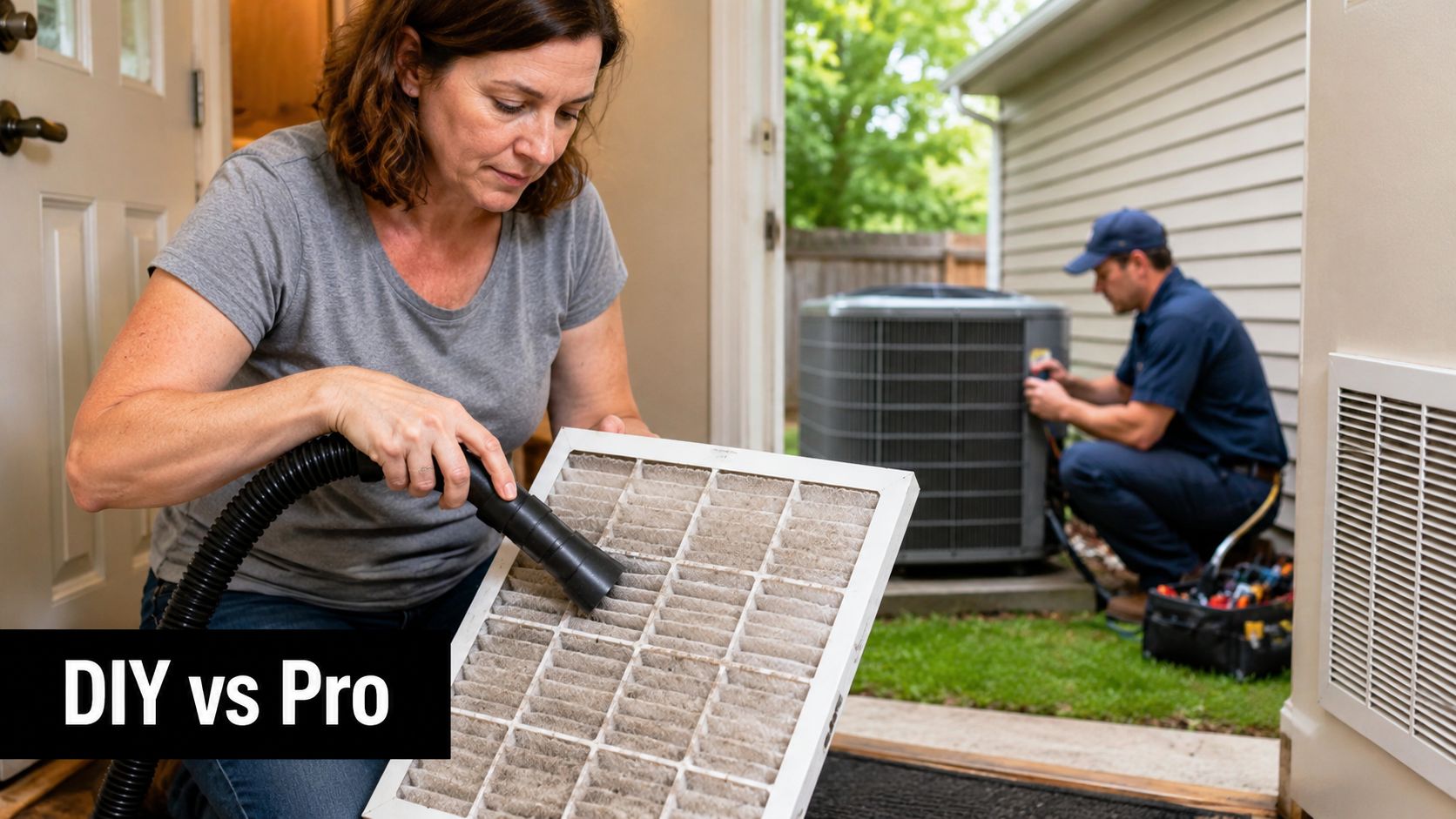
Homeowners absolutely have a role in AC care. In fact, the systems that tend to run best are often in homes where the owner pays attention between service visits.
But there's a line between basic upkeep and professional diagnostic work.
What you can safely do yourself
A homeowner can usually handle the simple things that support airflow and cleanliness around the system.
That includes:
- Changing or checking the filter: A dirty filter can choke airflow.
- Keeping the outdoor unit clear: Leaves, weeds, and debris can interfere with operation.
- Watching for drain issues: Water where it shouldn't be is worth attention.
- Listening and noticing: New sounds, smells, or weak airflow matter.
These habits help. They also make your technician's job easier because the system has a better chance of being inspected in normal working condition instead of neglected condition.
What requires a trained technician
A real tune-up involves testing, measuring, and judging system behavior. That's where professional tools and training matter.
Constellation points out an important distinction. A one-time tune-up visit is not the same thing as a true preventive maintenance program, and a professional service should identify deeper issues like airflow problems or code-related installation defects that a simple cleaning won't fix, as explained in Constellation's guide to what to expect during an air conditioning tune-up.
That's the key difference:
| Homeowner upkeep | Professional tune-up |
|---|---|
| Replace filter | Test electrical components |
| Clear debris around condenser | Verify refrigerant-related performance |
| Notice odd sounds or smells | Measure temperature split and motor readings |
| Keep vents open and unobstructed | Identify airflow or duct-related issues |
If the problem is in the refrigerant circuit, the control system, the electrical components, or the duct design, DIY maintenance won't diagnose it accurately.
Professional service also matters for safety. Electrical testing and system diagnostics involve parts that can be hazardous to handle without training. And if the system has recurring performance issues, a quality technician should be asking deeper questions than “Did you change the filter?”
Warning Signs Your AC Is Crying for a Tune Up
Sometimes homeowners call because they want preventive maintenance. Other times, the system starts hinting that it needs attention.
A tune-up can be useful when the unit still runs but doesn't seem to run right. That's often the sweet spot, because the technician has a chance to catch stress before it turns into a hard failure.
Clues you shouldn't ignore
Watch for these signs:
- Weak airflow from vents: The issue may be filter restriction, blower trouble, coil buildup, or duct problems.
- Rooms cooling unevenly: That often points to airflow imbalance, duct leakage, or system distribution issues.
- Musty smell when the AC runs: Moisture around the drain or indoor components may need attention.
- Burning or sharp electrical smell: Shut the system down and call for service. Electrical issues need prompt evaluation.
- Unusual noises: Buzzing, rattling, squealing, or grinding usually mean something has changed mechanically or electrically.
- Frequent on and off cycling: Short cycling can signal control issues, airflow trouble, refrigerant concerns, or sizing problems.
- Higher bills without a clear reason: If weather and usage feel similar but cost doesn't, the system may be losing efficiency.
What a tune-up can and can't solve
A tune-up can address dirt, neglected maintenance items, some early warning issues, and performance checks that point to a fix.
It can't magically correct every comfort complaint. If the house has leaking ducts, poor return airflow, an installation defect, or equipment that's no longer sized well for the home, cleaning alone won't solve that.
That's why homeowners should think of warning signs as information. They don't always mean “you need a new unit.” They do mean the system deserves a closer look by someone who can tell the difference between maintenance, repair, and bigger design issues.
What Globe and Miami Area Residents Should Expect from a Pro
A professional tune-up should feel like a real checkup, not a quick glance at the equipment and a generic “looks fine.”
If you took your truck in for a tune-up, you would expect more than someone wiping off the hood and sending you home. You would expect testing, measurements, and a plain-English explanation of what is working, what is wearing out, and what needs attention later. Home cooling service should work the same way.
Carrier explains that a worthwhile AC tune-up should lead to evidence-based findings tied to actual system performance, including items like temperature split, amperage draw, and airflow, while also identifying larger problems such as duct leakage, refrigerant leaks, or equipment sizing concerns, according to Carrier's AC tune-up service guidance.
What that looks like in the real world
A good technician explains the system in a way that makes sense to a homeowner. You should come away knowing what was checked, what the readings showed, and whether your comfort problems point to maintenance, repair, or a bigger airflow issue somewhere else in the house.
That often includes:
- Airflow checks: Is enough air moving across the indoor coil and into the rooms that need cooling?
- Cooling performance readings: Does the system show a normal temperature drop as it cools the air?
- Electrical testing: Are motors, capacitors, and other key parts operating within an acceptable range?
- Whole-system evaluation: Are the ducts, returns, and equipment setup helping the system do its job, or holding it back?
That last point gets missed in a lot of tune-ups. In Arizona, the equipment can be running while the house still feels uncomfortable because the delivery side of the system is weak. The AC unit is the engine. The ductwork is the road it travels on. If the road is damaged or poorly laid out, the trip is never going to be very good.
Comfort problems in local homes often come from more than one source. A system can need routine maintenance and still have airflow trouble. It can cool the air at the unit and still lose performance before that air reaches the far bedroom.
Service before sales matters
Homeowners in Globe, Miami, and nearby communities are right to be cautious about tune-up visits that quickly turn into sales pitches. A trustworthy technician stays focused on diagnosis first.
Cobre Valley Air LLC is one local company homeowners may come across for repair, installation, maintenance, duct design, and airflow evaluation. The company name matters less than the service standard behind it. The technician should inspect the equipment, look at airflow and duct performance when needed, explain the findings clearly, and be honest about whether a tune-up is enough.
Sometimes the answer is simple. Sometimes it is not.
A good pro will say so directly. If the issue is dirty components, worn electrical parts, or deferred maintenance, they should show you that. If the bigger problem is poor return airflow, leaking ducts, or an older system that no longer matches the home well, they should explain that too without turning the visit into pressure.
That kind of clarity is especially helpful in older Arizona homes, homes with additions, and houses where comfort has never felt quite even from room to room. In those cases, the best technician looks at the full cooling system, not just the box outside.
Invest in Your Comfort with Proactive AC Care
An AC tune-up is simple to define, but its value runs deeper than most homeowners expect. It's preventive maintenance that helps your system operate more cleanly, more safely, and with fewer unpleasant surprises when the heat sets in.
For Arizona homeowners, the bigger lesson is this. Cooling performance isn't just about whether the unit turns on. It's about whether the whole system, including airflow and duct delivery, is doing its job.
If you've been wondering what is an AC tune up, the practical answer is that it's a scheduled checkup for one of the hardest-working systems in your home. It's a chance to catch dirt, wear, and hidden performance issues before they become expensive summer problems.
Waiting until the house is hot usually costs more in stress, time, and repair decisions. Scheduling maintenance before peak season gives you better information and better options.
If you're in Globe, Miami, Superior, or a nearby Arizona community and want a clear, no-pressure evaluation of your cooling system, schedule an AC maintenance visit with Cobre Valley Air LLC. Their team handles air conditioning repairs, installation, maintenance, duct design, and full-system diagnostics so you can make informed decisions before summer puts your equipment to the test.