


When considering duct cleaning services, it's often due to a specific problem, not a routine chore. Maybe dust keeps showing up on the furniture a day after you clean. Maybe the house smells stale when the air conditioner starts. Maybe a remodel left fine debris everywhere, and now you're wondering what made it into the system.
In Globe, Miami, and nearby communities, that question usually sits next to bigger HVAC concerns. Is the airflow weak because the ducts are dirty, or because the filter is overdue, the blower is loaded up, or the duct design was never right to begin with? That's the part many duct-cleaning pages skip. Duct cleaning can help in the right situation, but it isn't a magic fix for every comfort or air-quality complaint.
The better way to look at it is as one piece of total system health. Ducts matter. So do blower components, coils, filtration, duct leakage, return-air sizing, and overall airflow balance. If you treat the visible vents as the whole job, you miss the reason the house feels dusty, stuffy, or uneven in the first place.
What Is Professional Duct Cleaning Really?
A homeowner in Globe calls because the house gets dusty fast, one bedroom never feels right, and the AC has a stale smell at startup. Duct cleaning may be part of the answer. It may also have very little to do with the underlying problem.
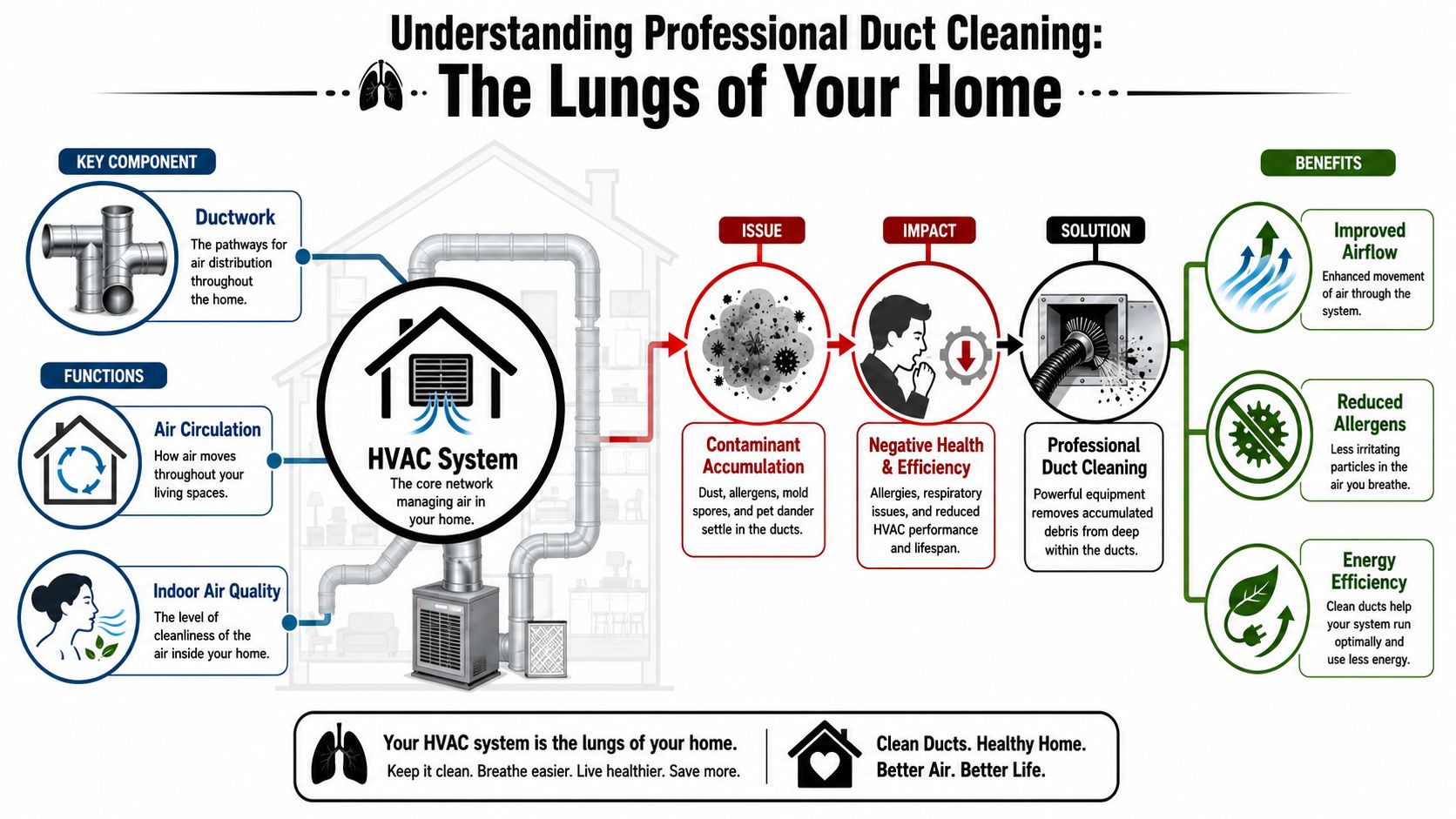
That is why professional duct cleaning should be treated as an HVAC system service, not a cosmetic add-on. The goal is to remove debris from the air path and confirm whether contamination is affecting system performance, indoor cleanliness, or air quality. A good contractor checks the duct system, blower section, filtration, and accessible components before deciding what cleaning will and will not accomplish.
What homeowners often expect
Many homeowners expect a shop vac at the registers and a quick pass through the vents. That approach cleans visible dust near the openings, but it does not address the full route air takes through the system.
Professional duct cleaning is tied to the airside system. That includes supply ducts, return ducts, grilles, and the air-moving components that can hold and recirculate debris. If the blower wheel is loaded up, the return is pulling insulation dust from an attic leak, or the filter has been bypassing particles, cleaning vents alone will not solve much. In homes with recurring dust issues, it also helps to review basic filtration habits, including how often to replace your HVAC filter.
What a real cleaning job includes
A proper job usually starts with inspection, not equipment. The technician needs to determine what is in the system and whether cleaning is the right correction.
That often includes:
- Inspecting supply and return runs for dust buildup, construction debris, pest contamination, damaged duct board, loose insulation, or signs of moisture
- Creating negative pressure so loosened material is captured instead of blown back into the house
- Using agitation tools that fit the duct material and condition, whether that is sheet metal, flex duct, or duct board
- Cleaning accessible components tied to airflow, such as registers, the blower compartment, and other air-moving parts when contamination is present
- Closing and sealing service openings correctly after the work is complete
- Verifying airflow and basic system operation after cleaning
The details matter. Aggressive brushing in older flex duct can do harm. Skipping the return side leaves part of the contamination path in place. Cleaning without checking the blower, filter rack, and obvious leakage points often leaves the homeowner with the same complaint a month later.
What duct cleaning does not do
Duct cleaning removes debris from the air path when debris is there. It does not correct poor duct design, undersized returns, duct leakage, a dirty evaporator coil, or a weak blower motor. It also should not be sold as a guaranteed cure for allergies, odors, comfort problems, and high electric bills in one visit.
That is the trade-off homeowners need to hear clearly. Cleaning can be the right service after remodeling, pest activity, heavy dust intrusion, or visible contamination inside the duct system. In other cases, the smarter repair is sealing return leaks, correcting airflow, cleaning the blower assembly, or fixing a filtration problem.
Why this matters in real HVAC work
In the field, dirty ductwork is often one part of a bigger system story. I have seen houses where the ducts needed attention, but the main issue was a blower wheel packed with dirt, a collapsed return, or an air filter that was too restrictive for the equipment. I have also seen homes where renovation debris inside the returns made duct cleaning the right call.
The difference is diagnosis.
Professional duct cleaning means cleaning the system where contamination exists and recognizing when the root cause sits somewhere else. That is the standard homeowners should expect from any HVAC company that takes system health seriously.
Five Signs Your Arizona Home Needs Duct Cleaning
The first question isn't who to hire. It's whether your house needs the service.
That's where most homeowners get stuck. Marketplace guidance notes that homes with visible dust at registers, recent remodeling, pest contamination, or confirmed mold are strong candidates, while routine cleaning for every home isn't clearly justified. It also points out that the primary pain point is decision-making and the need for inspection to identify the true source of airflow or air-quality complaints, as noted in Thumbtack's duct cleaning guidance.
Dust at the registers that keeps coming back
A light film on a grille isn't unusual. Heavy buildup, dark dust collecting around supply registers, or debris blowing out when the system starts is different. If you wipe nearby surfaces and dust returns quickly, the system may be moving contaminants through the house.
That doesn't automatically mean the ducts are the only issue. Start by checking the filter condition and replacement schedule. If you're not sure whether filtration is part of the problem, this guide on how often to replace your HVAC filter is a good place to start.
Recent remodeling or construction
Drywall dust, sawdust, insulation particles, and general jobsite debris can get pulled into returns during a renovation. Even careful plastic containment doesn't catch everything, especially if the system ran during the work.
In older Arizona homes, smaller projects can create outsized mess because return paths and duct joints may already be leaky. If the house was remodeled and the HVAC system stayed active, a professional inspection makes sense.
Signs of pests inside the duct system
Rodents and insects don't just create a cleanliness issue. They create a contamination issue. Nesting material, droppings, and damaged insulation can affect both air quality and duct integrity.
Look for these clues:
- Scratching or movement sounds near walls, ceilings, or the air handler.
- Musty or foul odors that appear when the blower turns on.
- Debris around vents that doesn't look like ordinary household dust.
- Chewed material near duct runs in attics, crawlspaces, or mechanical areas.
Confirmed mold or moisture-related contamination
If mold has been confirmed in or around the duct system, don't treat that like normal dust. The bigger question is where the moisture came from. Condensation problems, insulation issues, and drainage or equipment problems need to be addressed along with any cleaning.
If moisture is still present, cleaning alone won't hold. The contamination can return because the condition that caused it is still there.
Uneven airflow with no obvious filter issue
This sign needs a little caution. Weak airflow from one room doesn't prove the ducts are dirty. It can also point to a crushed flex run, closed damper, undersized branch duct, blower issue, or coil restriction.
Still, if you have weak airflow along with visible contamination at vents or recent debris-producing work in the home, duct inspection becomes a reasonable next step.
Odors that show up when heating or cooling starts
A stale, dusty, or musty smell at startup often gets homeowners searching for duct cleaning services near me. Sometimes they're right. Sometimes the odor source is at the coil, in the blower compartment, or tied to moisture around the system.
A good technician separates odor source from odor pathway. Ducts may be carrying the smell, but they aren't always where it starts.
Real Benefits vs Common Myths About Duct Cleaning
Duct cleaning gets oversold. That's why homeowners either expect too much from it or dismiss it completely.
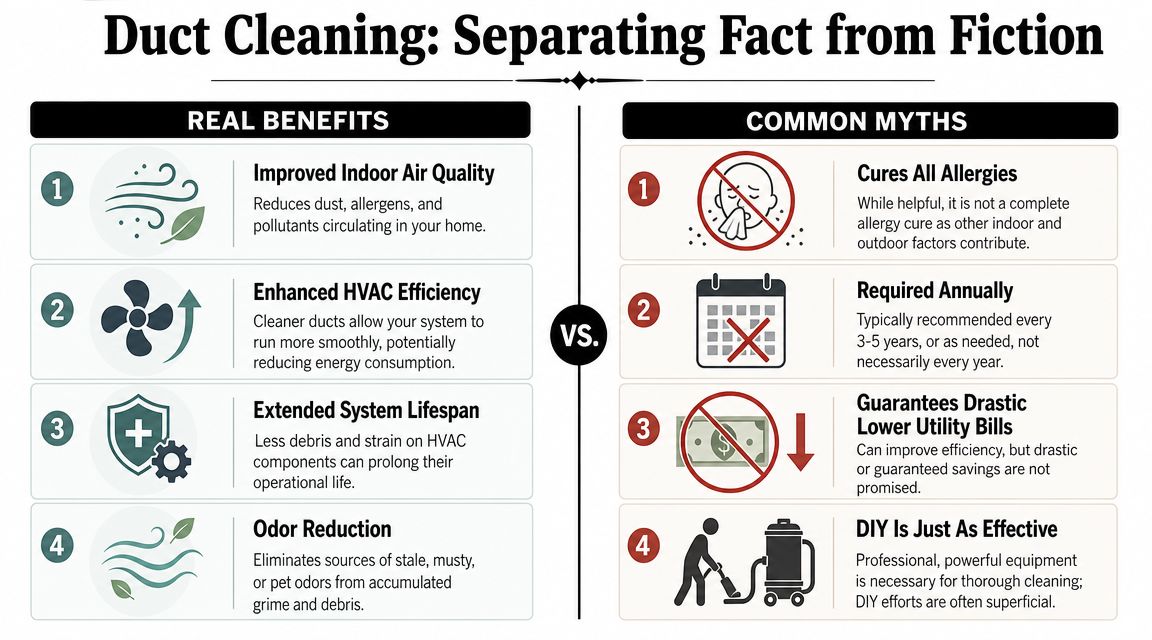
The truth sits in the middle. Some companies promise cleaner air, lower bills, and relief from every allergy complaint, but the outcome depends on what the system contains and what else is going on with the HVAC equipment. Stanley Steemer's consumer guidance takes the more realistic view that duct cleaning may help air quality and HVAC efficiency in some cases, especially when specific contaminants are being removed, but it isn't a guaranteed fix for every home. It also reflects a broader shift toward comparing duct cleaning with wider HVAC inspection and air-quality services, as described in Stanley Steemer's air duct cleaning overview.
What duct cleaning can genuinely do
When the system contains real contamination, cleaning can deliver practical results.
| Real-world situation | Likely benefit |
|---|---|
| Post-remodel debris in the duct system | Removes material that keeps recirculating |
| Dust buildup tied to contaminated supply and return paths | Reduces the amount of loose debris moving through the air path |
| Pest contamination | Removes nesting material and related debris after the underlying issue is addressed |
| Dirty airside components along with duct contamination | Supports cleaner airflow through the system |
For homeowners dealing with broader air-quality concerns, it also helps to compare cleaning with filtration, UV options, and source-control strategies. A full-service provider may include duct inspection as part of larger indoor air quality services, which is often the more useful approach when the complaint is "the house feels dusty" rather than "the ducts are visibly contaminated."
Myths that cause bad decisions
Some marketing claims sound good because they reduce a complicated issue to a simple promise.
- "It cures allergies." It can remove contaminants inside the HVAC air path, but allergies can also be driven by outdoor pollen, carpets, pets, humidity problems, and poor filtration.
- "Every home should do it on a schedule." Need matters more than calendar-based selling.
- "It always slashes energy bills." It may help in some situations, especially when contamination affects airflow, but no honest technician should guarantee dramatic savings without diagnosing the full system.
- "DIY vent cleaning is the same thing." Vacuuming grilles helps with housekeeping. It isn't the same as cleaning the interior duct system and air-moving components.
Reality check: The more dramatic the promise, the more carefully you should inspect what's actually included in the job.
Where homeowners get the most value
The strongest value usually shows up when cleaning is paired with diagnosis. If the return side is pulling attic dust, if the blower wheel is dirty, or if the duct layout is starving part of the home for airflow, cleaning by itself only solves part of the problem.
That's why I tell homeowners to think in layers. First identify the contaminant. Then identify how it entered the system. Then decide whether cleaning, sealing, filtration, repairs, or redesign will change day-to-day performance. That's how you get useful results instead of a temporary cosmetic improvement.
The Cobre Valley Air Duct Cleaning Process Step by Step
A homeowner in Globe usually calls for duct cleaning after noticing dust at the registers, stale air, or rooms that never seem to heat or cool evenly. The right appointment starts by verifying whether the duct system is the problem. Cleaning has value, but only when it is tied to what the system is doing as a whole.
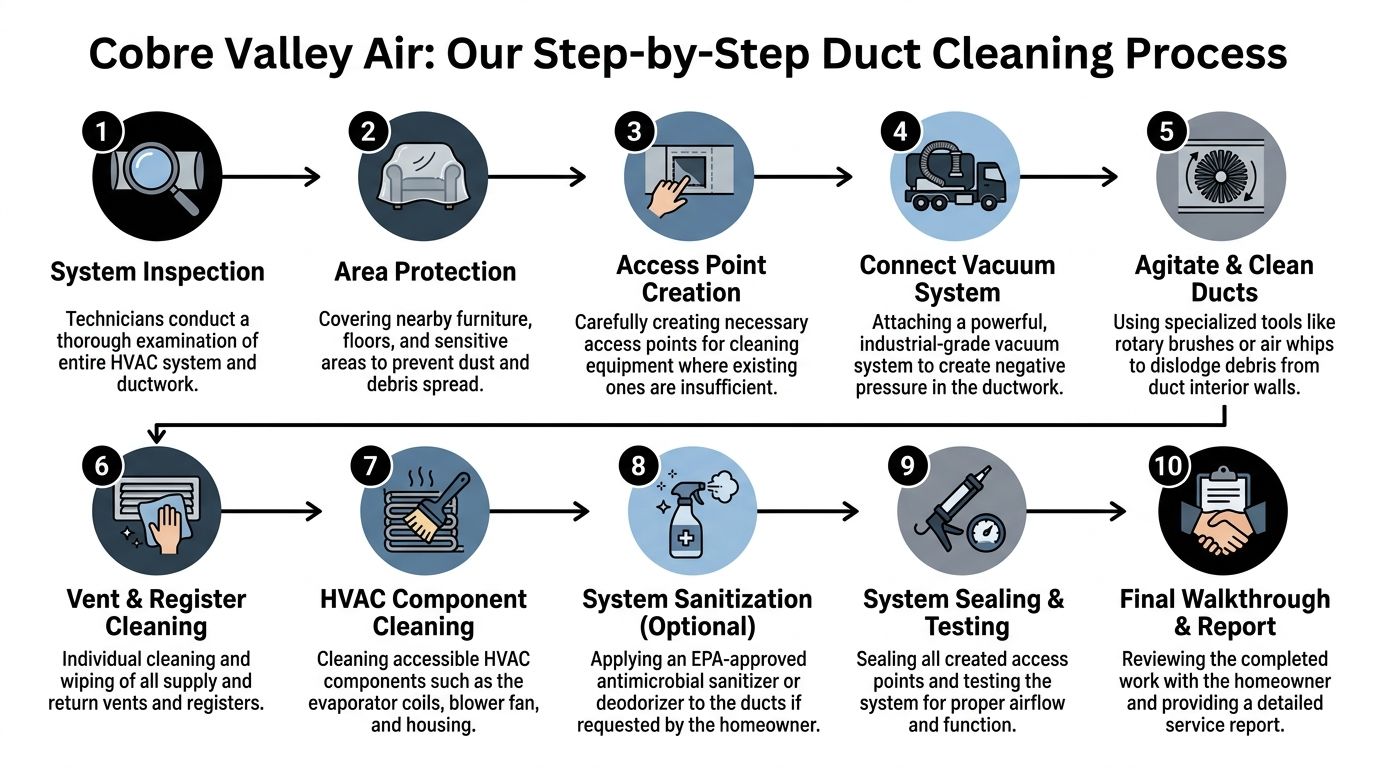
This visual shows the overall flow of a professional appointment.
The appointment starts with inspection, not equipment
Before any vacuum hose is set up, the system should be checked. That includes the supply and return runs, register condition, blower compartment, accessible coil area, filter fit, and any signs of leakage, moisture, crushed duct, or disconnected sections.
If you want that diagnostic step by itself before deciding on cleaning, a focused duct inspection near you can help identify whether contamination is the issue.
That first look matters because dust inside a duct is only part of the story. In Arizona homes, I often find return leaks pulling in attic dust, weak filtration letting fine particles bypass the filter, or airflow problems that keep debris settling in certain sections. Cleaning helps, but the inspection shows whether the system also needs sealing, repair, or airflow correction.
Protect the home, then establish negative pressure
The crew should protect floors, nearby furniture, and traffic paths before the cleaning begins. A professional job should leave the HVAC system cleaner, not the house dirtier.
Next, the technician places the duct system under negative pressure. That controlled suction keeps loosened debris moving toward the collection equipment instead of drifting into the living space. Without that containment step, the job turns into little more than aggressive dust stirring.
Here's a look at the process in action.
Mechanical cleaning reaches what suction alone leaves behind
Negative pressure does not remove stuck-on debris by itself. Dust, pet hair, and construction residue often cling to the duct interior, especially at bends, joints, and long branch runs. The technician needs agitation tools to break that material loose so the vacuum can collect it.
The method should match the duct material. Metal duct can usually handle more aggressive brushing than flex duct or internally lined duct. A careful contractor adjusts the tools and pressure to the system in front of them instead of treating every house the same way.
The job should cover the air path, not just the visible vents
A weak cleaning focuses on grilles because homeowners can see them. A proper cleaning addresses the sections that affect air movement and indoor air quality most directly. If contamination is present, the work may include these areas:
- Supply and return trunks, where heavier buildup often collects
- Branch runs serving individual rooms
- Registers and grilles with visible dust and debris
- Blower assembly and nearby housing, where buildup can affect airflow
- Accessible coil surfaces and cabinet areas when dirt is present there
That broader scope is what turns duct cleaning into part of an HVAC health check. If the blower is dirty, the return is leaking, or the coil area is fouled, cleaning only the vents leaves too much untouched.
Optional treatments need a clear reason
Some companies push deodorizing sprays or antimicrobial products as part of every job. That should raise questions. Those products may have a place in limited situations, but they are not a substitute for removing contamination and correcting the source of the problem.
Good duct cleaning removes buildup from the system. Moisture problems, damaged ductwork, poor filter racks, and bad duct design still need their own fix.
Final testing and homeowner walkthrough
After cleaning, any access openings should be closed and sealed correctly. Then the technician should run the system, check airflow, and confirm normal operation.
The final walkthrough is where a homeowner learns whether the job solved the whole issue or only one layer of it. If the crew found return leakage, damaged duct sections, poor filter fit, weak airflow, or contamination around the blower or coil, that should be explained plainly. That is the standard Cobre Valley Air aims for. Duct cleaning should support long-term system performance, not stand in for a real diagnosis.
Understanding Duct Cleaning Costs in Globe and Miami AZ
Cost questions are fair. The problem is that duct cleaning isn't a one-price service.
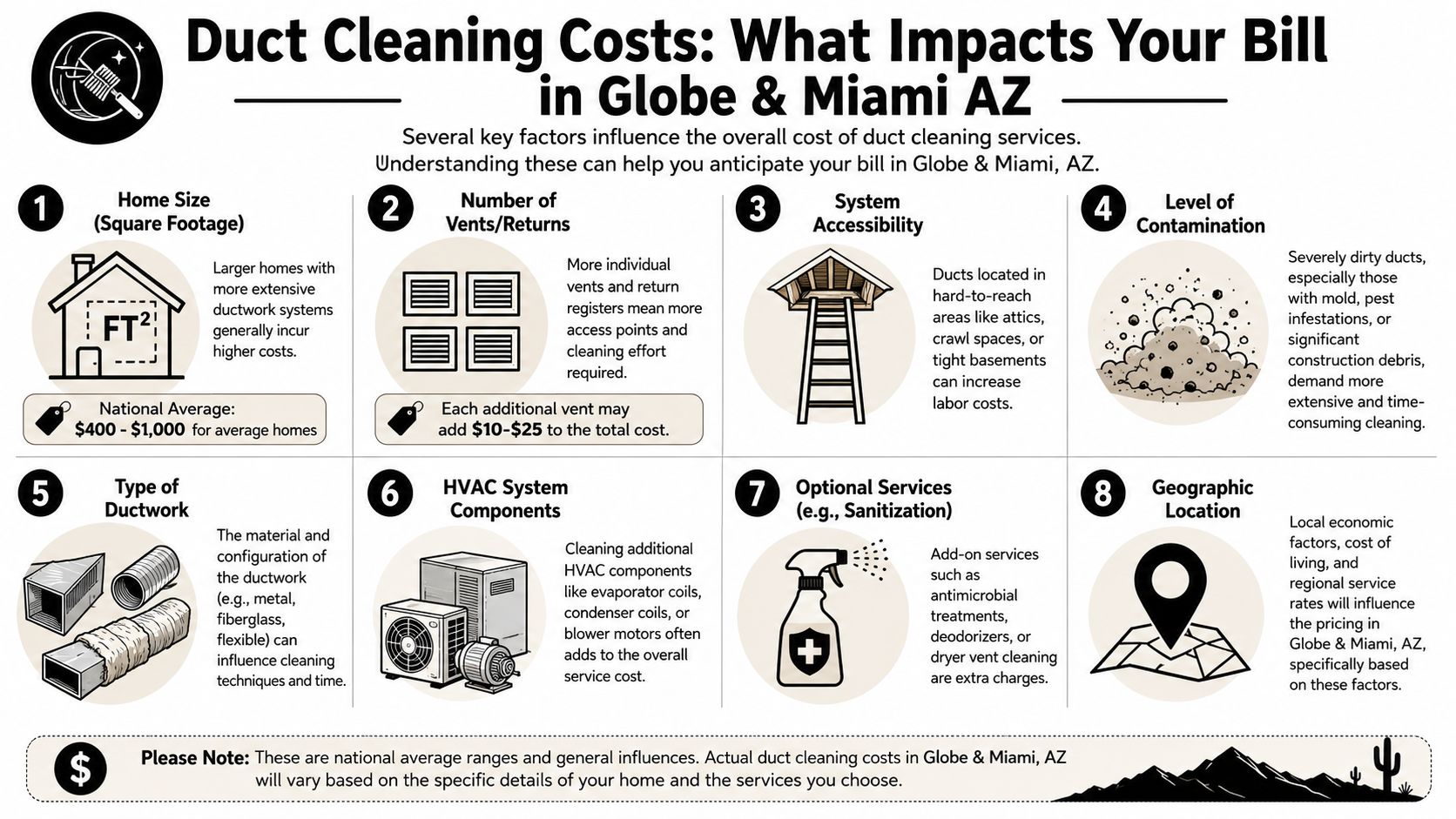
The total depends on the size and layout of the house, how many supply and return openings are in the system, how accessible the ductwork is, what type of duct material is installed, and how contaminated the system is. That's why flat phone quotes tend to be unreliable.
A useful pricing benchmark
Angi's market data gives homeowners a realistic baseline. It reports an average air duct cleaning cost of $593, with most residents paying $310 to $879, and possible totals ranging from $100 to $1,600 depending on home size and vent count. The same data says hourly rates are typically $85 to $120, vents average $35 each, and labor can account for 90% to 95% of the total bill, according to Angi's duct cleaning cost breakdown for Houston.
That isn't a Globe-specific price list, but it does show how this service is commonly priced in a large U.S. market. The big takeaway is that labor time and system complexity drive the quote more than a one-size-fits-all package.
What changes the quote locally
In Globe and Miami, several job conditions tend to push a quote up or down:
- House size and layout affect how much ductwork has to be accessed and cleaned.
- Vent and return count matters because each opening adds labor and cleaning time.
- Accessibility changes the work if the equipment or ducts are in tight attic spaces or difficult mechanical areas.
- Duct type matters because metal, flex, and internally lined sections require different handling.
- Contamination level changes scope when the system contains remodeling debris, pest material, or heavy accumulation.
- Additional component cleaning can add time if the blower area or accessible coil surfaces need attention too.
Why inspections matter more than coupons
A low advertised price often strips the work down to the easiest visible pieces or opens the door to heavy upselling once the crew arrives. A real quote should follow an inspection of the system configuration and condition.
Here's a simple way to think about pricing value:
| Quote style | What it usually means |
|---|---|
| Very low flat price with little detail | Likely limited scope or sales pressure later |
| Midrange quote with system inspection | Usually more realistic for complete work |
| Detailed quote tied to contamination and access | Better for understanding what you're paying for |
When homeowners ask whether duct cleaning is "worth it," the answer depends less on the headline price and more on whether the work matches a real need. Spending money on a thorough service after a renovation, pest issue, or confirmed contamination is different from paying for a routine cleaning that wasn't necessary in the first place.
How to Hire the Right Duct Cleaning Professional in Arizona
A Globe homeowner calls after seeing dust blow from a bedroom register and getting three very different duct cleaning quotes in the same afternoon. One company promises cleaner air for the whole family. Another offers a low flat rate with almost no detail. The third asks questions about the age of the system, recent remodeling, airflow problems, and whether anyone has inspected the return side.
That third conversation is usually the one worth having.
Hiring the right duct cleaning professional starts with one basic idea. Duct cleaning is not a stand-alone cure for every comfort or air quality complaint. It is one service inside a larger HVAC evaluation. If the contractor cannot tell the difference between dirty ductwork, duct leakage, poor return design, weak blower performance, or filtration problems, the cleaning may be done well and still fail to solve the reason you called.
Ask what they inspect before they clean
A qualified contractor should be able to explain the system in plain language. That includes what they plan to inspect, what they plan to clean, and what findings would change the scope.
Ask direct questions:
- What parts of the air distribution system are included? You want a clear answer on supply ducts, return ducts, registers, the air handler or furnace cabinet area, and any accessible components that affect airflow.
- How do you contain loosened debris? Look for an explanation that includes negative pressure, source removal, and controlled agitation.
- What would make you recommend against cleaning? Good companies are comfortable saying, "This system needs repair first," or, "Cleaning is not the main issue here."
That last answer matters. In Arizona homes, especially older homes and additions around Globe and Miami, I often see comfort complaints caused by return restrictions, disconnected flex duct, crushed runs in the attic, or poor filter fit. Cleaning may still help, but only after the actual fault is identified.
Get the scope in writing
A written estimate is where the sales talk ends and the actual job begins.
If the estimate only says "whole house duct cleaning," it leaves too much room for argument later. A useful estimate names the components included, notes access limitations, separates optional treatments from base work, and explains any conditions that could change the price.
| What should appear in the estimate | Why it matters |
|---|---|
| Specific ducts and components included | Keeps the scope clear before work starts |
| Optional treatments listed separately | Prevents surprise add-ons |
| Access or repair notes | Shows whether attic access, damaged duct, or sealing issues may affect labor |
| Clear pricing terms | Makes comparison between contractors more honest |
Short, vague estimates usually lead to vague results.
Verify licensing, insurance, and actual HVAC experience
Arizona homeowners should verify that the company is properly licensed for the work being performed and insured to work on the home. Duct cleaning often overlaps with access panels, air handlers, duct modifications, and mechanical components. That is HVAC territory, not just housekeeping.
Then look past the license number and ask what the company does day to day.
A contractor who only sells duct cleaning may miss bigger system problems. A contractor who regularly handles AC repair, heat pumps, furnaces, duct design, airflow diagnostics, and static pressure issues is more likely to recognize when debris is the problem and when it is not. That distinction saves money.
One local example is Cobre Valley Air LLC, ROC 339078. The company handles HVAC repair, installation, maintenance, duct inspection, duct design, and indoor air quality work. For homeowners trying to solve airflow and comfort issues instead of just checking a box, that broader skill set matters.
Be careful with health claims and fear-based sales
As noted earlier in the article, federal homeowner guidance warns against broad health claims tied to duct cleaning.
A reputable technician should show you what they found. That may include visible buildup, pest-related debris, damaged duct sections, or contamination after remodeling. They should explain what cleaning can reasonably improve and where the limits are. They should not guarantee that cleaning will fix allergies, asthma symptoms, or every dust problem in the house.
Fear is easy to sell. Diagnosis takes more skill.
Listen for airflow knowledge
This is one of the fastest ways to tell whether you are dealing with an HVAC professional or a one-service salesperson.
If you mention hot rooms, weak airflow, noisy returns, high utility bills, or an AC system that seems to run too long, the contractor should be able to talk about more than brush-and-vacuum work. They should be ready to discuss related issues such as:
- Filter size and fit
- Return-air layout
- Duct leakage
- Blower condition
- Coil cleanliness
- Duct sizing problems in remodeled spaces
Those are common root causes in Arizona homes. Homeowners often search for duct cleaning services near me because the symptom shows up at the register. The cause may be deeper in the system.
What a good hire sounds like
The right provider usually sounds calm, specific, and willing to explain trade-offs.
They inspect before committing to a final scope. They can tell you whether cleaning is justified, whether repairs should come first, and whether the issue points to duct contamination, airflow design, equipment condition, or a combination of those factors. They put the work in writing. They do not rely on pressure, dramatic language, or promises that sound too broad to test.
Use this checklist before you book:
- They explain what they will inspect
- They define what is included in the cleaning
- They provide a written estimate
- They can verify license and insurance
- They avoid unsupported health promises
- They understand airflow, duct design, and HVAC system performance
That is the standard homeowners should expect. Duct cleaning has a place, but only when it fits the condition of the system. The best hire is the contractor who treats the ductwork as part of the whole HVAC picture and provides an honest assessment, even if it reveals that cleaning is only one step.