


The house is warming up, the thermostat clicks, and then nothing happens. No fan. No outdoor unit. No rush of cool air through the vents. If your AC won't turn on, that silence feels expensive fast, especially on a hot Arizona day.
The good news is that a dead system doesn't always mean a major breakdown. Some of the most common no-start calls come from simple issues you can check safely in a few minutes. One big example: approximately 20% of thermostat failures that prevent an air conditioner from turning on are caused by dead batteries, according to Balance Point Mechanical's air conditioner not turning on guide. That tells you something important right away. Start at the controls and power supply before assuming the compressor, heat pump, or furnace has failed.
That Sinking Feeling When the AC Stays Silent
When an AC stops responding, most homeowners jump straight to the worst-case scenario. They think failed compressor, failed motor, or full system replacement. Sometimes that happens. A lot of times, it doesn't.
A no-start problem usually follows a chain. The thermostat sends a call for cooling. The indoor equipment responds. Safeties stay closed. The outdoor unit gets the signal. If any one link in that chain is interrupted, the whole system sits still. That's why calm, ordered troubleshooting works better than guessing.
This video gives a useful visual overview before you start checking your own system:
What matters first
You want to separate simple homeowner fixes from pro-only electrical or refrigerant problems. That means starting with items that are both safe and common.
- Thermostat power: If the control has no power, the system gets no command.
- Basic electrical supply: A tripped breaker can shut down part or all of the system.
- Condensate safety: Water backup can lock the unit out even when everything else looks normal.
- Outdoor clues: Sound and fan movement can tell you whether the unit is trying to start.
Practical rule: If a check requires removing a high-voltage panel, touching wiring, or forcing a component to move, stop there and call a technician.
That same step-by-step mindset matters beyond repairs. Quality air conditioning repairs, AC installation, and AC maintenance all depend on process, not guesswork. The same goes for heat pumps, furnaces, and duct design. Good HVAC work starts with the simple things and confirms the basics before anyone swaps parts.
Start With the Simple Stuff Power and Thermostat Checks
The thermostat is the command center. If it isn't powered, set correctly, or sending a call for cooling, the rest of the system won't respond.
Check the thermostat before anything else
If the screen is blank or dim, start there. According to HomeFixx's guide to an AC not turning on, dead thermostat batteries are the #1 cause of "no power" AC service calls, and a $3–$8 battery replacement can avoid a $95–$150 diagnostic fee.
Use this order:
- Remove the faceplate carefully: Many thermostats snap off the wall plate.
- Look for AA or AAA batteries: Most battery-powered models keep them in a tray on the front or back.
- Install fresh alkaline batteries: Skip rechargeable cells unless the thermostat manufacturer specifically allows them.
- Wait briefly: Let the thermostat reinitialize before testing.
- Set it correctly: Switch to COOL and lower the setpoint below room temperature.
If the screen comes back to life and the system starts after that, you've solved the problem with the cheapest fix in the house.
For a broader look at basic system troubleshooting, this heating and air conditioning troubleshooting article is also worth reviewing.
Confirm the settings are calling for cooling
A powered thermostat can still be set wrong. Check three things:
| Item | What to look for | Why it matters |
|---|---|---|
| Mode | COOL, not OFF or HEAT | Wrong mode means no cooling call |
| Setpoint | Lower than room temperature | The system needs a reason to start |
| Fan | AUTO is usually best for testing | ON can confuse the diagnosis because only the blower may run |
If you have a smart thermostat, pay attention to any delay message. Some models intentionally wait before starting to protect the equipment.
If the breaker has tripped once, reset it once. If it trips again, stop. Repeated trips usually mean the system is protecting itself from a deeper electrical fault.
Check the breakers the right way
Go to the main electrical panel and find anything labeled AC, air handler, furnace, or HVAC. Some systems use separate breakers for indoor and outdoor equipment.
A tripped breaker doesn't always look fully off. It may sit in the middle. Reset it by pushing it firmly to OFF first, then back to ON. Don't keep flipping it over and over. If it won't hold, that's your signal to stop and bring in a pro.
At this stage, you've covered the easiest and safest causes of an AC that won't start. If the thermostat is powered, the settings are correct, and the breakers are holding, the next place to look is the one many guides barely mention.
The Overlooked Culprit Your ACs Condensate System
A lot of homeowners check batteries and breakers, then assume the next step must involve a failed capacitor or compressor. That's not always true. One of the most missed shutdown causes sits right at the indoor unit, and it has nothing to do with a major mechanical failure.
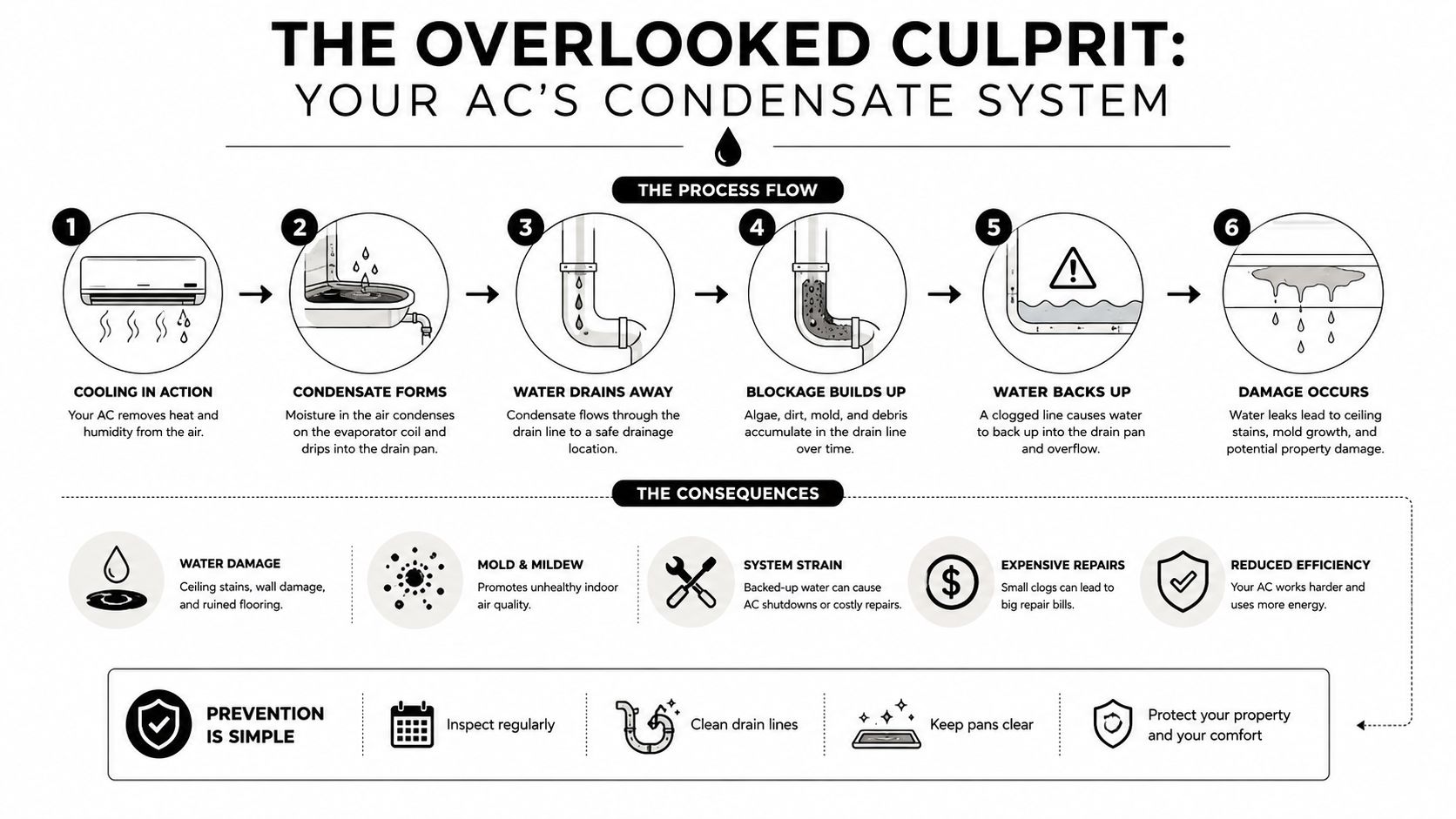
Your AC doesn't just cool the air. It also removes moisture. That moisture turns into condensate and drains through a PVC line. When that line clogs, water backs up. To prevent overflow and water damage, many systems use a float switch or condensate safety switch that shuts the system down.
Why this gets missed so often
Most online advice sticks to thermostat, filter, and breaker checks. Those matter, but they don't tell the whole story in hot climates. According to this video on float switch shutdowns and drain line issues, existing content rarely addresses the condensate drain safety switch, even though 30–40% of summer AC shutdowns in hot climates stem from water overflow triggering the float switch.
That tracks with what technicians see during Arizona's muggy stretches. The system may be perfectly capable of cooling, but the safety switch is doing its job and refusing to let it run with backed-up water.
What to look for indoors
Go to the air handler, furnace closet, attic unit, or wherever the indoor equipment is installed. You're looking for the condensate setup, not opening sealed electrical compartments.
Check for these visible signs:
- PVC drain pipe: Usually white plastic exiting the indoor unit.
- Standing water: In a drain pan, around the unit, or inside a clear trap.
- Float switch: A small safety device wired near the drain or auxiliary pan.
- Algae or sludge: A common clue that the line has partially clogged.
If you see water where it shouldn't be, the safety switch may be what shut your AC off.
A system that won't start because of a float switch isn't "broken" in the usual sense. It's stopping on purpose to prevent a water problem from becoming a ceiling, drywall, or floor problem.
The DIY fix most guides skip
If you're comfortable with basic cleanup and the clog appears minor, the practical homeowner fix is often at the end of the drain line outside, not inside at the air handler.
Try this:
- Locate the outdoor drain termination: Usually a small PVC pipe near the exterior wall.
- Attach a wet/dry shop vacuum: Seal it as well as you can with your hand or a rag.
- Run the vacuum briefly: You're trying to pull out sludge, algae, or debris from the line.
- Recheck the indoor area: If the water level drops and the switch resets, the system may start again.
Don't pour random chemicals into the line. Don't bypass the safety switch. And don't keep forcing the unit to run with standing water still present. If the line won't clear, or if water keeps returning, it's time for service.
This is also where regular AC maintenance matters. A clean drain line, a clear trap, and an inspected float switch prevent a lot of no-cool calls. On systems that also share space with heat pumps or furnaces, keeping the condensate path clear protects more than just cooling performance.
A Safe Visual Inspection of the Outdoor Unit
Once you've ruled out thermostat settings, breakers, and the condensate safety, step outside. This isn't the point to grab tools and start opening panels. It's a visual and listening check only.
The outdoor condenser can tell you a lot without you touching a single wire. If your AC won't turn on, what you hear and what you see often narrows the problem quickly.
Listen first, then look
Stand near the unit after the thermostat is calling for cooling.
You may notice one of several things:
- Complete silence: That can point to a power issue, control issue, or safety interruption upstream.
- Clicking: The unit may be trying to engage but not completing the start sequence.
- Humming without full startup: That often means a component is energized but unable to start properly.
- Buzzing: This can signal an electrical part struggling under load.
Then check the top fan. Is it spinning normally, sitting still, or trying to move and failing? If you hear humming but the fan isn't turning, don't poke it with a stick and don't try to spin it by hand. That shortcut causes injuries and can make the repair more expensive.
For a homeowner-friendly breakdown of exterior components, review this guide to the parts of an outdoor AC unit.
What a visual-only check can reveal
You don't need gauges or meters to spot some obvious problems.
| What you notice | What it can suggest | What to do |
|---|---|---|
| Fan not spinning | Motor or start component issue | Stop at observation |
| Heavy dirt on coil fins | Airflow restriction and heat buildup | Light surface rinse only |
| Burnt smell | Electrical failure possible | Turn system off and call |
| Loose debris around unit | Airflow blockage | Clear leaves and trash safely |
The condenser coil needs breathing room. If the sides are packed with dust, lint, weeds, or cottonwood, the system can overheat and shut down on a safety.
What you can do safely
A homeowner can do a little outside maintenance without crossing into electrical work.
- Clear debris around the cabinet: Remove leaves, grass, and trash by hand.
- Rinse coil surfaces gently: Use a standard garden hose, not a pressure washer.
- Check for obvious damage: Bent grille, chewed insulation, or signs of impact.
- Notice oil spots or stains: Don't touch them, but make note of them for the technician.
Don't remove the service panel. Don't touch the disconnect internals. Don't test live components. Outdoor units contain high voltage, and even a system that looks dead can still be dangerous.
If the outdoor unit is silent, dirty but intact, or making only partial startup noises, the likely problem has moved past basic homeowner troubleshooting.
Common Failures and When Its Time to Call a Professional
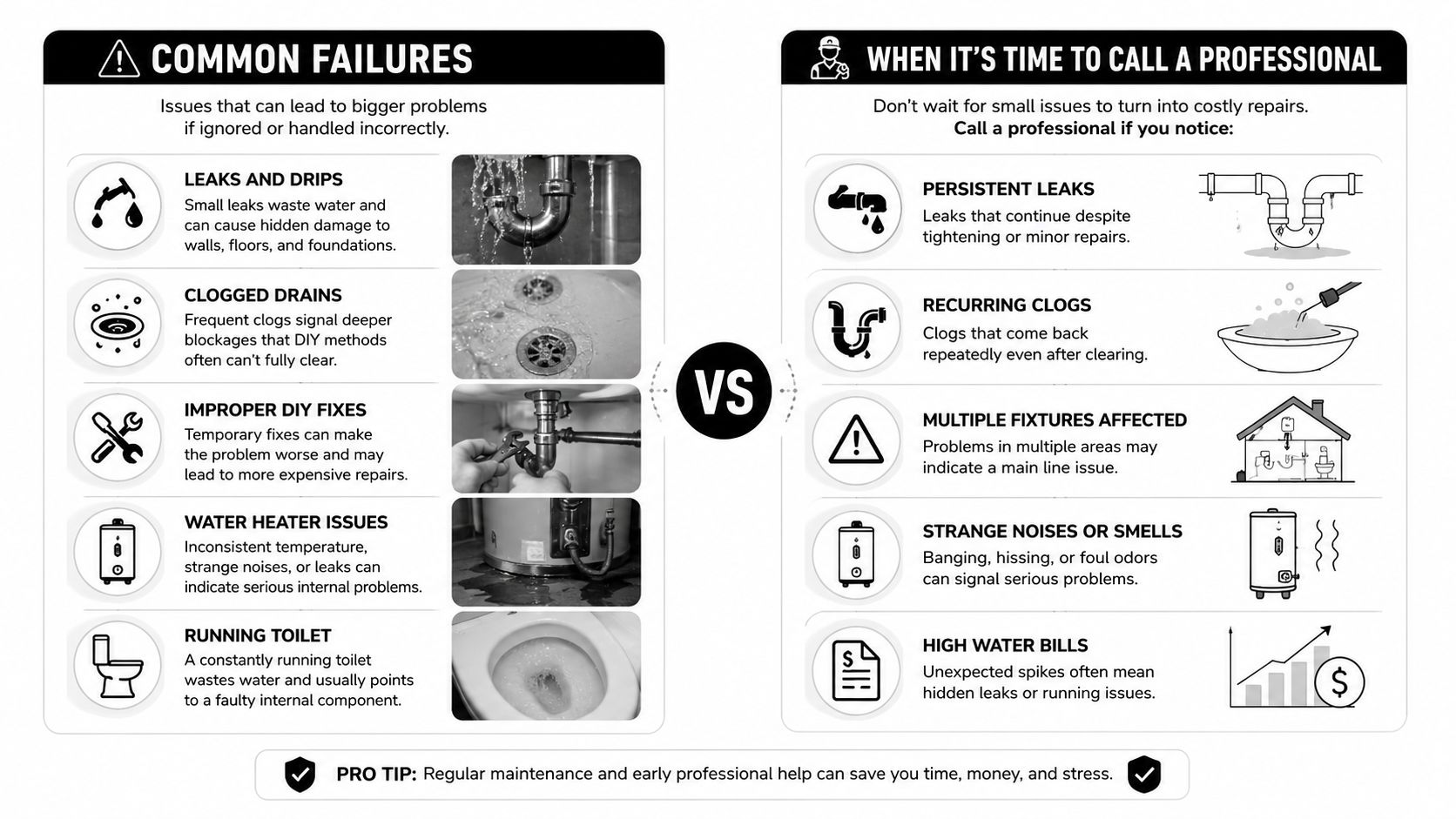
If the easy checks didn't restore cooling, the next tier of problems usually involves components that require training, proper meters, and safe handling. At this stage, DIY should stop.
The most common failures in a no-start call often involve the capacitor, contactor, control wiring, fan motor, or another electrical part in the starting circuit. Some of these parts are physically small. None of them are small from a safety standpoint.
What usually fails after the basic checks
A capacitor stores and releases electrical energy to help motors start and run. When it fails, the outdoor unit may hum, click, or do nothing useful at all. A contactor works like a heavy-duty electrical switch. When the thermostat calls for cooling, the contactor closes and sends power where it needs to go.
Homeowners sometimes look online, see a swollen capacitor top or burnt contactor points, and think the repair looks simple. It isn't. Even with the power off, stored energy can remain in components, and wrong replacement parts create fresh problems fast.
Other common issues include:
- Faulty low-voltage control wiring: The system may never receive a complete cooling call.
- Failed fan motor: The compressor may not be able to operate safely without proper airflow.
- Control board or transformer faults: More common after power disturbances.
- Refrigerant-related lockouts: These require licensed diagnostic work, not guessing.
Why professional diagnosis matters
A skilled technician doesn't just replace the first failed part they see. They check why it failed. A bad capacitor might be age-related, but it can also point to overheating, voltage problems, or a motor pulling poorly. That's the difference between a temporary patch and a real repair.
Proper HVAC system diagnostics are essential. A meter reading, amperage check, control-voltage test, and system-wide inspection tell the story much better than visual guesswork.
Swapping a part without confirming the cause is how homeowners end up paying twice. The first bill buys the wrong fix. The second bill buys the diagnosis that should've happened first.
Repair versus replacement isn't only about age
Sometimes a no-start problem leads to a bigger conversation about system condition. If a major component has failed, the right question isn't just "Can this be repaired?" It's also "Is this system correctly designed and worth putting more money into?"
For installations and major replacements, quality standards matter. According to HVAC Trade Network's installation standards overview, technicians must complete a Manual J load calculation per ACCA Manual J, 8th edition to determine the heating and cooling load for all conditioned zones before selecting equipment. That's the backbone of proper AC installation, and it affects more than cooling. It ties into heat pumps, furnaces, airflow, and duct design too.
A unit that's oversized, undersized, or paired with poor ductwork can create years of comfort and reliability problems. Good repairs help. Good design keeps repairs from becoming routine.
Your Local HVAC Partner Cobre Valley Air
When safe troubleshooting doesn't solve the problem, local support matters. Homeowners in Globe, Miami, Superior, and nearby Arizona communities need a contractor who can diagnose the actual fault, explain the options clearly, and do the work right the first time.
Cobre Valley Air LLC was built around a simple idea: service before sales. That matters when your AC won't turn on because the right answer isn't always replacement. Sometimes it's a drain line cleanup, a control diagnosis, or a focused electrical repair. Sometimes it is time for a new system. The point is to know the difference before spending money.
What good HVAC service looks like
Strong HVAC work isn't just about getting the unit running today. It includes the surrounding system that affects reliability and comfort:
- Quality air conditioning repairs: Find the failed component, confirm why it failed, and test the system after the repair.
- AC installation: Match the equipment to the home, not just the square footage estimate scribbled on a notepad.
- AC maintenance: Clean, inspect, and catch the preventable shutdowns before the hottest day of the season.
- Heat pumps and furnaces: Diagnose the full comfort system, not just one seasonal mode.
- Duct design: Make sure airflow supports the equipment instead of fighting it.
That bigger view matters in Arizona. A house with weak return airflow, poor duct layout, or marginal drainage can cycle through the same comfort complaints year after year even after parts get replaced.
Up-to-date standards matter too
Efficiency rules continue to change, and contractors need to stay current. According to this summary of southwestern AC efficiency rules, starting January 1, 2025, newly installed split-system air conditioners in the southwestern region, including Arizona, must meet a minimum SEER2 rating of 14.3, replacing the older SEER 15 standard.
That matters for replacement planning. If you're comparing repair costs against a new system, the conversation should include current installation requirements, long-term operating efficiency, and whether your ductwork and airflow are ready for the new equipment.
Why homeowners and builders need the same mindset
The same disciplined approach that solves a no-start call also improves new construction and full replacements. Proper sizing, airflow planning, and duct evaluation aren't extras. They're what keep a new system from short cycling, draining poorly, or struggling in certain rooms.
That applies to:
| Property type | What usually matters most |
|---|---|
| Existing homes | Accurate diagnosis, safe repair, airflow review |
| Rentals and managed properties | Reliability, clear communication, preventive maintenance |
| New construction | Load calculation, equipment sizing, duct layout |
| Small commercial spaces | Minimal downtime, dependable service, practical replacement planning |
For restaurant owners and commercial operators, the need is even more direct. Downtime affects customers, staff, and product. The same goes for walk-in cooler support, rooftop units, and maintenance planning.
Cobre Valley Air also serves customers who need more than a quick fix. That includes ductless mini split installs, duct repair and inspection, indoor air quality solutions, and water heater work. Financing through Wisetack and OPTIMUS helps when a repair turns into a larger decision, and 24/7 emergency response matters when cooling failures happen after hours.
If your system won't start and you've already handled the safe checks, the next step is simple. Stop before you get into live electrical parts, and get a trained technician involved.
When your AC won't turn on, get help from Cobre Valley Air LLC, the local team serving Globe, Miami, Superior, and surrounding Arizona communities with diagnostics, repairs, AC installation, AC maintenance, heat pump and furnace service, and duct design support. If you've checked the thermostat, breakers, and condensate drain and the system still won't start, contact Cobre Valley Air LLC for safe, code-compliant service that puts clear answers ahead of guesswork.