


You're standing in the kitchen in July, staring at a dead thermostat, a warm house, and a service estimate that's bigger than you wanted to see. In places like Globe, Miami, and Superior, that's not a hypothetical. It's a normal Arizona summer problem, and financing HVAC replacement is often the practical way to solve it without gutting your savings.
The smart move is not to ask, “Can I pay cash?” The smart move is to ask, “How do I shrink the bill first, then borrow only what's left?” That order matters because HVAC replacement isn't just a box swap. You may be paying for equipment, labor, ductwork, controls, and a system that has to survive brutal heat. For a full residential replacement, industry summaries put the cost in a wide band, from about $5,000 to $12,000+ for a central AC and furnace combination, with broader installed ranges reaching $6,900 to $18,500 when ductwork is part of the job, and national averages often cited around $7,000 for a new HVAC system (ClearValue Lending).
That's why most homeowners end up choosing between contractor financing, personal loans, home equity options, and incentives. None of those is a moral victory or a failure. They're tools. The right one depends on how urgent the breakdown is, how strong your credit looks, and how much equity or rebate money you can pull in before you sign.
Why Financing an HVAC Replacement Is a Normal Decision
A Globe family with a 15-year-old system does not need a sermon when the unit dies in July. They need cool air fast, and they need a plan that protects the rest of the month's cash. That is why financing a new HVAC system is normal. It is a cash-flow decision, and in Arizona, it is often the practical one.
A replacement is rarely just a swap of one box for another. The bill usually reflects equipment, labor, controls, and sometimes ductwork or other fixes the old system was already hiding. The numbers are large enough that many homeowners should expect to plan, compare, and borrow with intent rather than try to absorb the hit all at once. That is especially true when the goal is to spend once and avoid another breakdown before the next heat wave.
Practical rule: If the proposal feels too large to pay in one shot, that does not mean you are overbuying. It usually means you are buying the right-sized system for the house.
The decision is not whether financing is normal. It is whether you are using it the smart way. In Arizona, that means looking at rebates and credits first, then borrowing only the balance that is still left on the table. APS, SRP, federal IRA credits, and local weatherization help can lower the project cost before a loan ever enters the picture. That keeps you focused on total cost of ownership, not just the monthly payment the lender wants to highlight.
Typical HVAC Replacement Cost Ranges
| Project Scope | Typical Installed Cost |
|---|---|
| Central AC and furnace combination | $5,000 to $12,000+ |
| Small-to-mid-sized home replacement | $11,590 to $14,100 |
| Replacement with ductwork added | $2,100 to $4,000 extra |
The best homeowners do not start by asking which loan is easiest to sign. They start by asking what can come off the top through rebates, credits, and utility incentives, then they finance the remainder on terms they can live with. That order usually saves more money than chasing the lowest advertised payment.
The Main Financing Paths Explained
Start with the job in front of you. A planned spring replacement and a dead July compressor call for different financing choices, because speed, cost, and paperwork all matter in different ways.
The smart move is not to ask, “Can I pay cash?” The smart move is to ask, “How do I shrink the bill first, then borrow only what's left?” In Arizona, that means checking rebates, utility incentives, federal IRA credits, and weatherization help before you sign for any debt. If you want a good place to start on the project cost side, review this HVAC replacement cost guide and then work backward from there.
Contractor plans work best when speed matters
Contractor-arranged financing, including platforms like Wisetack and OPTIMUS, is built for homeowners who want a fast answer at the kitchen table. These offers are often the quickest route to approval, and same-as-cash plans are commonly advertised at 0% for 12 to 24 months. That can work well if you know the balance will be gone before the promo ends. It can also go bad fast if the contract uses deferred-interest terms, because a missed payoff window can turn a clean-looking deal into an expensive one.
Personal loans are the middle lane
A personal loan fits homeowners who want speed without tying the debt to the house. Typical personal-loan APRs are often 7% to 24%, with funding in 1 to 3 days. That is fast enough for an urgent replacement, and it keeps the paperwork simpler than a home-secured loan. The tradeoff is straightforward. The payment is fixed, and the rate is usually higher than home-equity borrowing.
Home equity options are cheaper but slower
A HELOC or home equity loan usually gives you access to lower rates because the home secures the debt, but you pay for that advantage in time and complexity. HELOCs commonly take 2 to 6 weeks to close. That timing is fine for a planned project. It is a poor fit for an Arizona home that is getting hotter by the hour.
Credit cards and cash-out refinancing need caution
Credit cards can be convenient, but they are usually the most dangerous choice unless you have a short payoff plan and a balance you can clear. Cash-out refinancing can work when you are already restructuring a mortgage, but it changes the home loan itself, so it is not a casual move. It belongs in a larger mortgage decision, not as a reflex when the AC dies.
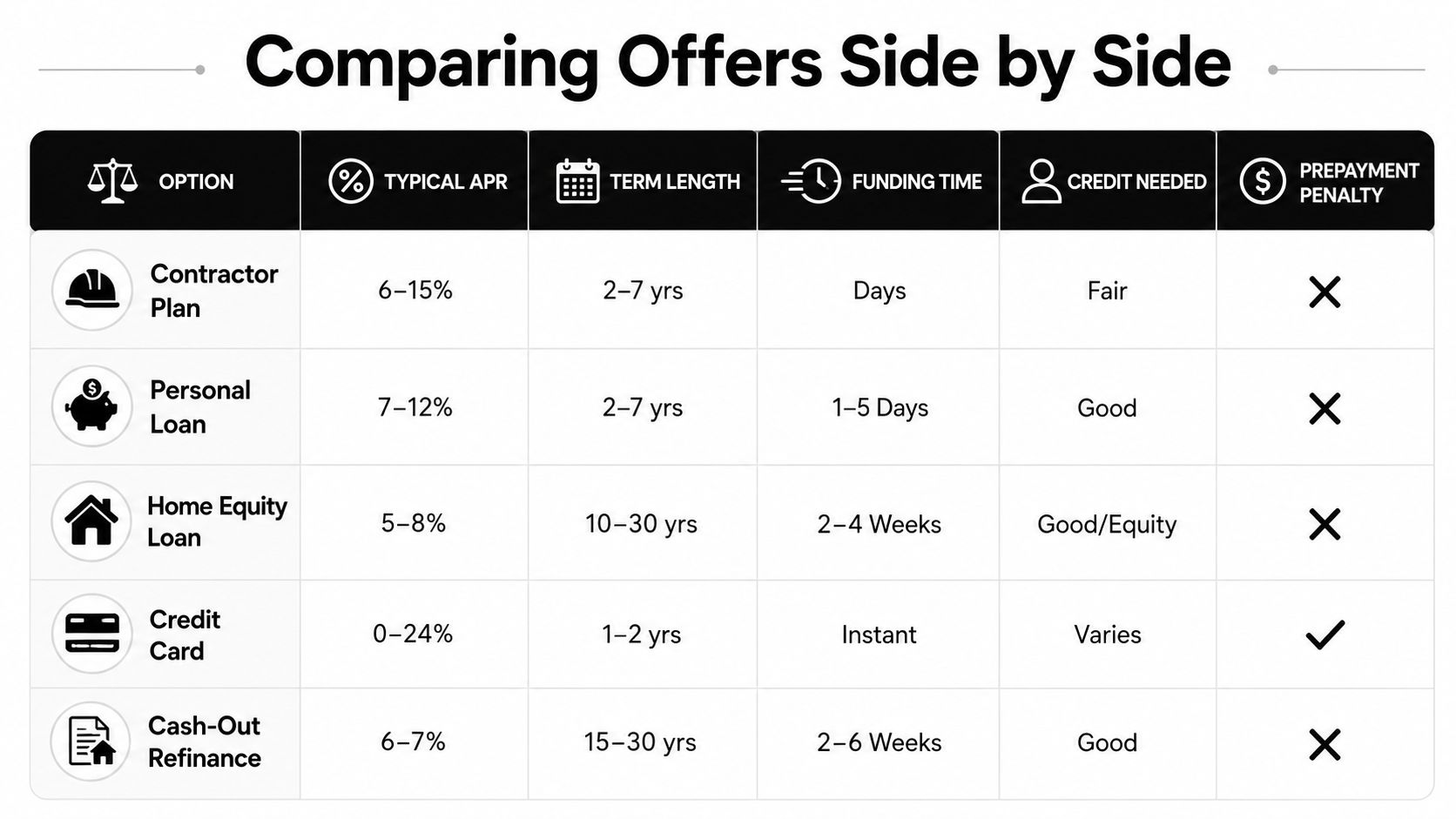
Comparing Offers Side by Side
The headline payment is not the deal. The question is what the system costs over its full life, how fast the money arrives, and what the fine print does to you later. A 0% promo can still be the wrong move if the payoff window is too short for your budget, especially when an Arizona replacement is already straining the household cash flow.
Compare offers the right way. Start with the total amount you will repay, then check the monthly payment, the term, any deferred-interest clause, and the penalty for missing the promo deadline. Contractor financing is usually the fastest route, and some offers give you a short promotional period, but the balance has to be gone before the offer expires or the price jumps. Personal loans are often faster than home-secured borrowing, while HELOCs can be cheaper but take more time to close, so they fit a planned project better than an emergency.
The trap is simple. A longer term can make the payment look easy while pushing the total cost higher. That is why the right comparison is not the smallest monthly bill. It is the cheapest complete exit from the debt, including the months after the new system starts doing its job.
Read this line before you sign: If the offer includes a promotional rate, find the date the promo ends and the rule for any unpaid balance.
Before you commit to a loan, compare the financing against the incentives that may lower the project cost first. For a homeowner looking at the full replacement budget, a clear breakdown like this HVAC replacement cost guide helps you see how the price stacks up against rebates, credits, and the amount you need to borrow. In Arizona, that matters because a heat pump or high-efficiency system may qualify for incentives that change the size of the loan you should take. Sales pitches usually start with the monthly payment. Start with the rebate stack, then decide what still needs financing.
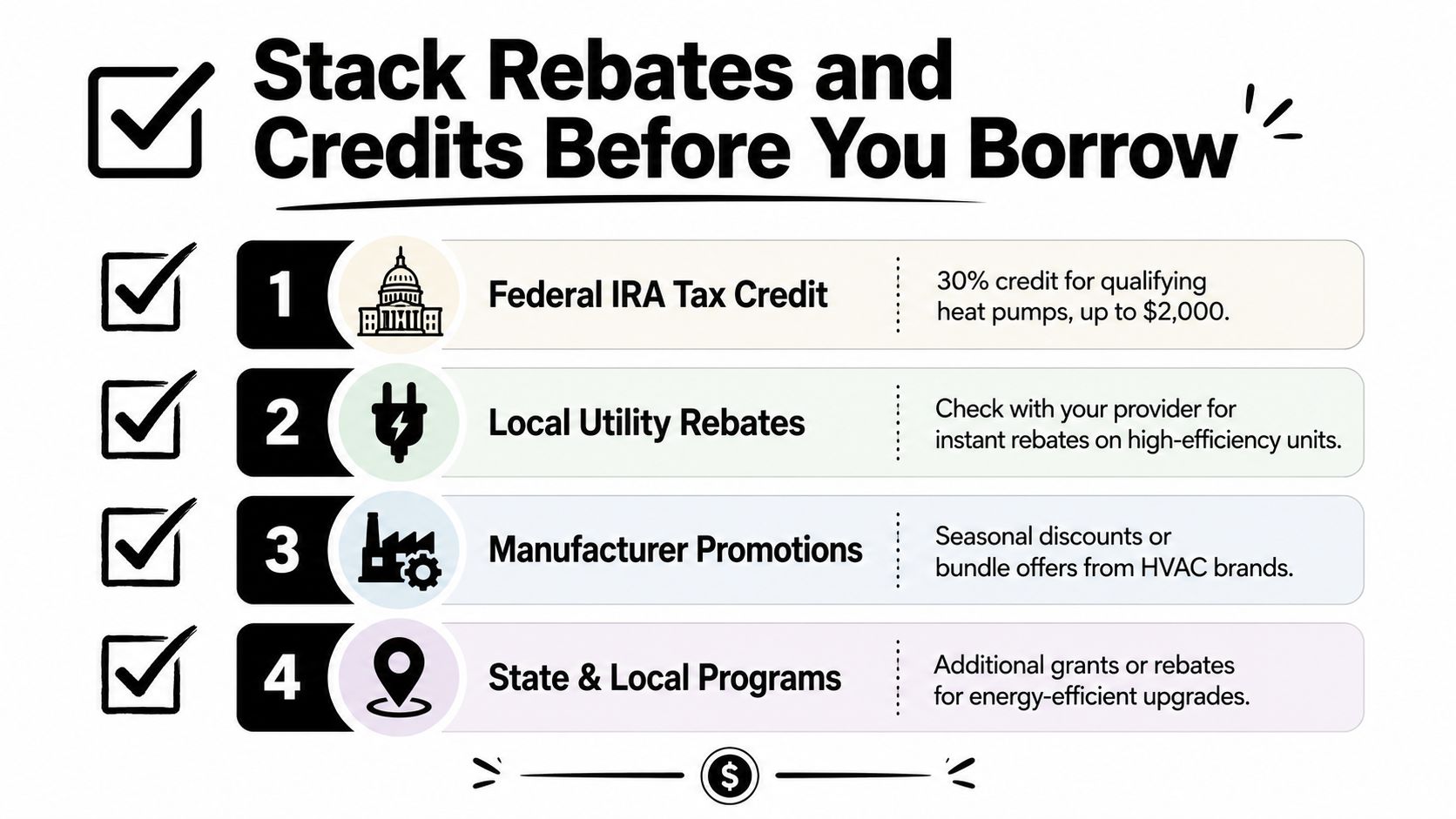
Stack Rebates and Credits Before You Borrow
Many homeowners do this backward. They sign for the full amount, then try to chase rebates later. That's lazy financing, and it costs more than it should. The better order is to apply every incentive you can, then finance the smaller number that's left.
For a Globe-area homeowner, the first stop is the federal 25C Energy Efficient Home Improvement Credit for qualifying equipment such as heat pumps, AC systems, gas or oil furnaces, and air handlers. The federal HEAR program also matters because Arizona has received allocation, which makes state-level rebate pathways relevant for homeowners who qualify. On top of that, utility programs can matter a lot, especially through APS and SRP for qualifying high-efficiency systems, and some manufacturers, including Goodman, Amana, and Daikin, routinely use promotions that can trim the bill before financing is even discussed.
Arizona households should also look at the Weatherization Assistance Program if income is tight or the home is older. That program can help with cleaning, tuning, repairs, and, in some cases, replacement of cooling systems depending on state rules (HVAC.com). That path is not glamorous, but it's real help.
The order matters. Get the quote. Check the incentive eligibility. Apply for the utility rebate, manufacturer offer, and federal credit where applicable. Then ask the contractor to re-run the numbers and size the financing to the reduced total. That's how you keep a $10,000 to $14,000 job from turning into an oversized loan when part of the cost should have been offset first (Synchrony).
If you want a local estimate before you start stacking incentives, use the HVAC replacement cost guide as a starting point. Then bring the line-item quote back to the incentive conversation.
Preparing Your Credit and Documents
This part takes an afternoon, not a weekend. Do it before you talk terms, and you'll avoid the awkward moment where the loan gets delayed because a document is missing or your credit report has an old mistake on it.
Start with the basics. Pull your credit reports from all three bureaus, scan for errors, and check whether a small credit card balance is throwing off your debt-to-income ratio. Gather pay stubs, recent tax returns, and a current utility bill. If you're planning to use contractor financing, personal-loan underwriting, or a HELOC, the lender is going to ask for some version of that stack anyway.
A few points deserve a blunt answer. Pre-qualification is the soft step, and it usually won't ding your credit. A full application is the hard pull, and it can cause a temporary dip. That's why you should pre-qualify with more than one lender before you commit. If one offer is clearly cleaner, you can stop shopping.
Practical rule: Don't apply blind. Pre-qualify first, compare the real APR and payment, then decide whether the term is worth it.
Credit standards vary by product. Contractor financing can be more forgiving than a bank loan, personal loans generally reward stronger credit, and HELOCs usually depend on both credit quality and equity. If your file is borderline, a co-signer can help, but only if both of you understand that missed payments hit both credit profiles.
Arizona incentives can also affect how much you finance. A qualifying federal credit, a utility rebate, or a weatherization program can reduce the amount you need to borrow, which improves the lender conversation before you ever submit the final application. That's the point. Lower the principal, then apply.
From Quote to Funded Project
A clean financing setup should make the job easier to run, not harder. If the process feels messy, the contractor is not controlling the paperwork, or the scope is still moving.
Start with the final line-item proposal. Every piece should be written out, equipment, labor, duct changes, controls, permits, and any accessories. Ask for the JMOC, or the equivalent job measurement and completion paperwork, so the financing file matches the install scope from the start. Then submit the application, upload the documents the lender asks for, choose the term that fits the monthly budget, and sign electronically.
The timeline matters, but it should not drive the whole decision. Some funding paths close faster than others, which is why urgent replacements usually call for contractor financing or a personal loan. If the compressor is dead and the Arizona heat is already inside the house, waiting on a slower equity product is a bad plan.
Keep the project from stalling by staying tight on the paperwork and the scope.
- Incomplete documents. Missing income, identity, or address paperwork slows approval and pushes the install back.
- Mid-project change orders. If the scope changes after approval, the financing and the install can fall out of sync.
- Rebate timing. If a utility rebate is part of the plan, confirm whether it needs approval before closing or whether it can be filed after the work is done.
Keep the job aligned with a licensed HVAC technician guide before anything gets signed. A low payment does nothing for a bad install, loose ductwork, or a system that was sized wrong from the start.
Making the Right Choice for Your Home
This decision gets easier when you stop thinking in categories and start matching the product to the problem. Urgent replacement, good credit, equity in the home, and rebate eligibility are the key variables. Everything else is marketing noise.
For a young family in Globe with average credit and a failed AC in July, I'd push hard toward contractor financing or a personal loan, because speed matters more than perfection. For a retiree in Miami on a fixed income with a 20-year-old system, I'd start with rebates, utility programs, and weatherization support before I ever asked them to take on a bigger monthly bill. For a small restaurant owner in Superior needing a rooftop unit, the right answer is usually a financing structure that keeps cash in the business and gets the equipment running fast, not a drawn-out refinance conversation.
The best homeowners ask one direct question. What lowers my total cost of ownership over the next several years, not just my payment this month? That includes equipment efficiency, duct condition, labor quality, and the financing itself. If the system qualifies for incentives, use them first. If the job is urgent, choose the fastest clean funding path. If your equity is strong and you have time, compare home-secured options carefully.
The next move is simple. Use the HVAC energy savings calculator to sanity-check the upgrade, then talk through the project with a contractor who can explain the equipment, the incentives, and the financing in plain English. If you're in Globe, Miami, Superior, or nearby Arizona communities, Cobre Valley Air LLC offers Wisetack and OPTIMUS financing, holds ROC 339078, and answers emergencies 24/7. A real conversation beats guessing every time.
A CTA for Cobre Valley Air LLC.