


Your utility bill shows up, the kitchen stays busy, and the walk-in cooler keeps humming in the background. Most restaurant owners notice the cost only after it's already creeping up, because the box is always on and the problems inside it tend to hide behind a closed door.
That's why walk in cooler energy efficiency has to be handled like a diagnostic job, not a guessing game. The strongest savings usually come from a simple order of operations, measure first, fix the basic maintenance issues, tighten how the cooler is used, and only then decide whether a bigger retrofit is worth the money.
The Hidden Energy Drain in Your Business
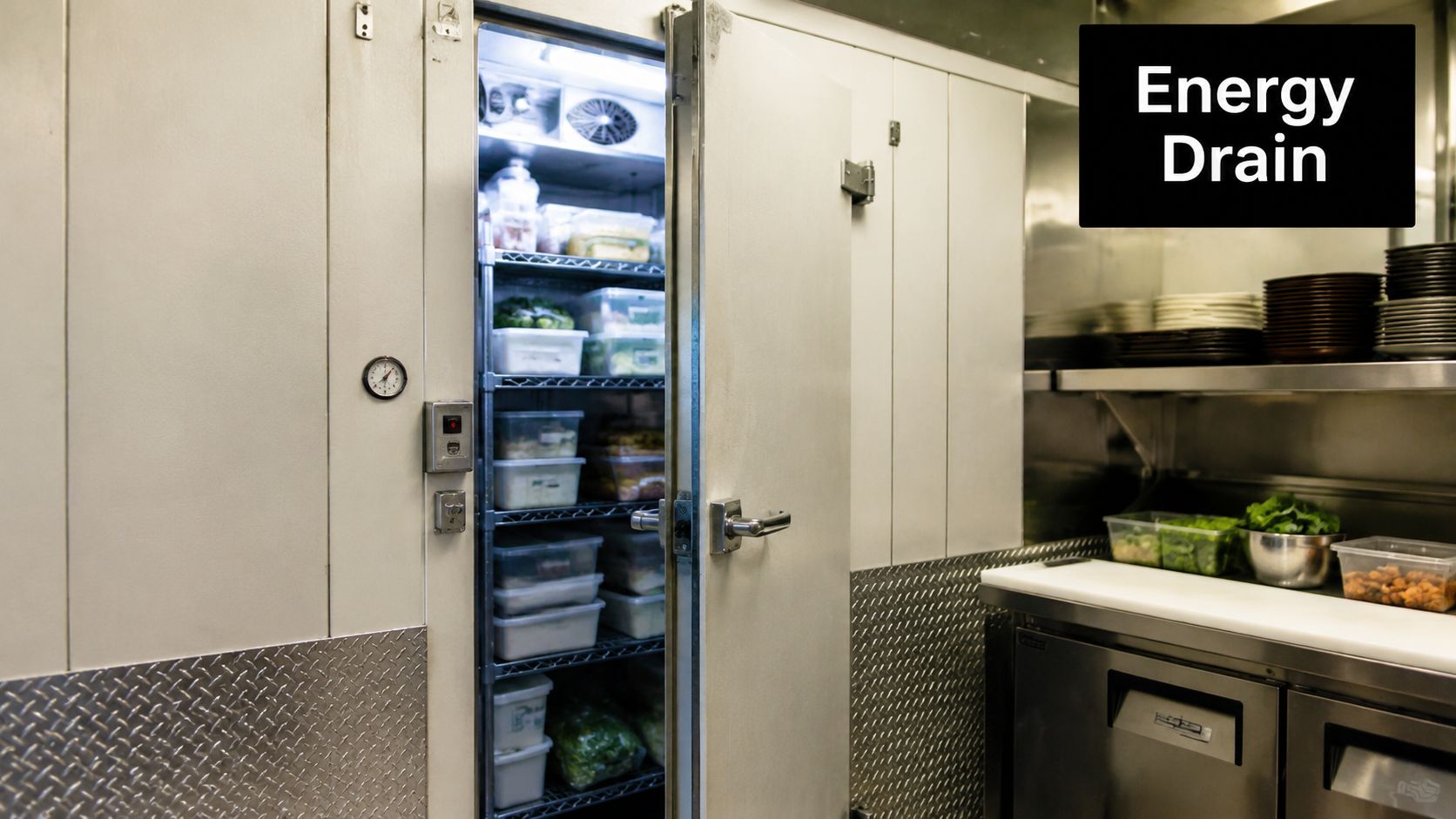
A lot of owners blame the electric bill on summer heat, old rooftop units, or the ice machine that never seems to stop. Sometimes that's part of it, but a walk-in cooler can be the silent load that keeps draining money every hour of every day. A U.S. Department of Energy study estimated that walk-ins consume about 19.1 TWh annually, equal to roughly 199 trillion Btu of primary energy, which is exactly why small improvements can matter so much at the business level (DOE commercial refrigeration study).
Start with the box, then the habits, then the equipment
The practical mistake is jumping straight to a compressor replacement before checking the easier losses. If the door doesn't close cleanly, the gasket is tired, the coils are dirty, or staff keeps loading warm product in the wrong way, the compressor is forced to fight avoidable heat gain all day long. That's wasted electricity, but it's also extra wear on the refrigeration system.
Practical rule: if a cooler is pulling harder than it should, the cause is often a mix of infiltration, loading habits, and maintenance, not just the refrigeration package itself.
That's the logic behind a field-first approach. Measure how the cooler is behaving, inspect the door and coil condition, tighten the daily routine, and then judge whether the equipment itself is the bottleneck. If you skip those steps, you can spend real money on a new unit and still keep paying for bad operation.
For a deeper maintenance framework that fits this same approach, see commercial HVAC preventive maintenance.
Your Essential Maintenance and Diagnostic Checklist
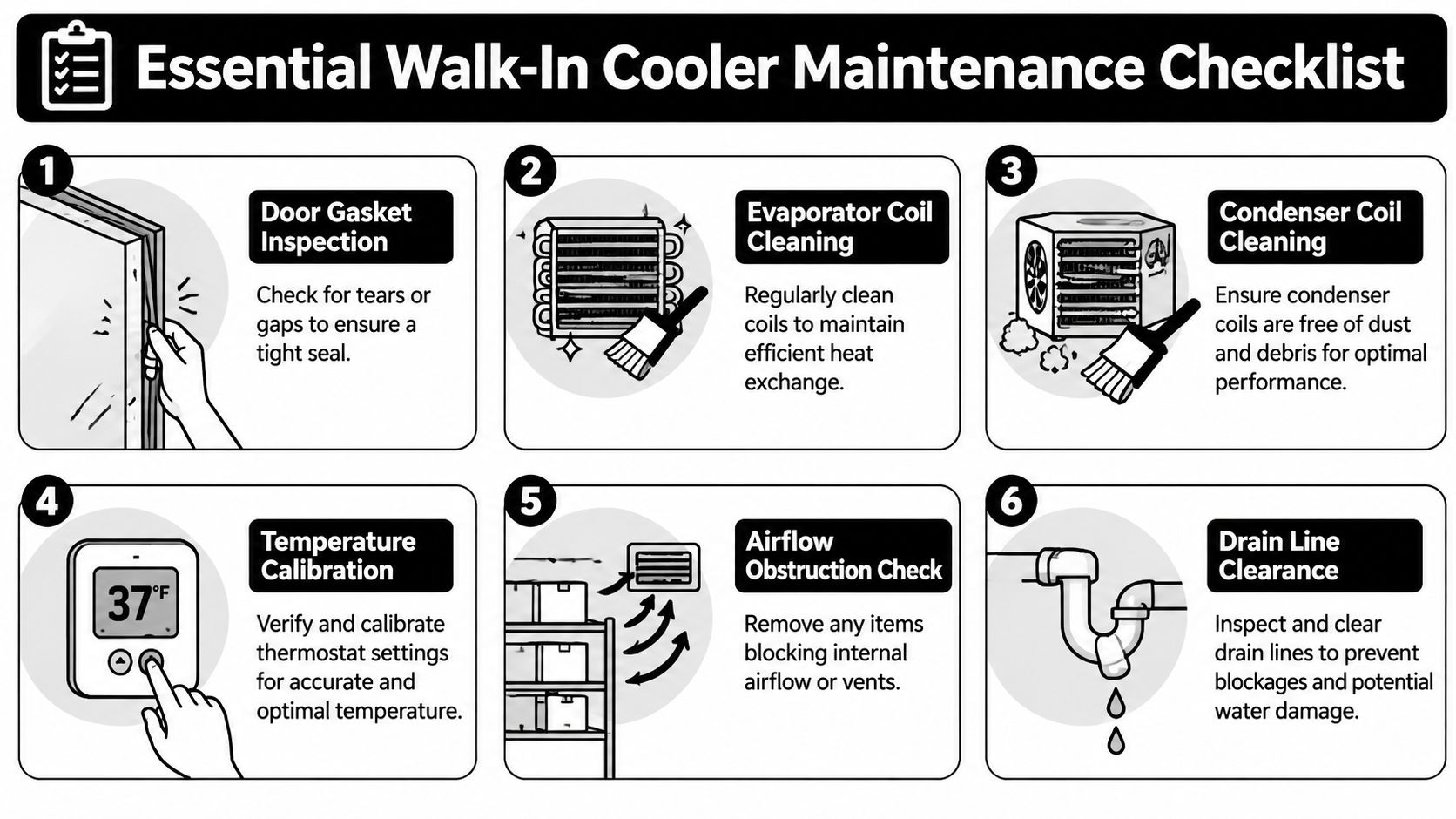
A walk-in that looks fine at a glance can still be wasting power. The first pass should always be basic condition checks, because Norlake recommends keeping the box between 35°F and 38°F and verifying that the door closes securely each day. Worn gaskets, a weak latch, or a door that doesn't sit flat can bleed off cold air and force the system to run longer than it should (Norlake maintenance guidance).
What to check every day
Start with the door, then move inside the box. Make sure the latch catches fully, the seal looks even all the way around, and nothing is holding the door open. Then listen for abnormal noise and look for restricted airflow inside the cooler, because product packed too tightly can create warm spots and make the refrigeration system work harder than the load really requires.
A quick daily walk-through should also include the floor and drain area. Standing water, frost, or ice near the entrance usually points to moisture intrusion or a drainage problem, and either one can turn into an energy drain fast.
What to clean and inspect every month
Door gaskets deserve close attention because small gaps become ongoing losses. Check for tears, flattened sections, or spots that do not press evenly against the frame. Dirty coils matter too. Norlake's guidance calls for monthly inspection of door gaskets, fan motors, and evaporator and condenser coils, because fouled coils raise system effort and worn gaskets allow temperature loss (Norlake maintenance guidance).
A walk-in can look fine from ten feet away and still be leaking energy at the door seal or coil face.
Use that same monthly visit to confirm the box is behaving the way it should. If temperatures drift, if frost keeps returning, or if the unit runs harder than the load suggests, compare the symptoms with walk-in cooler not cooling before assuming the compressor is the problem.
When the issue is deeper than a cleaning job
Basic maintenance will not solve every problem. If the cooler cannot hold temperature, if defrost issues keep coming back, or if frost shows up where it should not, the cause may be electrical, mechanical, or code-related. That is the point where a licensed technician should inspect the system, because refrigerant handling, controls, and safety compliance are not a place to guess.
The practical takeaway is simple. A clean, tight, properly loaded walk-in will run better than a neglected one, even before any upgrade work starts. Maintenance does not replace good equipment, but it keeps good equipment from acting like a bad investment.
Optimizing Operational Controls and Daily Habits
Some of the best savings don't require a single new part. Titan Walk-In Coolers recommends practical habits like cooling hot food to room temperature before storage and organizing products to reduce door-open time, because frequent infiltration brings in moisture that causes icing and more defrost cycles (Titan energy efficiency guide).
Train staff to work the cooler like a system
Door discipline sounds basic because it is, but it's one of the biggest behavior changes that sticks. Staff should know where items belong before they open the door, because each extra search turns cold air exchange into a recurring load. If the most-used ingredients sit in the back or the top shelf is overloaded, the door stays open longer and the cooler keeps paying for it.
Field advice: the cooler works better when people make fewer decisions inside it.
That means product should be grouped by use, not by whoever stocked it first. Put high-turn items where they're easy to reach, keep air paths open around the evaporator, and don't load warm containers straight into a packed box. Those habits don't sound technical, but they directly affect moisture, icing, and run time.
Use controls to support real usage, not default assumptions
Default settings are often fine for a showroom, but a busy restaurant isn't a showroom. If a box gets hammered during prep and service, the controls need to match that reality. Defrost timing, thermostat behavior, and alarm settings should reflect the way the cooler is used, not the way a manual assumes it's used.
The best operators think in patterns. They know when deliveries arrive, when prep peaks, and when the door gets hit the hardest. Once those patterns are clear, the cooler can be organized around them, and that's where the waste starts shrinking.
For many sites, this is the cheapest efficiency move available. It costs time and training, not hardware, which is why it should come before any expensive upgrade conversation.
Upgrading the Cooler Envelope Doors and Lighting
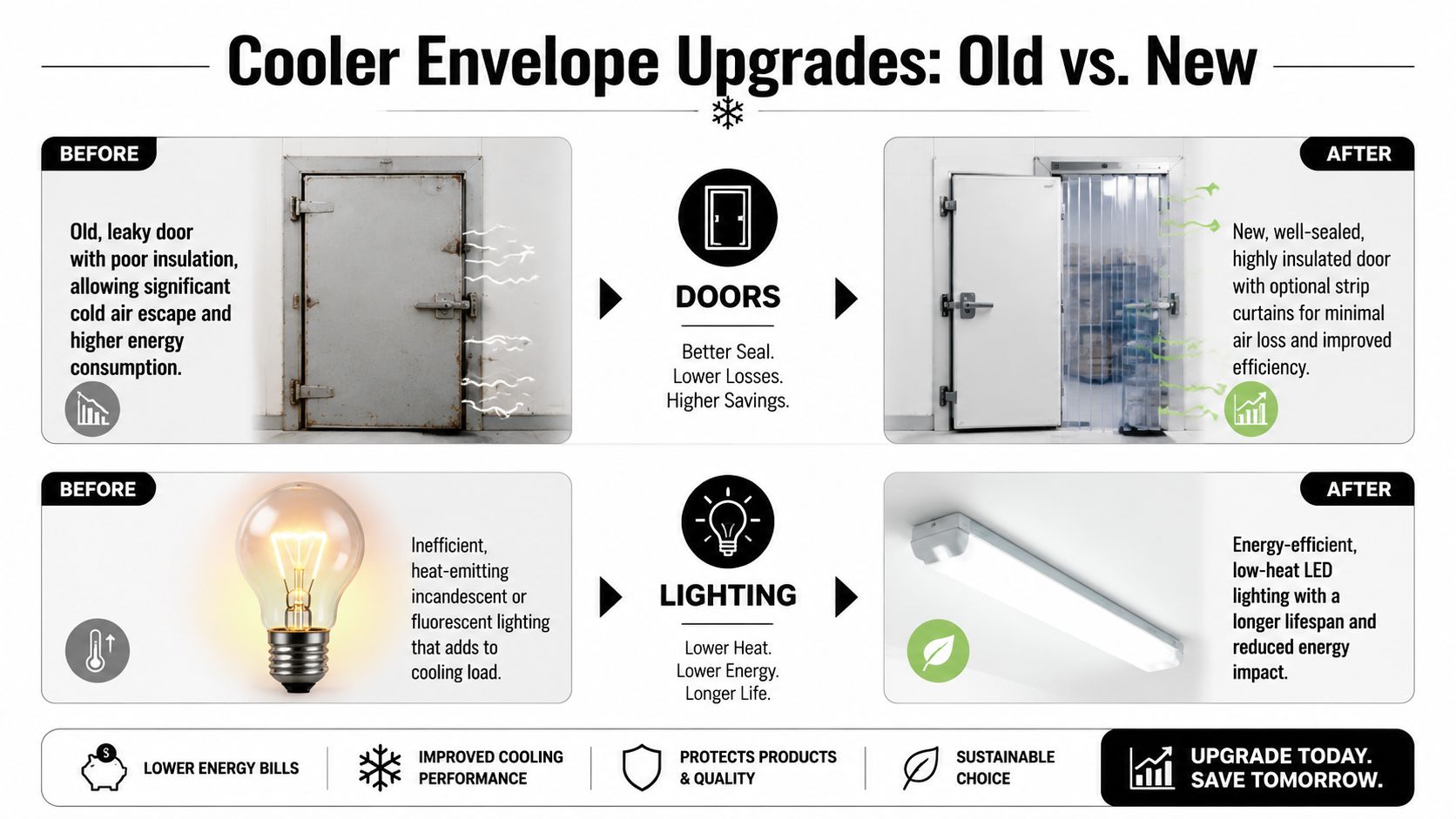
Once the daily routine is under control, the next question is how well the box itself holds the cold. Code standards often call for R-25 walls, R-32 doors, and automatic door closers that shut within 1 inch of closure, and they also cap anti-sweat heater power and require efficient lighting (walk-in cooler and freezer mandatory code benchmark). Those details matter because a tight refrigeration system won't offset a leaky envelope for long.
Doors are usually the first place to look
A worn cooler door is a constant energy tax. If it doesn't seal cleanly, cold air spills out and warm air moves in every time someone walks through it. Strip curtains can help in high-traffic spots, but they work best as a support measure, not as a substitute for a damaged door or failed closer.
The best door upgrade is the one that closes reliably, seals evenly, and matches the traffic level of the kitchen. If a site has frequent deliveries or repeated staff entry, automatic closure and a solid seal do more than most owners expect because they reduce infiltration and make temperature recovery faster.
Lighting is a cooling load too
Old lamps add heat, and heat inside a cooler has to be removed by the refrigeration system. Efficient lighting reduces that extra burden, and occupancy controls help keep lights from running when nobody's in the box. That's a small operational detail with a real effect on the system's workload.
If you're evaluating whether to spend on a door project, lighting retrofit, or a full box refresh, start with the parts that are most obviously leaking air or adding heat. Better seals and better lighting don't look dramatic, but they improve stability, reduce compressor strain, and make the whole system easier to manage.
For older sites, the right upgrade is often the one that fixes infiltration and parasitic loads before it touches the refrigeration package. That approach tends to protect inventory better too, because temperature swings get smaller and recovery gets more predictable.
Advanced Refrigeration System Retrofits and Tuning
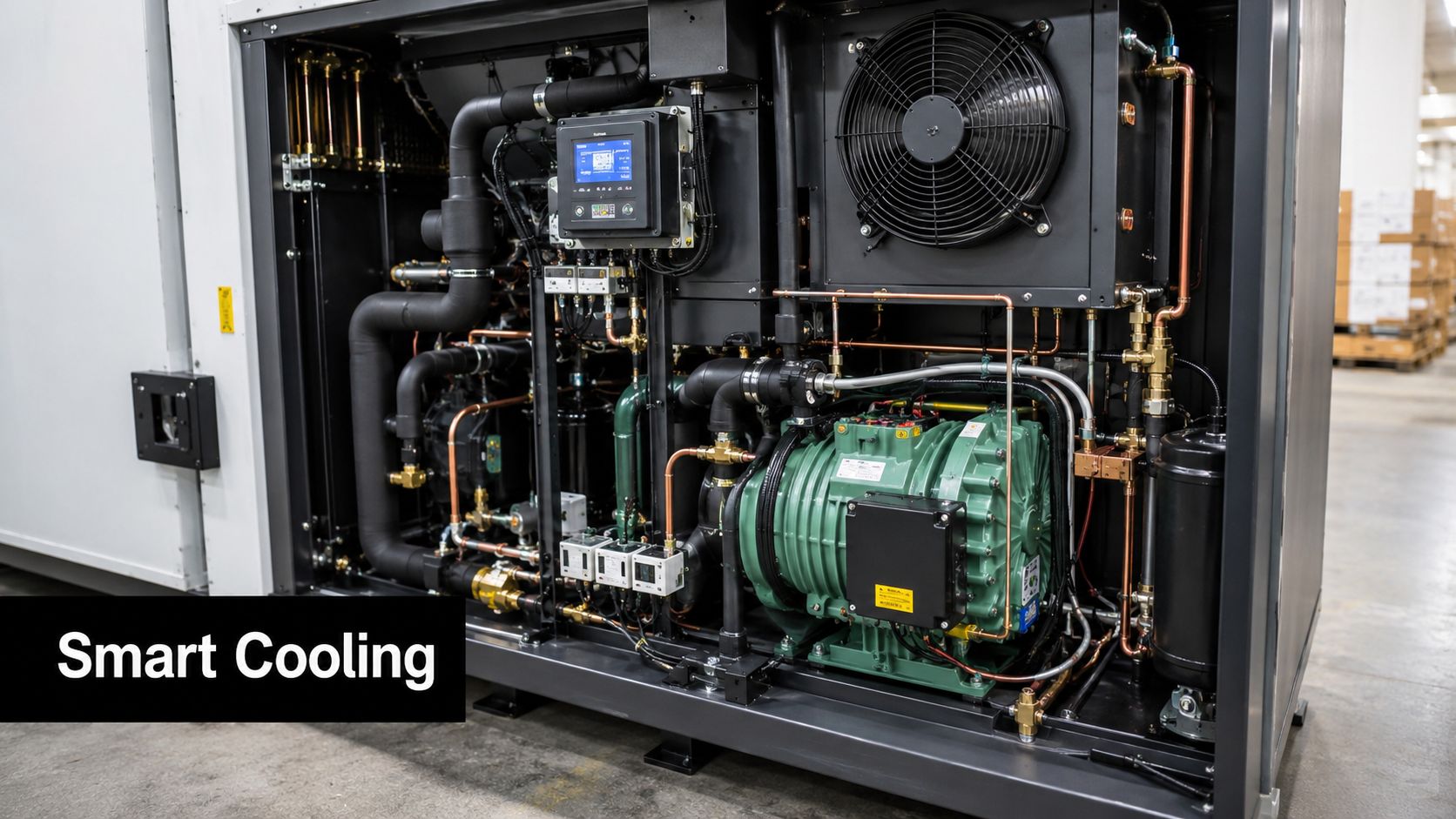
The big gains usually show up when the refrigeration package is matched to the actual load instead of being oversized, outdated, or poorly controlled. The Annual Walk-In Energy Factor, or AWEF, is the practical metric to use here, because it compares annual refrigeration output removed from the box against annual electrical input to the refrigeration system. In other words, it helps you compare real-world efficiency instead of just looking at nameplate capacity (AHRI performance rating standard_Performance_Rating_of_Walk-in_Coolers_and_Freezers.pdf)).
Match the retrofit to the load
Recent industry research presented to ACEEE reports that packaged remote condensing units with ECM fans and variable-speed compressors achieved nearly 40% energy savings versus conventional units, and one metered installation showed 18,500 kWh in annualized savings (HeatCraft packaged RCU research summary). That's the kind of result that gets attention, but it only matters if the installation fits the site.
Don't buy the shiny unit first. Verify the load, traffic pattern, and control strategy before you decide what belongs on the roof or beside the box.
That's where tuning matters. A modern compressor can still waste energy if the controls are poor or the system is sized wrong. Likewise, an efficient fan motor won't rescue a cooler with excessive door openings or bad airflow around stored product. The system has to be looked at as a whole.
Use standards as a buying filter, not a sales slogan
DOE standards are changing the equipment market, and the 2024 rule for walk-in coolers and freezers is a good example of why that matters. The Department of Energy estimated 1.60 quadrillion Btu in savings over the 30-year compliance window, with 6.3% less energy use than the no-new-standards case and $2.00 billion to $4.74 billion in cumulative net present value of consumer benefits, depending on discount rate (DOE final rule). Those figures show why old assumptions about “good enough” equipment don't hold up anymore.
If you're looking at a retrofit, use AWEF, system type, and site behavior together. That's a better buying filter than refrigerant type alone, and it keeps you from paying for equipment that looks advanced but doesn't solve the actual problem. For a refrigerant-focused decision point, see is Freon still used.
When to Call Your Local Pro from Cobre Valley Air
A technician should be involved any time the work touches refrigerant, electrical safety, or code compliance. If you suspect a leak, hear compressor faults that don't make sense, see repeated icing that basic maintenance doesn't fix, or need to size and install new equipment, that's not a trial-and-error job. It needs proper diagnostics, proper tools, and someone who knows the rules that govern the equipment.
The line between owner checks and licensed service
Owners and managers can handle the visual checks, housekeeping, door habits, and basic cleaning. They should not open sealed refrigeration components, guess at refrigerant charge, or start changing electrical controls without the right qualifications. That's where a small mistake turns into downtime, spoiled product, or a safety issue.
A few situations call for a pro immediately.
- Suspected refrigerant leak: If performance drops and the system never seems to catch up, a licensed technician can test and correct the problem safely.
- Electrical trouble: Burn marks, tripping breakers, or intermittent operation need proper troubleshooting, not swapping parts at random.
- System replacement or sizing: New equipment should be selected around the actual load, the box configuration, and the site's usage pattern.
- Compliance questions: Door hardware, insulation, anti-sweat loads, and refrigeration controls all need to line up with code and manufacturer requirements.
Why a careful diagnosis saves money
A good service call should tell you what's failing, what's wasting energy, and what can wait. That's the standard Cobre Valley Air follows in Globe, Miami, and nearby Arizona communities, with precise diagnostics, code-compliant installations, and airflow-aware recommendations that prioritize long-term value over unnecessary replacement.
If your cooler is running harder than it should, start with the basics, then call for a professional audit before the problem becomes a product loss event. Reach out to Cobre Valley Air LLC for honest diagnostics, practical repair options, and a plan that keeps your walk-in cooler efficient, reliable, and ready for the next busy service.